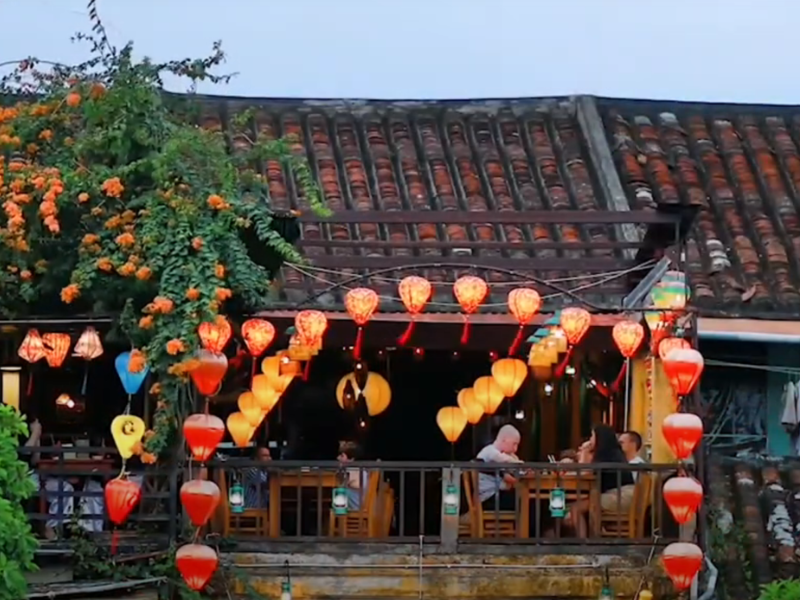
When autumn sweeps across the ancient riverbanks of the Thu Bon River, the UNESCO World Heritage town of Hoi An sheds its everyday peaceful charm to become the beating heart of one of Southeast Asia’s most enchanting cultural celebrations. While Tết Trung Thu (the Mid-Autumn Festival) is celebrated nationwide across Vietnam, nowhere is its folklore, nostalgia, and magic felt more deeply than under the glowing silk canopies of Hoi An Ancient Town.
Known historically as a bustling 16th-century international trading port where Vietnamese, Chinese, and Japanese cultures merged, Hoi An transforms the Mid-Autumn Festival into an immersive fairytale of light and heritage. Thousands of colorful silk lanterns illuminate yellow-walled merchant houses, rhythmic lion dance drums echo through cobblestone alleys, and the river glows under the golden light of the harvest full moon.
Whether you are a family seeking joyful cultural encounters, a couple drawn to unhurried evening river cruises, or a culture explorer yearning to experience ancient Vietnamese traditions, this guide covers everything you need to know about celebrating the Vietnam Mid-Autumn festival in Hoi An.
At Sao La Vietnam Tours, we believe in slow, tailor-made travel that connects you directly with local life and authentic living culture. Read on to discover festival dates, historic rituals, local delicacies, photo locations, and expert travel advice.
Quick Overview: Hoi An Mid-Autumn Festival At A Glance
Vietnamese Name: Tết Trung Thu (Mid-Autumn Festival) or Tết Thiếu Nhi (Children’s Festival).
Festival Date: The 14th and 15th days of the 8th lunar month (Typically falling between mid-September and early October).
Location: Hoi An Ancient Town, Quang Nam Province, Central Vietnam (Thu Bon River, An Hoi Sculpture Garden, Japanese Covered Bridge area).
Atmosphere: Vibrant, magical, family-friendly, and deeply spiritual.
Highlights: Traditional lion/dragon dances (Múa Lân-Sư-Rồng), silk and paper lantern releases, mooncake tasting, traditional folk games (Bài Chòi), and river processions.
Travel Style: Tailor-made cultural walking tours, evening wooden boat cruises, and luxury boutique stays organized by Sao La Vietnam Tours.
The Cultural Significance of Tết Trung Thu in Vietnamese Heritage
To fully appreciate the magical atmosphere of the Vietnam Mid-Autumn festival in Hoi An, it helps to understand its origins and cultural significance.
Unlike Western autumn harvests or commercialized holiday events, Tết Trung Thu in Vietnam carries deep agricultural and familial roots:
A Celebration of Agriculture & Harvest: Historically, farmers worked tirelessly during the spring and summer planting seasons. Mid-Autumn marked the completion of the summer harvest before the rainy season arrived. Families gathered under the bright full moon to relax, give thanks to the heavens, and enjoy the fruits of their hard labor.
A Festival Dedicated to Children: In Vietnamese culture, parents work intensively during harvest months. The Mid-Autumn Festival became a dedicated time for parents to shower their children with love, make handmade toys, bake sweet treats, and process through the streets with star-shaped paper lanterns (Đèn Ông Sao).
Folklore & Mythology: The festival is woven with legendary tales, including Chú Cuội (the banyan tree woodcutter trapped on the moon) and Hằng Nga (the Moon Goddess). Children look up at the bright full moon trying to spot the silhouette of Chú Cuội sitting beneath his magical banyan tree.
In 2023, the Mid-Autumn Festival in Hoi An was officially recognized as a National Intangible Cultural Heritage, celebrating the town’s centuries-old commitment to preserving authentic festive customs.
When is the Mid-Autumn Festival Celebrated in Hoi An?
The Mid-Autumn Festival is calculated according to the traditional East Asian lunar calendar:
Peak Celebration: The 14th and 15th nights of the 8th Lunar Month (the exact full moon night).
Festive Duration in Hoi An: While the full moon night is the climax, Hoi An starts buzzing with festive activities, lion dance rehearsals, and glowing street installations for 3 to 4 days leading up to the main night.
Lunar-to-Solar Calendar Conversion Guide:
Because the lunar calendar shifts each year, the festival dates vary on the Gregorian calendar:
Mid-Autumn Festival Timing: Mid-to-late September or early October.
Local Expert Insight: During the 14th and 15th nights of the lunar month, Hoi An Ancient Town turns off modern electrical streetlights, bans motorized vehicles, and allows only traditional silk lanterns, candles, and oil lamps to illuminate the historic quarter.
Top 6 Unmissable Experiences During Hoi An Mid-Autumn Festival
Visiting Hoi An during this festive period offers an array of sights, sounds, and flavors. Here are the top 6 experiences curated by Sao La Vietnam Tours:
1. Witnessing the Spectacular Lion and Dragon Dances (Múa Lân)
During Mid-Autumn, professional and neighborhood lion dance troupes take over the streets of Hoi An. Accompanied by thunderous drums, gongs, and cymbals, colorful lion dancers leap across raised platforms, performing in front of local shops and family homes to bring good fortune, prosperity, and ward off evil spirits.
Highlight Spot: Look out for performances in front of the Quan Cong Temple, Fujian Assembly Hall, and along Tran Phu Street.
2. Floating Paper Lanterns on the Thu Bon River (Thả Đèn Hoa Đăng)
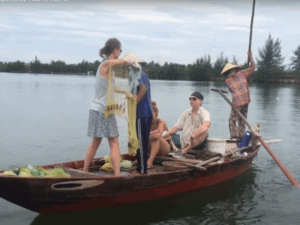
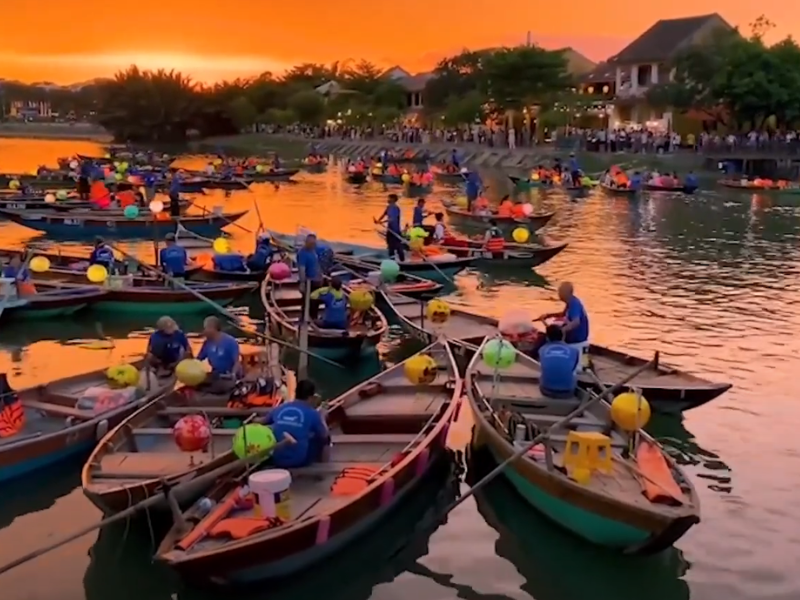
As night falls, the Thu Bon River becomes a floating galaxy of flickering candles. Visitors step aboard traditional wooden sampan boats or stand along the riverbank to release small, hand-folded paper lanterns onto the calm water. Making a wish as your lantern floats downstream is one of the most romantic and meaningful rituals in Hoi An.
3. Participating in Traditional Bài Chòi Folk Singing & Games
Along the riverbanks near the An Hoi Bridge, you will hear rhythmic bamboo clappers and melodic singing. Bài Chòi is a UNESCO-recognized intangible cultural heritage combining music, poetry, acting, and card games. Joining a game under the guidance of local experts offers an entertaining peek into authentic Central Vietnamese folklore.
4. Exploring the Glowing Night Markets & Star Lantern Displays
Cross the bridge to the An Hoi Night Market, where hundreds of artisan stalls showcase handmade silk lanterns, clay ocarinas (Tý Le), bamboo toys, and intricate star lanterns made from red cellophane and bamboo sticks (Đèn Ông Sao).
5. Tasting Authentic Vietnamese Mooncakes (Bánh Trung Thu)
No Mid-Autumn celebration is complete without savoring traditional mooncakes. These round pastries symbolize completeness, harmony, and family unity.
Bánh Nướng (Baked Mooncake): Golden-brown crust filled with mixed nuts, candied pork fat, lotus seeds, sesame, lime leaves, and salted egg yolk (Thập Cẩm).
Bánh Dẻo (Sticky Rice Mooncake): Soft, aromatic white glutinous rice crust infused with pomelo blossom water, filled with sweet mung bean or lotus seed paste.
6. Marveling at the Sacred Grand Altar Displays (Mâm Cỗ Trung Thu)
Traditional families and ancient assembly halls erect elaborate offering altars facing the full moon. These grand displays feature artfully carved pomelo fruits shaped like bunnies, stacks of mooncakes, autumn persimmons, finger citrons (Phật Thủ), and fragrant incense.
Recommended 3-Day Hoi An Mid-Autumn Cultural Itinerary
Designed by our travel specialists at Sao La Vietnam Tours, this tailor-made 3-day itinerary combines festive events with peaceful, unhurried cultural discovery.
[Da Nang Airport] ➔ [Ancient Town Heritage Walk] ➔ [Lantern Workshop]
➔ [Mid-Autumn Festival Night] ➔ [Eco-Village & River Cruise] ➔ [Departure]
Day 1: Welcome to Hoi An – Old Town Immersion & Festival Eve
Afternoon: Private pickup from Da Nang International Airport in an executive vehicle. Check into your boutique resort along the Thu Bon River or An Bang Beach (e.g., Anantara Hoi An Resort or La Siesta Hoi An Resort & Spa).
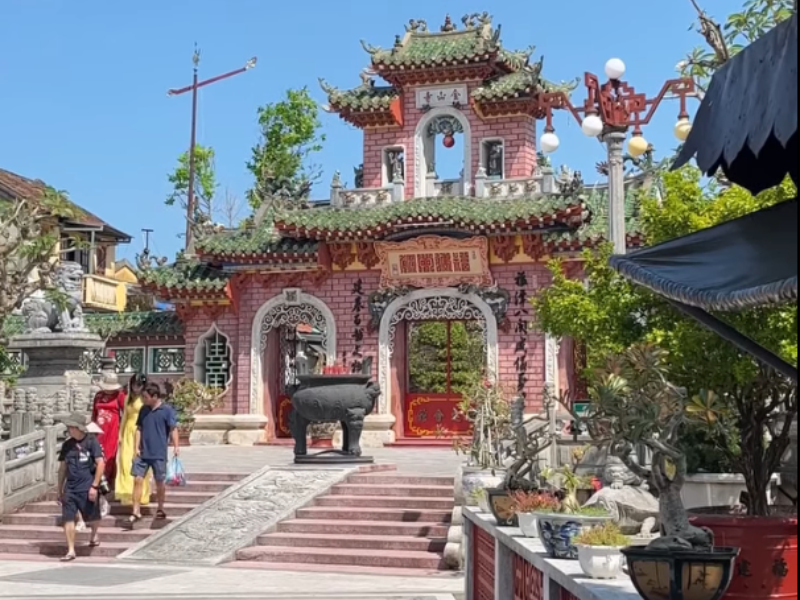
Late Afternoon: Enjoy a private walking tour of the historic quarter with your dedicated guide. Explore preserved merchant houses, the Japanese Covered Bridge, and Chinese Assembly Halls decorated with festive Mid-Autumn banners.
Evening: Dine on regional specialties such as Cao Lầu and White Rose Dumplings in an atmospheric garden courtyard. As twilight falls, stroll through streets glowing exclusively by traditional lantern light.
Day 2: Lantern Crafting & The Magic of Mid-Autumn Full Moon Night
Morning: Visit an artisan lantern workshop. Under the step-by-step guidance of a master craftsman, shape bamboo frames and stretch fine Vietnamese silk to create your own personalized Mid-Autumn lantern to take home.
Afternoon: Relax at your resort pool or take a private bicycle ride through organic herb gardens in Tra Que Vegetable Village.
Evening (Full Moon Climax): Board a private VIP wooden boat along the Thu Bon River. Sip chilled wine and sample artisanal mooncakes as you watch lion dance troupes process along the riverbanks. Release floating candle lanterns into the water and soak in the magical street performances.
Day 3: Countryside River Cruise & Cultural Farewell
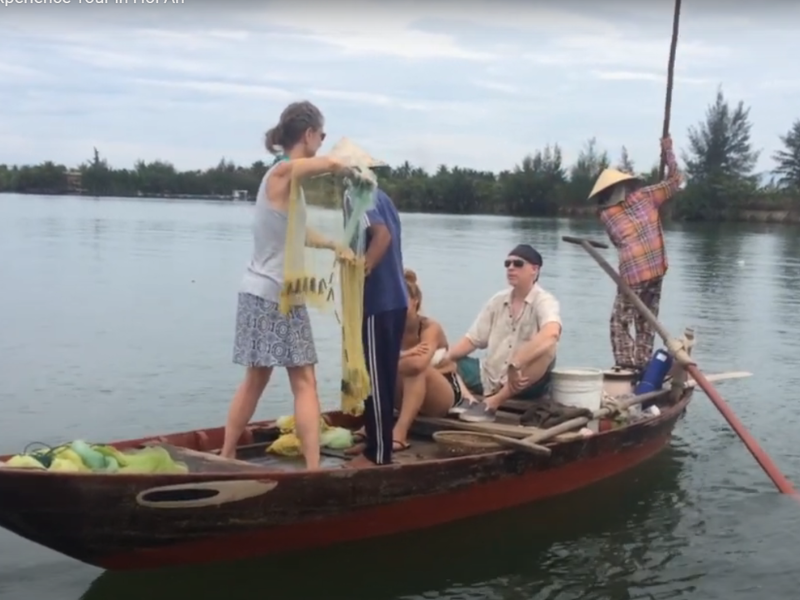
Morning: Take a serene morning wooden boat ride through the Cam Thanh Coconut Forest. Try your hand at paddling a traditional bamboo basket boat (Thúng Chài) through tranquil mangrove waterways.
Afternoon: Enjoy a farewell lunch featuring fresh seafood and central Vietnamese delicacies.
Late Afternoon: Private transfer back to Da Nang Airport for your onward journey, carrying your handmade lantern and unforgettable memories of Tết Trung Thu.
Where to Stay in Hoi An During the Festival
To make the most of your Mid-Autumn experience, choosing the right accommodation is essential:
| Resort / Hotel | Style & Atmosphere | Ideal For |
| Anantara Hoi An Resort | Colonial riverfront elegance, walking distance to Ancient Town. | Couples & Luxury Travelers seeking proximity to festivities. |
| Four Seasons Resort The Nam Hai | Ultra-luxury beachfront sanctuary located 15 minutes from town. | High-end travelers desiring private villas and serene relaxation. |
| La Siesta Hoi An Resort & Spa | Charming boutique resort surrounded by paddy fields and gardens. | Families & Culture Explorers wanting authentic hospitality. |
| Boutique Hoi An Resort | Peaceful beachside retreat along An Bang Coast. | Travelers who want to balance festival nights with beach days. |
Culinary Guide: Mid-Autumn Flavors & Hoi An Specialties
While visiting Hoi An during the Mid-Autumn season, indulge your palate with both seasonal festive delicacies and world-famous local dishes:
Seasonal Mid-Autumn Treats:
Artisanal Mooncakes: Pair rich baked mooncakes with warm pots of jasmine or lotus-infused green tea to balance the sweet and savory flavors.
Autumn Fruits: Enjoy fresh pomelos, sweet persimmons, and green rice flakes (Cốm) served on traditional moonlit altars.
Famous Hoi An Local Dishes:
Cao Lầu: Firm chewy noodles served with braised pork slices, crisp rice crackers, fresh mountain herbs, and a spoonful of savory broth.
Mì Quảng: Turmeric-infused rice noodles served with pork, shrimp, quail eggs, crushed peanuts, and toasted rice paper.
Com Ga Hoi An (Hoi An Chicken Rice): Tender shredded free-range chicken served over fragrant rice cooked in chicken broth and turmeric, garnished with spicy onions and Vietnamese coriander.
Essential Photography & Visitor Tips
To ensure a seamless and respectful festive experience, consider these practical tips from our local team:
Photography Advice:
Capture the Ambient Light: Avoid using heavy flash inside the Ancient Town at night. Use a lens with a wide aperture (e.g., f/1.4 or f/1.8) and higher ISO settings to capture the warm, natural glow of silk lanterns and candle boats.
Lion Dance Action: Set your camera to shutter priority mode (1/250s or faster) to freeze the fast-paced jumps and drum movements of lion dance performers.
Navigating the Crowds:
Book Early: Mid-Autumn is one of the most popular cultural events in Vietnam. Hotel rooms, private cars, and guides sell out months in advance.
Mindful Crowds: The street bridge connecting Hoi An to An Hoi Night Market gets very crowded between 07:30 PM and 09:00 PM. Schedule private boat trips or early riverfront dinners to enjoy the scenery comfortably.
Respect Local Altars: Families set up sacred offering tables outside their shops and homes. Enjoy viewing them, but avoid touching altars or blocking family prayers.
Frequently Asked Questions (FAQ)
1. Is the Mid-Autumn Festival in Hoi An suitable for families with children?
Absolulely! The Mid-Autumn Festival is fundamentally a celebration of childhood in Vietnam. Kids will love watching lion dances, carrying glowing star lanterns, learning to craft lanterns, and riding bamboo basket boats.
2. What is the difference between the monthly Hoi An Lantern Festival and the Mid-Autumn Festival?
While Hoi An celebrates a monthly Full Moon Lantern Festival every lunar month, the Mid-Autumn Festival (8th lunar month) is far grander. It features nationwide holiday traditions, extensive street parades, elaborate lion dance competitions, mooncakes, and family altar displays that happen only once a year.
3. How do I travel to Hoi An from Hanoi or Ho Chi Minh City?
Fly into Da Nang International Airport (DAD) via a short 1.2-hour domestic flight. From Da Nang, Hoi An is just a comfortable 45-minute private drive in an executive vehicle arranged by Sao La Vietnam Tours.
Experience the Magic of Tết Trung Thu with Sao La Vietnam Tours
Witnessing the Vietnam Mid-Autumn festival in Hoi An is a sensory and emotional journey into the heart of Vietnamese culture.
At Sao La Vietnam Tours, we specialize in designing flexible, tailor-made, and slow-paced private journeys that allow you to explore Vietnam at your own rhythm without feeling rushed. Let our local travel experts craft your personal Mid-Autumn story today.