
Planning a trip to Vietnam or preparing for an extended stay as an expat? Vietnam is widely recognized as one of the safest, most welcoming travel destinations in Southeast Asia. Violent crime against tourists is extremely rare, and the vast majority of locals are genuinely warm, helpful, and honest.
However, like many popular travel hubs around the globe, Vietnam has its share of subtle traps, dishonest pricing schemes, and tourist-targeted scams. From rigged taxi meters and fake ticket counters to digital payment traps and motorbike rental tricks, falling victim to a scam can ruin an otherwise incredible journey.
Knowing how to avoid scams in Vietnam isn’t about traveling with paranoia—it’s about equipping yourself with local knowledge, recognizing warning signs early, and responding calmly. This comprehensive guide covers every major scam category, exact red flags to look for, and actionable safety protocols so you can travel Vietnam with total confidence.
1. The Reality of Tourist Safety in Vietnam
Before diving into specific scams, it is essential to keep things in proper perspective: Vietnam is fundamentally a safe country.
Violent Crime vs. Opportunistic Scams
Unlike destinations where muggings, armed robbery, or violent assaults pose genuine risks, safety concerns in Vietnam are almost entirely opportunistic and financial:
Opportunistic theft: Phone snatching by drive-by motorbikes in dense urban areas.
Financial overcharging: Paying triple the local rate for fruit, coconut water, or street souvenirs.
Deceptive practices: Unregulated tours, rigged meters, or altered menu pricing.
Violent Crime Risk in Vietnam ───► Extremely Low
Opportunistic Theft Risk ───────► Moderate (Urban Hubs)
Financial Overcharging Risk ────► High (Tourist Zones)
Understanding this distinction allows you to relax regarding physical safety while remaining sharp regarding money transactions and street interactions.
2. Transportation & Taxi Scams (And How to Defeat Them)
Transportation is often a traveler’s first point of friction upon landing at major gateways like Noi Bai International Airport (Hanoi) or Tan Son Nhat International Airport (Ho Chi Minh City).
Scam #1: The Fake Airport Taxi & Unofficial Drivers
The Setup: As you step out of the arrival terminal, individuals wearing lanyard badges or official-looking uniforms approach you asking, “Taxi? Where are you going?” They may guide you to a private car parked outside the official taxi lane, claiming their meter is broken or demanding exorbitant flat fees (e.g., $50–$100 USD for a ride worth $12 USD).
The Red Flag: Drivers approaching you inside or directly outside the terminal doors instead of waiting at licensed taxi queues.
How to Avoid It:
Ignore unsolicited offers inside the airport terminal.
Use reliable ride-hailing apps like Grab or Xanh SM (Vietnam’s primary electric vehicle ride-hailing service).
If taking a street taxi, queue strictly at designated ranks for trusted companies: Mai Linh (Green cars) or Vinasun (White cars with red/green trim).
Scam #2: Rigged Meters & “Fast-Running” Taxis
The Setup: Unlicensed street taxis often mimic the color schemes and logos of reputable brands (e.g., naming their car “VinaSu” or “Mai Lin”). Once inside, the meter runs 3 to 5 times faster than standard rates, or jumps by massive increments every few hundred meters.
The Red Flag: The driver covers the meter display, refuses to turn it on, or the meter digits flash unnaturally fast.
How to Avoid It:
Always verify the full company name and phone number on the vehicle door before entering.
Ensure the meter is reset to the standard starting fare (usually 12,000–15,000 VND) when the vehicle starts moving.
Keep Google Maps open on your phone to verify that the driver is following a logical route rather than taking unnecessary detours.
Scam #3: The “Hotel is Closed” or “Wrong Address” Trick
The Setup: During the drive, the driver informs you that the hotel or hostel you booked has closed permanently, burned down, or is under government quarantine. They then offer to take you to “their friend’s hotel,” which happens to be overpriced and pays the driver a heavy commission.
How to Avoid It:
Never accept hotel recommendations from taxi drivers mid-ride.
Call your hotel directly using a local SIM card or roaming data to verify they are open.
Firmly insist: “Take me to the address on my phone map first.”

3. Street Vendor & Market Scams
Vietnam’s street culture is vibrant and sensory, but tourist hotspots like Hanoi’s Old Quarter, Hoi An Ancient Town, and Ho Chi Minh City’s Ben Thanh Market feature specific vendor traps.
+------------------------------------+---------------------------------------+----------------------------------------+
| Scam Type                          | Primary Location                      | Prevention Strategy                    |
+------------------------------------+---------------------------------------+----------------------------------------+
| The Photo-Op Trap                  | Hanoi Old Quarter / Lake Area         | Decline fruit baskets politely upfront |
| Shoe Repair Force-Fit              | Ho Chi Minh City Walking Streets      | Wear closed shoes or walk away fast   |
| Unlabeled Menu Overcharging        | Seafood Stalls / Tourist Markets      | Always insist on written price lists   |
| Coconut Seller Weight Exchange     | Major Tourist Monuments               | Agree on total price BEFORE cut/open   |
+------------------------------------+---------------------------------------+----------------------------------------+
Scam #4: The “Friendly Photo-Op” Fruit Basket
The Setup: A vendor carrying traditional bamboo shoulder poles (gánh hàng rong) with fresh fruit or coconuts approaches you with a warm smile. They place the heavy bamboo pole on your shoulder, hand you a conical hat (nón lá), and encourage you or your travel partner to take a photo.
The Trap: Once the photo is taken, the vendor immediately slices open two coconuts or hands you a small bag of fruit and aggressively demands 200,000–500,000 VND ($8–$20 USD) for items worth 30,000 VND.
How to Avoid It: If you do not intend to buy fruit, politely shake your head, say “Không, cảm ơn” (No, thank you), and step back. Never let a vendor place items on your body or in your hands before establishing a clear agreement.
Scam #5: The Unsolicited Shoe Repair / Cleaning Trap
The Setup: While sitting at an outdoor sidewalk cafe or walking down the street, a mobile cobbler kneels down, squirts glue onto your footwear, or forcefully pulls a sandal off your foot, claiming it is broken and needs immediate repair.
The Trap: After spending two minutes applying cheap glue or replacing a lace, they demand 300,000–800,000 VND for “restoration work.”
How to Avoid It: Pull your feet back immediately, firmly say “No!”, and walk away. If they aggressively follow you, step inside a hotel lobby, formal restaurant, or convenience store (like Circle K or WinMart).
Scam #6: The Market “No-Price” Menu Trap
The Setup: Dining at informal street markets without clear price tags. You order a plate of seafood or hotpot assuming standard street prices. Upon finishing, you receive a handwritten bill charging 5 to 10 times the market value.
How to Avoid It: Never order food or drinks without seeing a printed menu with listed prices. If prices are omitted, ask “Bao nhiêu tiền?” (How much is this?) and have the vendor write the exact figure on paper or show it on a calculator before cooking.
4. Tour, Ticket, and Booking Scams
Booking excursions—whether cruise trips through Ha Long Bay, trekking in Sapa, or bus rides between cities—requires caution regarding booking channels.
Scam #7: The Fake Travel Agency & Cloning Scam
The Setup: Highly respected tour operators (such as The Sinh Tourist) have suffered from brand cloning. Fraudulent operators set up physical storefronts with identical names, logos, and signs right next door or on the same street as legitimate agencies.
The Risk: You pay for a premium luxury bus or boat trip, only to end up on a cramped, unsafe, low-quality vehicle operated by an unauthorized third party.
How to Avoid It:
Double-check physical addresses on official company websites down to the specific building number.
Book tours through verified online platforms (e.g., Klook, GetYourGuide, official hotel concierges) or directly via official company portals.
Scam #8: The Ha Long Bay “Luxury Cruise” Switch
The Setup: Street booking booths offer “5-star luxury overnight cruises” at heavily discounted rates (e.g., $50 USD per person). The brochure displays photos of modern yachts with private balconies.
The Reality: Upon arrival at the port, you are boarded onto an aging, poorly maintained vessel with subpar safety equipment, cold food, and small cabins that look nothing like the brochure pictures.
How to Avoid It: If a luxury cruise price seems too good to be true, it almost certainly is. Authentic 5-star overnight Ha Long Bay cruises generally range between $150 and $350+ USD per person. Research operator reviews on independent platforms before transferring deposits.
5. Motorbike Rental & Traffic Traps
Riding a motorbike is one of the most thrilling ways to explore Vietnam’s stunning landscapes, such as the Ha Giang Loop or Hai Van Pass. However, rental agreements require diligent handling.
Motorbike Inspection Routine:
1. Walkaround HD Video Recording (Document every scratch)
2. Mechanical Brake Check & Tire Tread Depth
3. Mirror & Headlight Function Check
4. Verify Passport Storage Policy (Never surrender original passport if possible)
Scam #9: The Pre-Existing Damage Trap
The Setup: You rent a motorbike for a few days. Upon returning the vehicle, the rental shop owner inspects it closely, points out scratches, dented side panels, or worn brake pads, and accuses you of causing the damage. They demand hundreds of dollars for replacement parts.
How to Avoid It:
Record Video Evidence: Before driving away, record a high-definition video of the entire vehicle in front of the owner. Focus on scratches, tire conditions, mirrors, and undercarriage rust.
Choose Reputable Rental Shops: Rent from established operators with hundreds of positive Google/TripAdvisor reviews rather than informal street sign rentals.
Scam #10: Passport Retention & Stolen Bike Extortion
The Setup: Some shady rental outlets insist on holding your original physical passport as a deposit. Later, the bike magically “gets stolen” while parked outside your hotel (often using a spare key held by the shop). The shop then holds your passport hostage until you pay several thousand dollars for a replacement vehicle.
How to Avoid It:
Never leave your original passport with a motorbike rental shop. Offer a cash deposit (usually 1,500,000–3,000,000 VND) or a high-resolution color photocopy/scan of your passport along with your hotel booking confirmation instead.
Always park your motorbike in designated paid parking lots (Giữ xe) with attendant tickets, especially in urban areas and tourist attractions.
6. Currency, Exchange & Digital Payment Scams
Handling a foreign currency where $100 USD equals over 2,500,000 Vietnamese Dong can lead to calculation mistakes, which dishonest handlers might exploit.
Scam #11: The Banknote Confusion Switch (20,000 vs. 500,000 VND)
The Setup: Vietnamese banknotes are made of polymer plastic and share similar color tones across certain denominations:
20,000 VND and 500,000 VND both feature shades of blue/cyan.
10,000 VND and 200,000 VND both share brownish/yellowish tones.
The Trap: You hand over a 500,000 VND note to pay for a 30,000 VND item. The vendor quickly drops the note under the counter, pulls up a 20,000 VND note, and claims you paid with the smaller denomination, demanding more cash.
How to Avoid It:
State the note value out loud when handing it over: “Here is five hundred thousand.”
Take a second to look at the note clearly before placing it into the vendor’s hands.
Separate high-value notes (500k, 200k) from smaller notes (20k, 50k, 10k) in your wallet.
Scam #12: The Short-Change & Sleight-of-Hand Swap
The Setup: When handing back change from a large bill, the vendor folds money in half or stacks small notes underneath a top note, counting out loud quickly in Vietnamese. When you recount the money later, you find you are missing 100,000 or 200,000 VND.
How to Avoid It: Count your change completely at the counter before turning around or walking away from the cashier.
7. Nightlife, Bars, and Social Traps
Vietnam’s nightlife in destinations like Ho Chi Minh City (Bui Vien Street), Hanoi (Ta Hien Beer Street), and Da Nang is energetic, but specific venue traps exist.
Scam #13: The Bui Vien / Ta Hien “Tinder & Match App” Bar Trap
The Setup: A traveler matches with an attractive local profile on dating apps like Tinder, Bumble, or Badoo. The match insists on meeting at a specific hidden bar or lounge away from main streets.
The Trap: Once inside, the host orders expensive shisha, champagne, or high-end fruit platters without showing a menu. After 30 minutes, the match excuses themselves to use the restroom and slips out the back exit. Security guards then present a bill for $500–$2,000 USD and block the exits until payment is settled.
How to Avoid It:
Always choose the meeting location yourself for first-time dates—preferably a well-lit, public coffee shop or highly reviewed cocktail lounge.
If your date insists on going to a specific, unfamiliar venue, politely decline.
Scam #14: Nitrous Oxide (Happy Balloons) & Overpricing
The Setup: In nightlife districts, venues openly sell “Happy Balloons” (nitrous oxide). Aside from health and legal risks, bars frequently overcharge foreign guests by adding extra balloons or drink charges to bills, calculating that intoxicated customers will pay without checking itemized receipts.
How to Avoid It: Keep track of drink orders on your phone note app, request pay-as-you-go service for each round, and inspect receipts thoroughly before handing over cash or credit cards.
8. Essential Safety Apps & Digital Tools for Vietnam
Leveraging modern technology is the single most effective way to eliminate over 80% of common travel scams in Vietnam. Ensure your smartphone is equipped with these essential apps:
+------------------+----------------------------------+-----------------------------------------------+
| App Name         | Primary Utility                  | Scam Prevention Value                         |
+------------------+----------------------------------+-----------------------------------------------+
| Grab             | Ride-hailing & Food Delivery     | Fixed pricing; prevents taxi meter fraud      |
| Xanh SM          | Electric Taxi & Bike Rides       | Transparent fares; professional drivers       |
| Google Maps      | Navigation & Offline Maps        | Route verification; prevents driver detours   |
| Google Translate | Real-time Camera Translation     | Read unpriced menus; clarify communications   |
| Currency Converter| Real-time Exchange Rates        | Prevents bill confusion & poor exchange rates |
+------------------+----------------------------------+-----------------------------------------------+
Digital Payment Safety Tip:
When paying via credit card at hotels or upscale venues, always choose to pay in local currency (VND) rather than your home currency if prompted on the card machine. Choosing your home currency triggers Dynamic Currency Conversion (DCC), which adds hidden foreign exchange markup fees of 4% to 7%.
9. How to Respond Gracefully If You Encounter a Scam
If you realize you are in the middle of an attempted scam, handling the situation calmly is vital to resolving it safely:
Remain Calm and Composed: Avoid shouting, swearing, or escalating physical tension. Raising your voice causes individuals to “lose face,” which can lead to defensive reactions.
Firmly State Facts: Clearly state what was originally agreed upon: “We agreed on 50,000 VND before starting.”
Use Official Intervention Threats: Mentioning tourist police or emergency support often resolves minor street disputes quickly.
Know When to Cut Small Losses: If the dispute is over a trivial amount (e.g., $1 or $2 USD for overpriced fruit), hand over the small difference, learn the lesson, and move on. Your safety and peace of mind are worth far more than a minor monetary argument.
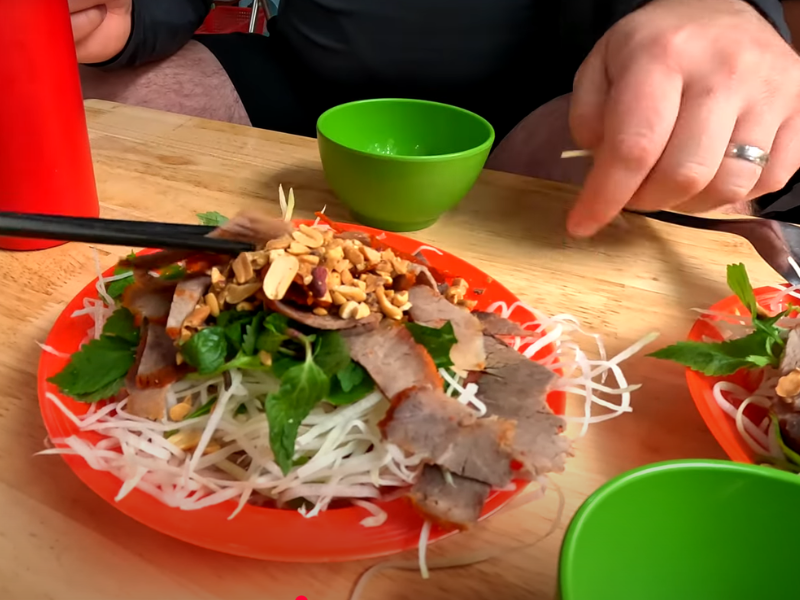
Taste iconic dishes, visit bustling markets, and discover hidden culinary gems from north to south.
10. Frequently Asked Questions (FAQ)
Q1: Is Vietnam safe for solo female travelers?
Yes, Vietnam is considered one of the safest countries in Asia for solo female travelers. Violent crime is extremely low. Standard precautions apply: avoid walking alone down dark, unlit alleys late at night, keep your personal belongings secure against drive-by snatching, and use ride-hailing apps like Grab rather than unmetered street taxis.
Q2: What are the emergency phone numbers in Vietnam?
Save these key emergency numbers on your phone before traveling:
113: Police (Công an)
115: Ambulance / Medical Emergency (Cấp cứu)
114: Fire Department (Cứu hỏa)
Tourist Support Hotlines: Major cities like Hanoi (+84 24 3926 1515) and Ho Chi Minh City (+84 28 3925 7777) operate dedicated tourist support hotlines with English-speaking staff.
Q3: Is bag and phone snatching common in Vietnam?
Drive-by phone and bag snatching occurs primarily in high-density urban areas like Ho Chi Minh City (District 1) and parts of Hanoi. Perpetrators on motorbikes mount sidewalks or swipe items while driving past tourists standing near road curbs.
Prevention: Never hold your phone loosely near road edges. Stand inside store entrances or step away from traffic lanes when checking maps or taking photos. Wear cross-body bags pulled securely across your chest.
Q4: Are tap water and ice safe to consume in Vietnam?
Tap Water: Do not drink tap water directly in Vietnam. Use boiled water, purified bottled water, or refillable filtered water stations.
Ice (Đá): Factory-manufactured cylindrical ice with holes in the middle served at cafes and restaurants is made from purified water and is safe to consume. Avoid crushed block ice served at informal rural stalls.
Q5: How can I avoid SIM card scams at the airport?
When purchasing a SIM card at arrival terminals:
Buy strictly from official telecom booths (Viettel, Vinaphone, or MobiFone).
Ensure the agent registers the SIM card using your physical passport.
Check your data balance immediately by dialing the network checking code (e.g., dial
*101#or check via the official telecom app) to verify that your data package is fully active before walking away.
Summary Checklist: Your Vietnam Anti-Scam Rulebook
Transport: Use Grab or Xanh SM apps; stick to Mai Linh or Vinasun for street taxis.
Street Vendors: Agree on total prices before accepting fruit, photo opportunities, or shoe services.
Dining: Only order from menus with printed, explicit pricing.
Currency: Check your banknotes carefully—don’t confuse 20k with 500k notes.
Rentals: Record video walkarounds of motorbikes and never hand over your original passport as collateral.
Mindset: Stay observant, keep tech tools handy, and enjoy Vietnam’s world-class culture and hospitality with peace of mind!
Conclusion: Travel Smart and Embrace Vietnam with Confidence
Navigating travel scams isn’t about letting fear dictate your itinerary—it’s about adopting smart, everyday habits that safeguard your wallet and your peace of mind. Vietnam remains one of the safest, most rewarding, and culturally rich travel destinations in the world. The overwhelming majority of people you meet—from street vendors and Grab drivers to hotel staff—are extraordinarily warm, generous, and honest.
By using reliable ride-hailing apps, confirming prices upfront, double-checking your polymer banknotes, and keeping a cool head, you effectively neutralize almost every common tourist trap before it even starts. Equip yourself with these simple safety rules, stay mindful of your surroundings, and get ready to experience the incredible food, breathtaking landscapes, and unforgettable hospitality that Vietnam has to offer.