The Intersection of Incense and Iron
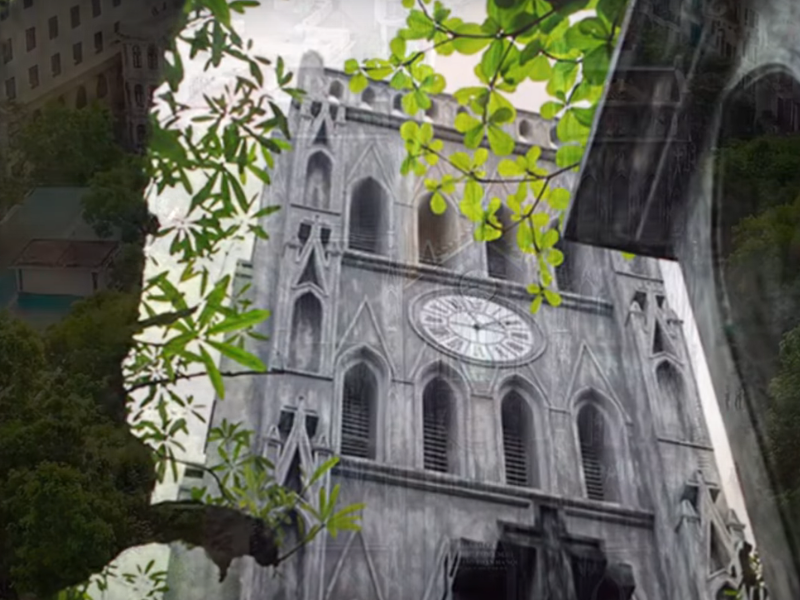
It is 6:00 AM on a misty April morning in Hanoi, 2026. As the first rays of sun pierce through the humidity, the rhythmic tolling of bronze bells vibrates through the narrow, incense-scented alleys of the Old Quarter. For the uninitiated traveler, the sight is startling: standing at the terminus of Nha Tho Street, framed by low-rise yellow merchant houses and tangled power lines, is a towering grey monolith that feels more like a fragment of medieval Europe than Southeast Asia.
This is St. Joseph’s Cathedral (Nhà Thờ Lớn Hà Nội). But to see it simply as a colonial relic is to miss the point entirely. In 2026, the Cathedral is a living organism—a “Gothic Soul” that has been breathed into the lungs of an ancient city. It is a place where the scent of French wax candles mingles with the street-side aroma of Phở and strong Vietnamese coffee. At Sao La Tours, we view the Cathedral not just as a stop on a map, but as a primary portal into the complex, layered identity of Hanoi. This first chapter peels back the stone skin of this landmark to reveal the historical drama and cultural synthesis that define its legacy.
The Ground Beneath the Stone: A Layered History
To understand St. Joseph’s, one must understand what lies beneath its foundations. History in Hanoi is never a single line; it is a stack of narratives.
The Bao Thien Legacy: Long before the first limestone block was laid in 1884, this site was the location of the Bao Thien Pagoda, built during the Ly Dynasty (11th century). It was once one of the “Four Great Treasures of Annam.”
The Transition: The construction of the Cathedral by the French colonial administration was a deliberate act of architectural and spiritual substitution. However, as the decades passed, the “substitution” became an “integration.”
2026 Perspective: Today, the site is respected by Hanoians not as a symbol of loss, but as a symbol of Resilience. The Cathedral has survived the air raids of the 20th century and the rapid modernization of the 21st, standing as a testament to Hanoi’s ability to absorb and redefine foreign influences.
The Architecture of Transcendence: Gothic Revival in the Tropics
Commissioned by Bishop Paul-François Puginier and inaugurated on Christmas Eve, 1886, the Cathedral was a bold attempt to replicate the grandeur of Notre-Dame de Paris in the humid heart of the Red River Delta.
The Gothic DNA
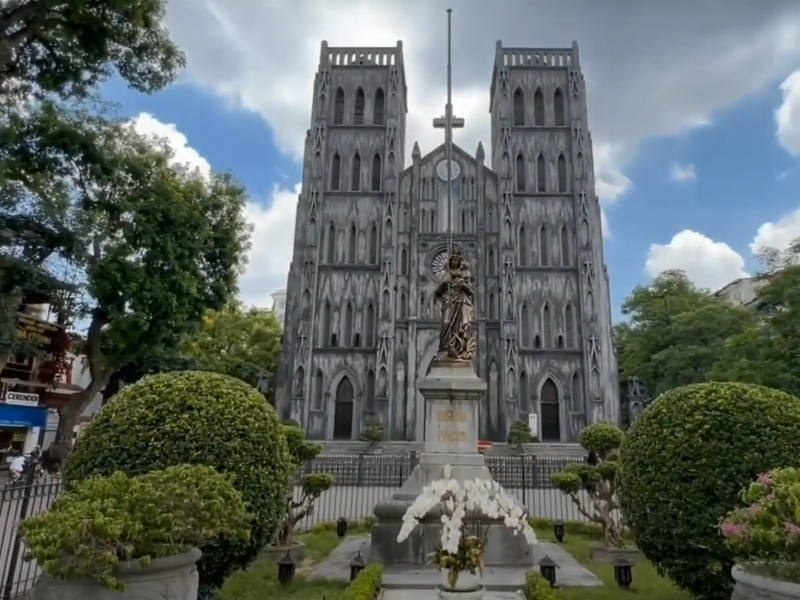
The Twin Spires: Reaching 31 meters into the sky, the twin bell towers utilize the classic pointed arch—a hallmark of Gothic architecture designed to draw the eye (and the soul) upward.
The Facade: Built with stone slabs and brick, the exterior originally had a stark, weathered grey appearance. By 2026, following the major restoration completed in recent years, the facade has been stabilized to preserve its “venerable” aesthetic while ensuring the structural integrity of the limestone carvings.
The Rose Window: The central stained-glass rose window acts as a kaleidoscope, filtering the intense Vietnamese sun into soft, ethereal hues that illuminate the nave, creating an atmosphere of “Lux Nova” (New Light) that was revolutionary for the city in the late 19th century.
Inside the Nave: A Symphony of Art and Faith
Stepping through the heavy timber doors of the Cathedral is an exercise in sensory recalibration. The roar of the city’s motorbikes vanishes, replaced by a profound, cool silence.
The Ribbed Vaults: The interior ceiling features the classic rib-vault system, which allowed for thinner walls and larger windows, creating a sense of weightlessness that contrasts with the heavy, humid air outside.
Vietnamese Craftsmanship: While the design is European, the hands that built it were local. Look closely at the altar and the gilded wood carvings; you will see the influence of traditional Vietnamese woodworking techniques, where red and gold lacquer—typically found in Buddhist pagodas—finds a new home in a Catholic sanctuary.
The Stained Glass: Imported from France, these windows tell the stories of the saints, but in the context of 2026, they serve as a historical record of the artistic exchange between East and West.
Comparison: St. Joseph’s vs. The Traditional Pagoda
| Feature | St. Joseph’s Cathedral | Hanoi Old Quarter Pagoda |
| Orientation | Vertical (Spires pointing to Heaven) | Horizontal (Courtyards reflecting Earth) |
| Primary Material | Limestone & Brick | Timber & Tile |
| Light Source | Stained Glass (Atmospheric) | Open Courtyards (Natural) |
| Acoustics | Reverberant (Organ & Choirs) | Muffled (Incense & Chants) |
| 2026 Status | Restored Gothic Monument | Preserved Ancient Sanctuary |
The “Invisible” Narrative: Cultural Synthesis
At Sao La Tours, we often discuss the “Indochina Style”—the unique aesthetic born from the French stay in Vietnam. St. Joseph’s is perhaps the most grand-scale example of this.
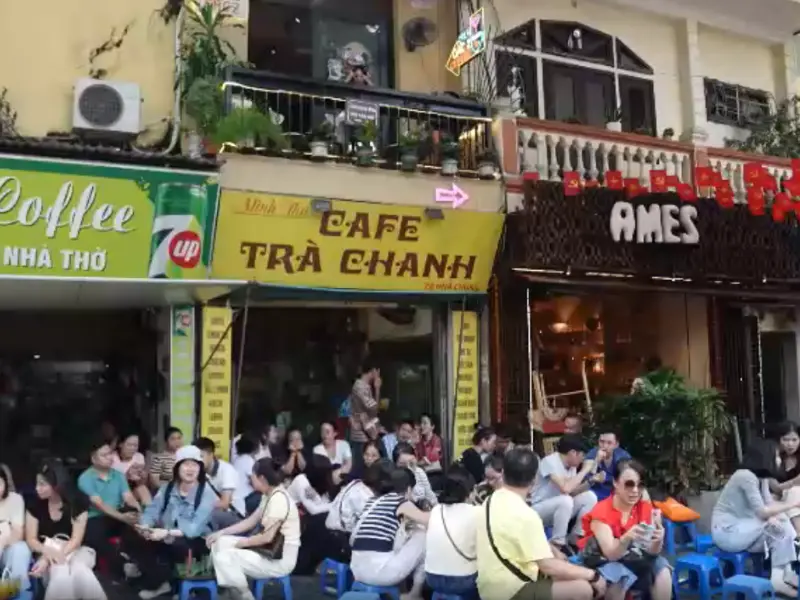
By April 2026, the Cathedral has become a “Cultural Crossroads.” It is common to see local elders practicing Tai Chi in the square at dawn, followed by Catholic worshippers attending Mass, and later, young Hanoians gathering for “Lemon Tea” (Trà Chanh) on the church steps. This social fluidness is what makes the Cathedral a true part of the city’s DNA. It is no longer a French church; it is a Hanoian Landmark.
The Great Restoration: Preserving the 19th Century with 2026 Tech
By the early 2020s, St. Joseph’s Cathedral had reached a critical point. A century of tropical humidity, urban pollution, and the relentless vibration of Hanoi’s traffic had begun to compromise the exterior limestone and the delicate timber structural elements of the twin towers.
The “Patina” Debate
The major restoration, completed leading into 2026, was a masterclass in architectural ethics.
The Challenge: How do you clean a monument without making it look “new” and stripping away its soul?
The Solution: Conservationists utilized Low-Pressure Laser Ablation to remove layers of black fungi and carbon crust without damaging the original 1886 stone. This technology allowed the Cathedral to emerge with its “venerable” grey aesthetic intact—often referred to as a “controlled patina.”
Structural Reinforcement: While the exterior was being cleaned, the interior was being reinforced with carbon-fiber supports hidden within the vaulted ceilings, ensuring that the heavy bronze bells can continue to toll for another century without risking the integrity of the masonry.
Architectural Alchemy: Light, Shadow, and Limestone
To the casual observer, the Cathedral is a grey building. To the architect or the photographer, it is a canvas of shifting textures. In April 2026, the interplay between the tropical sun and the Gothic geometry creates a phenomenon we call “Architectural Alchemy.”
The Exterior Play
The Morning Hue: Between 7:00 AM and 9:00 AM, the sun hits the eastern facade directly. The weathered limestone absorbs the light, turning from a cold charcoal to a warm, sandy grey. This is the optimal time for high-resolution photography.
The Shadow Cascades: The deep recesses of the Gothic arches and the intricate carvings of the saints create dramatic shadows. This high-contrast environment is a hallmark of the Gothic style, designed to create a sense of mystery and depth.
The Interior Radiance
Inside, the experience is dictated by the Stained Glass windows.
The Color Palette: The windows utilize deep cobalts, vibrant rubies, and forest greens. In the midday sun, these colors are projected onto the stone floor of the nave, moving slowly like a liquid kaleidoscope.
The 2026 Lighting System: As part of the restoration, a Smart LED System was installed. These lights are programmed to mimic the natural progression of daylight, subtly shifting in color temperature to enhance the spiritual atmosphere during evening masses and organ recitals.
The Sound of Hanoi: Acoustics and the Organ
The Cathedral is not just a visual experience; it is a sonic one. In 2026, it has become a premier venue for sacred and classical music in the capital.
The Pipe Organ: Following the restoration, the Cathedral’s pipe organ was meticulously tuned. The vaulted ceilings create a reverberation time of approximately 2.5 seconds, which is ideal for the deep, resonant notes of Bach or traditional French hymns.
Mass as Performance: Even for non-religious visitors, attending a Sunday Mass (often held in multiple languages) is an immersive experience. The combination of the choir’s voices rising into the 31-meter vaults and the heavy, humid air creates a physical sensation of sound that no modern concert hall can replicate.
The 2026 Photographer’s Toolkit: Capturing the Soul
For our Sao La Tours guests, capturing the Cathedral requires a strategic approach. In 2026, the square is more vibrant than ever, and timing is everything.
The “Blue Hour” Strategy: Just after sunset, the sky turns a deep indigo. This is when the Cathedral’s new external warm-wash lighting activates. The contrast between the cool sky and the glowing stone provides the most iconic “postcard” shot of Hanoi.
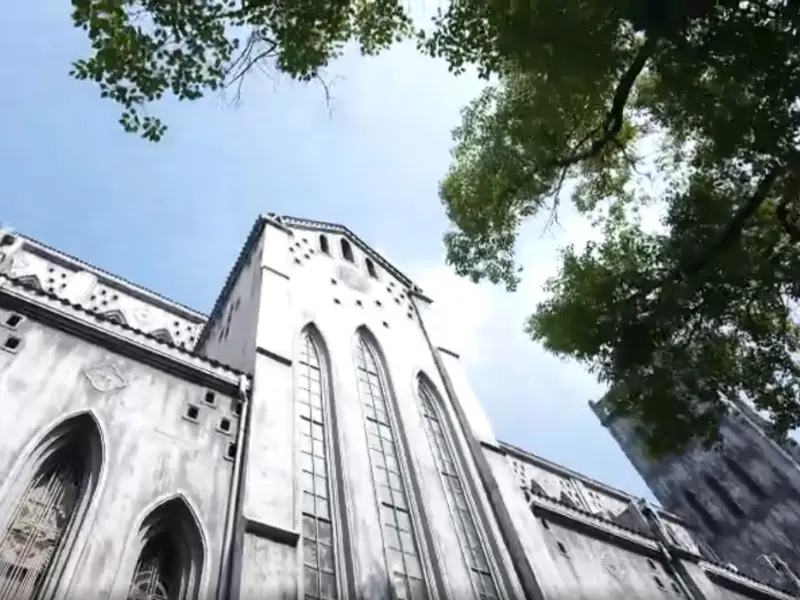
Lenses and Perspectives: We recommend a wide-angle lens (16-35mm) to capture the full height of the twin towers from the base, and a prime lens (50mm or 85mm) for the intricate limestone gargoyles and saints that adorn the facade.
Drone Regulations: As of April 2026, drone flight over the Old Quarter is strictly regulated. We provide our guests with pre-authorized permits and professional pilots for those seeking the ultimate “top-down” perspective of the spires against the Hoan Kiem backdrop.
Comparison: The 1886 Original vs. The 2026 Restored Version
| Feature | 1886 Original | 2026 Restored |
| Facade Appearance | Fresh Limestone (Light Grey) | “Controlled Patina” (Deep Grey) |
| Structural Integrity | Traditional Masonry | Laser-Stabilized & Carbon-Reinforced |
| Lighting | Candles & Natural Light | Smart-LED Integrated System |
| Accessibility | Restricted Entry | Open Heritage Site & Smart-Guided |
| Sound System | Natural Acoustics | Acoustic-Balanced Digital Overlay |
Preliminary Insights: The Cathedral as an Urban Anchor
We have explored the technical “Alchemies” that keep the Cathedral standing. We have seen how laser technology and smart lighting have modernized a 140-year-old structure without compromising its Gothic soul.
However, the Cathedral does not exist in a vacuum. It is the “Anchor” of a lifestyle. Outside its doors, the streets of the Old Quarter pulse with a different kind of energy—one of caffeine, commerce, and community. To truly understand St. Joseph’s, one must step out of the silence of the nave and into the vibrant “Church-Side” culture that defines modern Hanoi.
The Cathedral Lifestyle: Hanoi’s Living Room
In April 2026, the area surrounding St. Joseph’s Cathedral has solidified its reputation as the “Living Room of Hanoi.” It is a place where the city’s social strata blend seamlessly. Here, the “Gothic Pulse” is felt not in the stone, but in the lifestyle of the people who gather in its shadow.
The “Trà Chanh” Ritual
The most authentic expression of this lifestyle is found on the very steps and sidewalks surrounding the square.
The Ritual: Trà Chanh Nhà Thờ (Cathedral Lemon Tea) is more than a drink; it is a social institution. In 2026, this tradition has evolved. While the plastic stools remain—a nod to Hanoi’s egalitarian street culture—the quality of the ingredients has shifted toward organic, locally sourced tea leaves and honey.
The Atmosphere: It is here that the professional traveler can best observe the “Hanoi Paradox”: Gen Z creators filming content against the grey spires, elderly parishioners whispering in rapid-fire Vietnamese, and international expats negotiating deals over sunflower seeds.
Boutiques and Brews: The 2026 Precinct Guide
The streets radiating from the Cathedral—Nha Tho, Ly Quoc Su, and Nha Chung—have become the city’s premier destination for “Artisanal Luxury.”
The Specialty Coffee Revolution
Hanoi’s coffee scene in 2026 has moved far beyond the traditional condensed milk brew.
The “Balcony” Perspective: For the best view of the Cathedral’s restoration details, we recommend the upper-tier balconies of the specialty shops on the north side of the square. These venues now offer “Cathedral-Blend” roasts, specifically aged to reflect the smoky, historic character of the Old Quarter.
Modern Classics: While local chains like Highlands provide a reliable baseline, the true connoisseur should seek out the hidden “Hole-in-the-Wall” ateliers that offer Nitro-Cold Brews infused with local spices like cinnamon and star anise.
Artisanal Commerce
The Nha Tho precinct is home to some of Vietnam’s most sophisticated exports.
Silk and Sustainable Fashion: Look for boutiques that specialize in “Ethical Silk”—utilizing natural dyes and traditional weaving from the Van Phuc village but tailored for a global, modern silhouette.
Art Galleries: The area remains a stronghold for contemporary Vietnamese art. In 2026, several galleries around the Cathedral have integrated NFC-tagging, allowing you to scan a painting and view a digital documentary about the artist’s process on your device instantly.
The 2026 Success Toolkit: Navigating the Heart of Hanoi
To ensure your visit is efficient, respectful, and culturally deep, we provide the following Executive Framework:
Timing the Immersion
The “Golden Window”: Arrive at 6:30 AM. You will witness the early morning Mass-goers leaving the church as the flower vendors arrive on their bicycles. The light is soft, the air is (relatively) cool, and the square is at its most soulful.
The “Recital Window”: Check the digital board at the southern gate for the 2026 Organ Recital Schedule. These 30-minute performances usually take place on Saturday evenings and offer the best way to experience the 2.5-second reverberation we analyzed in Part 2.
Protocol and Etiquette
Dress Code: Despite its popularity as a photo spot, St. Joseph’s remains an active place of worship. In 2026, security is more strictly enforced during service times. Ensure shoulders and knees are covered to enter the nave.
Photography: Tripods are generally discouraged in the square during peak hours to maintain pedestrian flow. We recommend high-speed prime lenses for handheld low-light shots during the “Blue Hour.”
Digital Navigation
The “Sao La” AR Map: Use our 2026 Augmented Reality overlay when standing in the center of the square. It will visually “reconstruct” the old Bao Thien Pagoda on your screen, allowing you to see the two layers of history simultaneously.
2026 Cathedral FAQ: Expert Insights
Q1: Is it possible to climb the twin bell towers?
A: Access to the spires remains restricted to authorized maintenance and clergy to protect the structural reinforcements. However, special “Heritage Tours” are occasionally organized during the Hanoi Autumn Festival; contact our concierge for seasonal availability.
Q2: When is the best time for “Zero-Crowd” photography?
A: Tuesday and Wednesday mornings before 7:30 AM. Avoid Sundays unless you specifically want to capture the vibrancy of the community during the major Masses.
Q3: How has the 2026 restoration changed the acoustics?
A: The installation of discrete, high-fidelity acoustic panels in the upper vaults has actually improved clarity, reducing the “muddiness” of the echo while maintaining the majestic Gothic resonance.
Comparison: The Cathedral Experience Matrix
| Activity | Best Time | Expected Vibe | Sao La Recommendation |
| Spiritual Sojourn | 06:00 – 08:00 | Meditative / Local | Attend the early morning Mass |
| Aesthetic Capture | 17:30 – 18:30 | Dramatic / Mystical | Focus on the “Blue Hour” lights |
| Social Immersion | 19:30 – 21:00 | Vibrant / High-Energy | Trà Chanh & People Watching |
| Boutique Luxury | 10:00 – 15:00 | Sophisticated / Quiet | Explore the silk shops on Nha Tho |
Conclusion: The Pulse of the Capital
St. Joseph’s Cathedral in April 2026 is far more than an architectural landmark; it is the heartbeat of Hanoi’s Old Quarter. We have moved from the Silent Sentinel of the historical foundations (Part 1), through the Architectural Alchemy of the restoration (Part 2), and finally into the Living Room of the city’s lifestyle.
In the 140 years since its inauguration, the Cathedral has survived wars, revolutions, and the relentless march of time. It has absorbed the spirit of the Vietnamese people, becoming a place where the Gothic and the Gritty, the Sacred and the Street, exist in a perfect, precarious balance.
Master Your Hanoi Experience
Hanoi is a city of layers. Let us help you peel them back.
Where history is written in stone, and the present is brewed in a cup.
Sao La Tours – The Authority in 2026 Cultural & Heritage Exploration.
Regional HQ: Hanoi | Strategic Hubs: Ho Chi Minh City & Da Nang
Expertly Curated. Strategically Executed.