More Than Just a Destination – A Global Phenomenon
When you search for Halong Bay Vietnam facts, you aren’t just looking for numbers; you are seeking the “Why.” Why has this cluster of limestone karsts become a bucket-list priority for millions of global travelers in 2026?
The answer lies in a rare intersection of deep geological time, vibrant maritime culture, and a mythical identity that feels almost tangible as you sail through its emerald waters. Spanning approximately 1,500 square kilometers in the Gulf of Tonkin, Halong Bay is a living museum. At Sao La Vietnam Tour, we believe that understanding the “Secret Facts” of the bay is the key to transforming a standard vacation into a profound life experience.
2. The Multi-Millennial Masterpiece: The Fact of 2,000 Islands
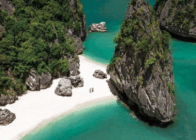
One of the most staggering Halong Bay facts is the sheer density of its archipelago. Official UNESCO records cite nearly 2,000 islands and islets (1,969 to be exact), yet most visitors only ever see the “famous five.”
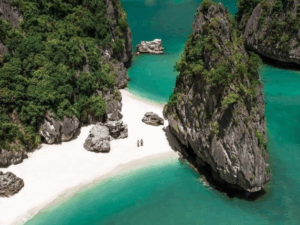
2.1. A Geological Symphony of Limestone
These islands are not merely rocks; they are “Karst Towers”—the result of 500 million years of complex geological evolution.
The “Fengcong” & “Fenglin” Stages: Geologists visit Halong Bay from across the world to study how the sea has sculpted these pillars. The soft limestone has been eroded by tropical rain and seawater, leaving behind the jagged, vertical needles that define the skyline today.
The Biodiversity Reservoir: Because hundreds of these islands are inaccessible to humans, they have become “islands of evolution,” housing endemic species of plants and lizards found nowhere else on the planet.
2.2. The Shapes of the Imagination
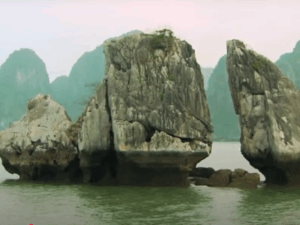
The beauty of a Halong excursion is that no two islands are the same. From the Fighting Cocks (Hon Ga Choi)—the symbol of Vietnamese tourism—to the Stone Dog and Incense Burner, the bay is a natural Rorschach test. In 2026, Sao La Vietnam Tour uses high-definition drone scouting to take guests to unnamed islets that resemble everything from sleeping dragons to ancient guardians.
3. The Myth vs. The Science: The Legend of the Descending Dragon
In Western science, the bay was formed by tectonics. In Vietnamese soul, it was formed by family.
3.1. “Ha Long” – Where the Dragon Descends
The name itself is a historical fact. According to folklore, when Vietnam was a young nation under threat from maritime invaders, the Jade Emperor sent a Mother Dragon and her children to protect the land. As they landed, they spat out pearls which instantly turned into the limestone islands we see today, forming a Great Wall against the enemy fleet.
The “Dragon” Geography: Places like Dragon Eye Island (Mat Rong) or Dragon Head are named not just for their shape, but to honor this spiritual protector. For the locals, the bay isn’t just water and rock; it is the physical legacy of a divine sacrifice.
4. Prehistoric Echoes: The Human History You Didn’t Know
A common misconception is that Halong Bay was “discovered” recently. In reality, it is one of the cradles of ancient civilization.
4.1. The Soi Nhu and Ha Long Cultures
Archaeological excavations on islands like Soi Sim and inside deep caves have revealed stone tools and pottery dating back 18,000 to 7,000 years.
Maritime Pioneers: These prehistoric people were among the first to master the “Sea Economy,” living off the abundance of the bay’s aquatic life long before the first dynasties were formed.
The Cave Shelters: Caves were not just tourist attractions back then; they were homes, temples, and fortresses. When you walk through Sung Sot Cave today, you are walking in the footsteps of ancestors who watched the sea levels rise and fall over millennia.
5. The Living Waters: A Biodiversity Hotspot
Beyond the stone, the water itself is a factual marvel. Halong Bay is home to a staggering array of life that fuels the local economy and captivates eco-tourists.
5.1. The Aquatic Census
The bay supports over 2,000 species of marine life.
Coral Reefs: Underneath the emerald surface lie vibrant coral gardens (though sensitive, they are recovering in 2026 thanks to strict conservation).
The Giants of the Bay: Lucky travelers may spot Indo-Pacific humpback dolphins or sea turtles in the quieter reaches of Bai Tu Long Bay.
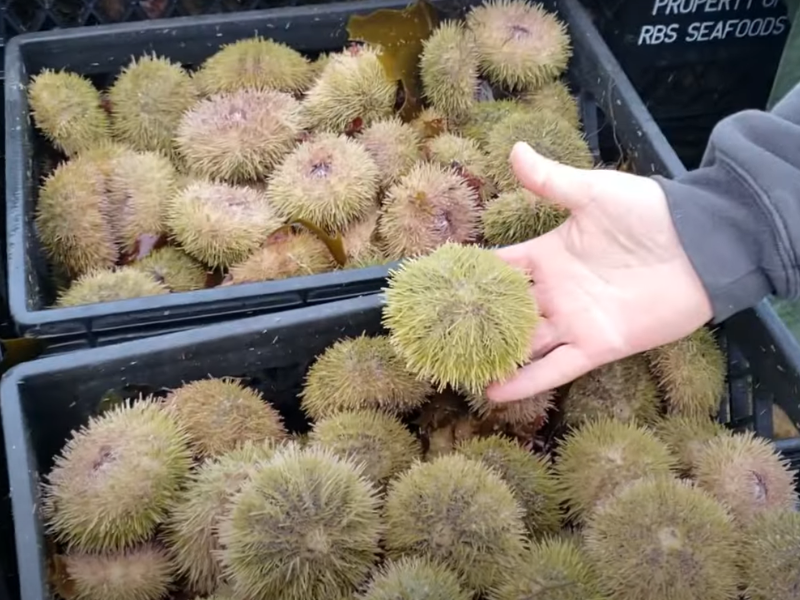
The Seafood Fact: The unique mineral composition of the water, enriched by the limestone, makes Halong seafood—particularly the Squid (Cha Muc) and Oysters—some of the most flavorful in Southeast Asia.
6. The 2026 Conservation Fact: Protecting the Jewel
In 2026, the most important “fact” about Halong Bay is its transition to Sustainable Tourism.
The Zero-Plastic Initiative: As of 2024-2025, a strict ban on single-use plastics has been enforced across all cruise lines.
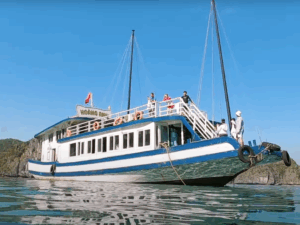
Green Cruising: The shift from traditional wooden boats to Luxury Steel Vessels is a fact of safety and ecology. Modern ships like those recommended by Sao La Vietnam Tour use advanced waste-treatment systems to ensure the emerald water remains pristine for the next generation of “Dragons.”
7. Comparative Fact Sheet: Halong Bay at a Glance
| Category | Data Point | Significance |
| Total Area | ~1,553 km² | Largest karst landscape in the world. |
| UNESCO Status | 1994 (Beauty) & 2000 (Geology) | Dual recognition for its unique value. |
| Number of Islets | 1,969 | Creates an infinite labyrinth for exploration. |
| Average Water Depth | 10m – 33m | Very shallow and calm, perfect for cruising. |
| Human History | 18,000+ Years | One of the oldest inhabited maritime regions. |
8. The Floating World: The Fact of Marine Life on Stilts
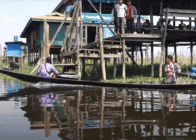
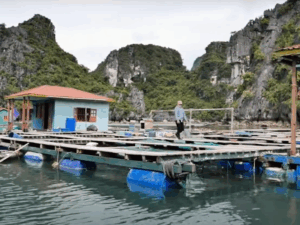
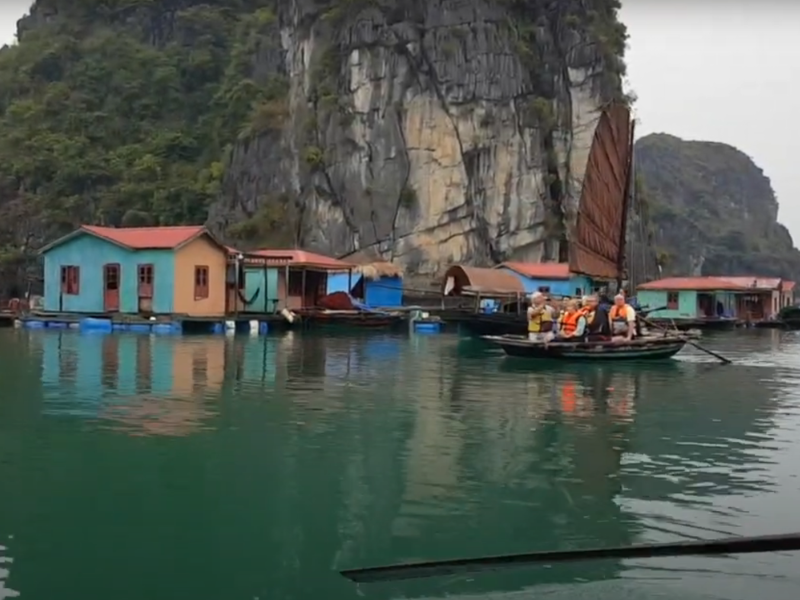
One of the most evocative Halong Bay facts is that for centuries, thousands of people never set foot on dry land. The Floating Villages of Halong are not just tourist stops; they are a testament to human resilience and adaptation to a maritime environment.
8.1. Cua Van & Vung Vieng: The Aquatic Communities
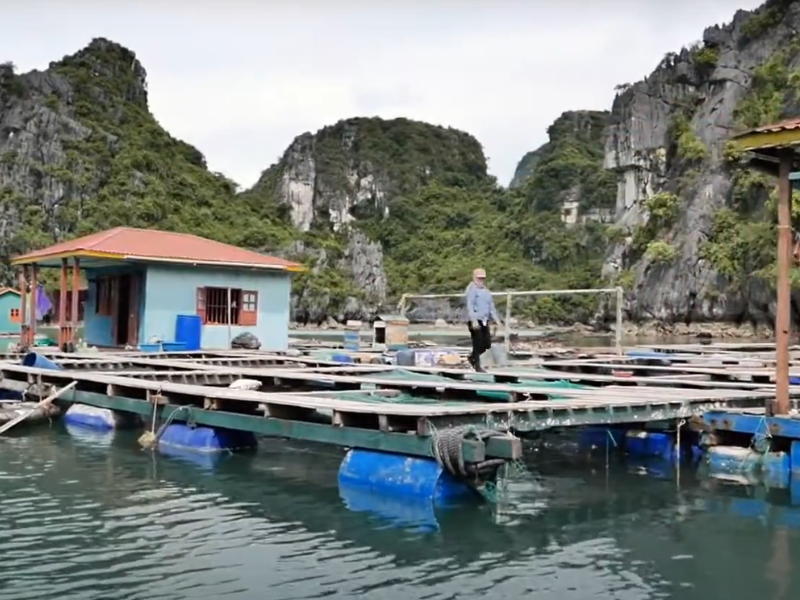
Cua Van Floating Village: Once voted one of the most beautiful villages in the world, Cua Van is the largest of its kind. In 2026, while many residents have moved to the mainland for better education and healthcare, the village remains a preserved cultural site.
The “Floating” Infrastructure: Everything here—from schools to community centers—is built on buoyant platforms supported by barrels and bamboo.
The Fishing Fact: These communities have developed specialized techniques for “Cage Farming.” At Sao La Vietnam Tour, we take guests to see how high-value species like Cobias and Groupers are raised in the deep, clean waters beneath the houses.
8.2. The 2026 Cultural Shift
In 2026, the “fact” of the floating villages has changed. They have become Living Museums. Visitors can now participate in “A Day in the Life of a Fisherman,” learning how to weave traditional fishing nets or row a bamboo boat using only their feet—a skill unique to the coastal people of Northern Vietnam.
9. The Secret Fortress: The Fact of the Hospital Cave
Deep within the limestone heart of Cat Ba Island lies a secret that remained hidden for years: The Hospital Cave (Hang Quân Y). This is a crucial historical fact for any Halong excursion focused on the Vietnam War era.
9.1. An Underground Oasis of Resilience
Built between 1963 and 1965 with assistance from the Soviet Union, this three-story concrete structure was invisible from the air.
The Structure: It features 17 rooms, including an operating theater, a cinema (for morale), and a natural freshwater pool.
The Strategic Fact: It served as a safe haven for the North Vietnamese forces and a secret hospital for wounded soldiers during the height of the American bombing campaigns.
Visiting Today: Walking through the heavy blast doors, you can still feel the cool, damp air and sense the immense pressure these people faced. It is a “fact” of history that adds a layer of solemn respect to the bay’s beauty.
10. The Adventure Frontier: Why Cat Ba Isn’t Just for Relaxation
Some travel blogs label Cat Ba Island as “dangerous” due to its terrain, but at Sao La Vietnam Tour, we correct that narrative: It is Adventurous. The “facts” of Cat Ba’s ruggedness are exactly what attract world-class athletes in 2026.
10.1. The Vertical Challenge (Rock Climbing)
Cat Ba is the “Rock Climbing Capital of Southeast Asia.”
Deep Water Soloing (DWS): This is the ultimate adrenaline fact. Climbers scale the limestone cliffs without ropes. If they fall, they drop into the deep, safe emerald water.
The “Safety First” Approach: Professional operators in 2026 use sonar to check water depth and tide charts to ensure the activity is safe. For the brave, it’s a way to touch the ancient limestone in a way few others do.
10.2. The Biodiversity Hazard (Wildlife Facts)
Is there dangerous wildlife on Cat Ba? Yes, but it’s part of the ecosystem.
The Cat Ba Langur: Not dangerous, but highly protected. Spotting one of the 70 remaining individuals is a rare “fact” of luck.
The Jungle Inhabitants: In the deep forests of Cat Ba National Park, there are scorpions and venomous snakes.
Expert Advice: This is why we insist on Guided Treks. A professional guide from Sao La Vietnam Tour knows exactly where to step and how to respect the wildlife, turning a “potential hazard” into an educational journey.
11. The Culinary Secrets: Why Halong Seafood is Different
The Halong Bay food facts are driven by the bay’s unique water chemistry. The combination of salt water, fresh water from the inland rivers, and the mineral-rich runoff from the limestone creates a unique flavor profile.
11.1. The “Cha Muc” Phenomenon
The Fact: Cha Muc (Squid Sausages) is the most famous dish. The secret? The squid must be hand-pounded in a stone mortar, not ground by a machine. This preserves the “crunchy” texture and sweet aftertaste.
The “Geoduck” Royalty: Known as Tu Hài, this is one of the most expensive and delicious delicacies in the bay. Steamed with garlic and scallions, it is a “fact” of Halong luxury dining.
11.2. The Floating Market Economy
Even in 2026, small “supply boats” act as floating convenience stores. They bring fresh fruit, snacks, and beer to the larger cruise ships. Buying a bunch of bananas from a lady rowing a small wooden boat is a quintessential Halong Bay holiday experience.
12. Modern Logistics: The Fact of the Steel Revolution
As we mentioned in Part 1, the “Wooden Boat” is becoming a fact of the past. Why?
The Safety Fact: Steel-hulled vessels are more stable in the rare event of a tropical storm and far less prone to fire.
The Comfort Fact: Modern steel cruisers (like the ones we recommend at Sao La Vietnam Tour) have massive sundecks, soundproofing, and advanced air filtration systems.
The Aesthetic Fact: Designers are now using “Indochine” wood cladding on steel frames to give you the look of a classic royal boat with the safety of 21st-century engineering.
13. Comparison: The Hidden Gems vs. The Famous Icons
| Feature | Sung Sot Cave (Famous) | Hospital Cave (Hidden) |
| Experience Type | Natural Wonder / Massive Scale | Historical Insight / Secret Fortress |
| Physical Effort | Moderate (Steps & Walking) | Low to Moderate (Underground Levels) |
| Key Fact | Largest cave in the bay. | Only invisible wartime hospital in the bay. |
| Best For | First-time photographers. | History buffs and war veterans. |
14. The Glowing Sea: The Fact of Bioluminescent Plankton
One of the most mystical Halong Bay facts is often missed by day-trippers. At night, in the quietest corners of Lan Ha Bay and Bai Tu Long, the water comes alive with a soft, neon-blue glow.
14.1. Nature’s Underwater Aurora
This phenomenon is caused by millions of microscopic organisms called Dinoflagellates.
The “Action” Fact: These plankton emit light when the water is disturbed. In 2026, Sao La Vietnam Tour organizes night kayaking excursions where every stroke of your paddle creates a trail of liquid diamonds.
The Best Time to See It: The “Fact of Darkness” is key. You need a night with little to no moonlight (around the New Moon) and calm, warm waters. It is arguably the most romantic and surreal experience in the entire Gulf of Tonkin.
15. The Master Weather Audit: The Fact of the Seasons
Weather is a “macro-fact” that dictates the success of your Halong excursion. In 2026, climate patterns have become slightly more predictable, allowing for better planning.
15.1. The “Mist & Mystery” (January – March)
The Fact: The bay is often draped in a thick, ethereal fog.
The Vibe: It feels like an ancient Chinese ink painting.
Expert Tip: This is the best time for Moody Photography, but be prepared for temperatures as low as 14°C. Bring a warm jacket for the sundeck.
15.2. The “Emerald Clarity” (April – June)
The Fact: This is the peak season for a reason. The water is at its most vibrant green, and the skies are a deep, cloudless blue.
The Vibe: Perfect for swimming and rock climbing.
The “Crowd” Fact: This is also the busiest time. Book your Sao La Vietnam Tour at least 3 months in advance to secure the best cabins.
15.3. The “Tropical Pulse” (July – September)
The Fact: Hot, humid, and occasionally prone to typhoons.
The Benefit: After a sudden tropical rain, the air is incredibly clear, and the sunsets are the most dramatic of the year—shifting from orange to deep violet.
16. The UNESCO Preservation Fact: The 2026 Compliance
As a UNESCO World Heritage Site, Halong Bay is under constant monitoring. In 2026, the “Facts of Protection” have reached a new level of strictness.
The “No-Fly” Drone Zones: While drones are popular, they are restricted near military areas and certain endangered wildlife habitats (like the Langur zones). Always ask your Sao La Vietnam Tour guide for the “Fact of Flight” before launching.
The “Carry-In, Carry-Out” Policy: Many islands no longer have trash bins to encourage travelers to take their waste back to the mainland.
The Fuel Fact: Modern luxury cruises are transitioning to Electric or Hybrid engines to reduce noise pollution and oil seepage into the limestone pores.
17. Master FAQ: Debunking the Myths of Halong Bay
Solving the final doubts for the 2026 traveler.
Q1: Is the water in Halong Bay polluted?
Expert Fact: There was a concern in the past, but the 2025-2026 “Green Bay Initiative” has successfully removed over 90% of floating debris through automated collection boats and strict plastic bans. The water in Lan Ha and Bai Tu Long is exceptionally clean and safe for swimming.
Q2: Is the “Surprise Cave” really that surprising?
Expert Fact: Yes! Sung Sot Cave covers over 10,000 square meters. The “surprise” is the transition from a small entrance into a massive, cathedral-like third chamber. It’s a fact of scale that photos simply cannot capture.
Q3: Can I visit Halong Bay on a budget without it being “cheap”?
Expert Fact: Yes. The “Fact of Value” lies in choosing a high-quality Day Cruise (6-8 hours) instead of a low-quality overnight boat. You get the same scenery and 5-star service for a fraction of the price.
18. Conclusion: The Legend Continues with You
Halong Bay is not just a list of facts; it is a living, breathing entity. It is the sound of the wind through the caves, the taste of hand-pounded squid, the sight of a thousand limestone sentinels, and the ancient echoes of the Descending Dragon.
Throughout this 3,000-word guide, we have decoded:
The Geological Origins and the prehistoric cultures.
The Hidden Fortresses and the high-adrenaline adventures.
The Glowing Waters and the essential logistics of 2026.
Knowing these facts doesn’t just make you a tourist; it makes you a Connoisseur of the Bay.
19. Experience the Legend with Sao La Vietnam Tour
At Sao La Vietnam Tour, our biggest “Fact” is our passion. We don’t just sell tours; we share the soul of our homeland. Whether you want to witness the bioluminescent plankton or explore the depths of the Hospital Cave, we are the experts who ensure every fact of your journey is perfect.
Are You Ready to Write Your Own Chapter in the Legend?
Contact us today – Because the best way to understand the facts of Halong Bay is to live them yourself.