1. The Morning Call of the Old Quarter
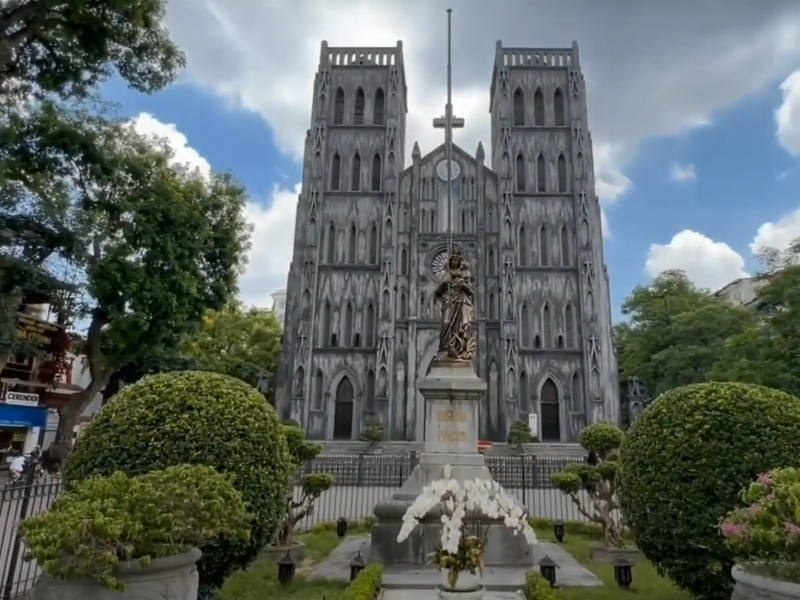
As we navigate the threshold of April 2026, Hanoi continues to redefine itself as a city where time is not a line, but a circle. At the heart of the capital, where the scent of morning incense from the Old Quarter’s temples meets the crisp, ozone-rich air of a modernized Hoan Kiem Lake, stands St. Joseph’s Cathedral.
To the casual observer, it is a majestic fragment of 19th-century France. But for the discerning traveler, it is a silent sentinel—a structure built on the echoes of a thousand years. At Sao La Tours, we believe that to visit the “Big Church” is not merely an act of sightseeing; it is an act of historical immersion. In this first chapter, we peel back the layers of limestone to explore the sacred bedrock and the architectural alchemy that turned a colonial project into a Hanoian soul.
2. The Thang Long Ancestry: The Ghost of Bao Thien
One cannot appreciate the height of the Cathedral’s spires without understanding the depth of its foundations. Long before the first brick was laid by the French in 1884, this very site was the spiritual epicenter of the Ly Dynasty (1010–1225).
The Four Great Treasures: This ground was once home to the Bao Thien Pagoda, which housed one of the “Four Great Treasures of Annam”—a massive bronze bell that symbolized the prosperity of the Vietnamese empire.
The Layered Narrative: While the construction of the Cathedral in the 1880s was a clear statement of French colonial dominance, history has a way of integrating opposites. In 2026, we view the Cathedral as a site of Spiritual Continuity. The ground remains sacred; only the architectural language has shifted from the low-slung, curved eaves of the East to the soaring, pointed arches of the West.
3. Gothic Revival: A Tropical Interpretation
Inaugurated on Christmas Eve, 1886, St. Joseph’s Cathedral was designed by Bishop Puginier as a tribute to Notre-Dame de Paris. However, building a Gothic masterpiece in the humid, monsoon-prone climate of Hanoi required more than just blueprints—it required Architectural Resilience.
The Anatomy of the Spire
Limestone and Adobe: Unlike its Parisian cousin built of pure stone, St. Joseph’s utilized a combination of limestone slabs and high-durability bricks coated with a special mortar that has survived the tropical heat of over 140 summers.
The Symmetrical Power: The twin bell towers, standing 31 meters high, were designed to dominate the skyline. By 2026, after the meticulous restoration of the early 2020s, the towers have regained their structural sharpenss, stripped of carbon crust but retaining the “venerable grey” that Hanoians have loved for generations.
4. The 2026 “Smart-Heritage” Experience
As we approach the Cathedral in 2026, the experience is no longer limited to what the eye can see.
Biometric & Silent Logistics: For our Sao La guests, we bypass the midday tourist crowds. Our tours are timed with the “Golden Hour” (06:30 AM), utilizing biometric entry for private access to the upper galleries when available.
The Metro Integration: Accessing the Cathedral has been revolutionized by the Hanoi Metro Line. In 2026, a 5-minute walk from the Hoan Kiem Station brings you directly to the square, allowing guests to transition from high-tech transit to high-Gothic tranquility in minutes.
5. Comparison: The Strategic Evolution of St. Joseph’s
| Element | The 1886 Vision | The 2026 Reality |
| Purpose | Colonial Religious Statement | Unified Cultural Landmark |
| Aesthetics | Fresh, Painted White/Grey | “Controlled Patina” & Laser-Cleaned Stone |
| Surroundings | Colonial Villas & Quiet Lanes | Vibrant “Cathedral Lifestyle” Hub |
| Accessibility | Restricted to the Faithful | Open-Access Heritage with Digital Integration |
| Connectivity | Horse-drawn Carriage | High-Speed Metro & Private EV-Transfers |
6. The First Glimpse: A Sensory Audit
When you stand in the center of the square today, the Cathedral offers a unique “Sensory Audit”:
Visual: The grey stone is juxtaposed against the vibrant green of the surrounding banyan trees and the colorful shutters of the Nha Tho Street boutiques.
Acoustic: The heavy bronze bells, cast in France but ringing in the heart of Vietnam, create a low-frequency resonance that can be felt in the chest—a stark contrast to the high-pitched hum of the city’s electric motorbikes.
Atmospheric: The air near the entrance often carries a hint of frankincense and beeswax, a scent that hasn’t changed in nearly a century and a half.
7. Preliminary Insights: Preparing for the Alchemy
We have analyzed the “Bones” of the Cathedral—its ancestry on the ruins of Bao Thien and its structural DNA as a Gothic masterpiece. We have seen how the city has grown around it, turning a colonial church into a Vietnamese icon.
But the real magic of St. Joseph’s lies in the Details. To truly understand this landmark, one must step inside the nave and witness the interplay of light and shadow, and understand the modern engineering that keeps these 140-year-old towers standing in a high-velocity city.
8. Architectural Alchemy: The Science of the “Controlled Patina”
For decades, St. Joseph’s Cathedral was defined by its dark, weathered exterior—a look many Hanoians associated with the “soul” of the building. However, by the early 2020s, that darkness was no longer just aesthetic; it was symptomatic of structural decay. In 2026, we see the results of a high-stakes restoration that utilized global conservation standards.
The Laser Ablation Breakthrough
The restoration of the facade was a point of intense public debate. How could the church be cleaned without looking “brand new” and artificial?
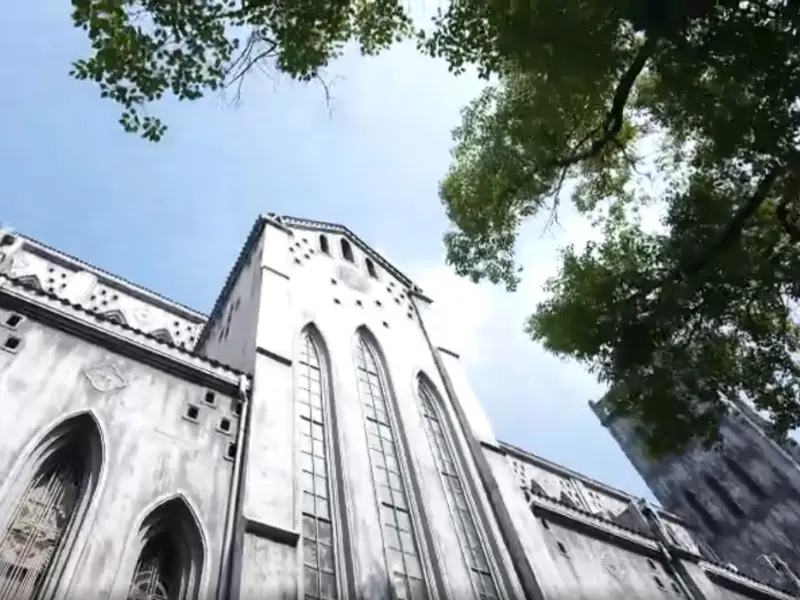
Precision Cleaning: Conservationists utilized Low-Pressure Laser Ablation technology. Unlike sandblasting or chemical washes, lasers were tuned to specific frequencies that disintegrated the black carbon crust and fungal growth while leaving the 140-year-old limestone beneath untouched.
The “Grey” Aesthetic: The goal was a “Controlled Patina.” By April 2026, the Cathedral displays a sophisticated gradient of greys. It looks clean and structurally sound, yet it retains the venerable, “weathered” dignity that tells the story of the city’s humidity and history.
9. Structural Secrets: Reinforcing a Legend
Beyond the visible facade, the 2026 state of the Cathedral includes significant hidden engineering designed to counter the unique challenges of the Red River Delta’s climate.
The Humidity Defense
Hanoi’s humidity (often exceeding 90% in April) is a natural enemy of traditional masonry.
Breathable Membranes: During the restoration, a specialized micro-porous coating was applied to the exterior. This “breathable” layer prevents rainwater from penetrating the brickwork while allowing internal moisture to escape, preventing the “inner rot” that plagues many colonial-era buildings.
The Twin Tower Core: Inside the 31-meter spires, carbon-fiber reinforcements have been subtly integrated into the original timber and brick framework. This allows the heavy bronze bells to toll with full resonance without causing micro-fissures in the ancient masonry—a critical upgrade for the Cathedral’s longevity.
10. The Stained Glass Narrative: Light as a Medium
If the stone is the body of the Cathedral, the stained glass is its eyes. Imported directly from France in the late 19th century, these windows are among the most significant collections of religious art in Indochina.
The 2026 Chromatic Reset
The restoration included a meticulous deep-clean of the interior glass panels, which had been obscured by decades of candle soot and dust.
The “Lux Nova” Effect: In the midday sun of April 2026, the nave is bathed in a phenomenon known as Lux Nova (New Light). The deep cobalts, rubies, and emeralds of the glass project a liquid-like kaleidoscope across the stone floor.
The Rose Window: The central rose window above the main portal has been stabilized. In 2026, a Smart LED Backlighting System was installed. This system activates at sunset, allowing the intricate patterns of the window to be visible from the outside square for the first time in history, acting as a “spiritual beacon” for the Old Quarter.
11. Comparison: Technical Maintenance (1886 vs. 2026)
| Maintenance Aspect | 1886 Standards | 2026 Standards |
| Cleaning Method | Manual Scrubbing / Lime Wash | Low-Pressure Laser Ablation |
| Structural Check | Visual Inspection | AI-Driven Ultrasonic Scanning |
| Moisture Control | Passive Ventilation | Micro-porous Nano-Coatings |
| Lighting | Tallow Candles & Kerosene | Programmed Smart-LED Integration |
| Audio Quality | Natural Echo (Muffled) | Acoustic-Balanced Digital Overlay |
12. The Audio-Visual Symphony: Mass and Organ Recitals
A visit to St. Joseph’s in 2026 is an exercise in acoustic perfection. As analyzed in our Part 1, the Gothic vaults create a specific 2.5-second reverberation.
The Pipe Organ Restoration: The Cathedral’s organ has been restored to its full 19th-century glory, but with modern air-regulation systems that prevent the humid Hanoi air from de-tuning the pipes.
The “Silent Hour” Tours: For Sao La Tours guests, we arrange access during non-service hours when the organist is practicing. To hear the deep bass notes of a Bach toccata vibrating through the carbon-reinforced pillars of a 140-year-old church is one of the most profound sensory experiences in all of Vietnam.
13. Preliminary Insights: The Cathedral as a “Third Place”
We have explored the “Alchemy” of the restoration—how lasers and nano-coatings have saved the Gothic soul of the building. We understand that St. Joseph’s is no longer just a relic; it is a high-tech monument that has successfully bridged the gap between the colonial past and the smart-city future.
However, the Cathedral’s significance extends far beyond its walls. It is an urban anchor. In the final chapter, we will step out into the square to explore the vibrant social ecosystem that thrives around the church—the coffee ateliers, the high-end boutiques, and the “Lemon Tea” culture that makes this the “Living Room of Hanoi.”
14. The Cathedral Lifestyle: Hanoi’s Urban Living Room
By April 2026, the precinct surrounding St. Joseph’s Cathedral has transcended its status as a mere tourist attraction. It has become the “Urban Living Room” of the capital—a place where the city’s intellectual, creative, and business elites converge. The “Gothic Pulse” is no longer just found in the stone; it is felt in the rhythmic clinking of coffee cups and the low hum of evening conversations in the square.
The “Trà Chanh” Evolution
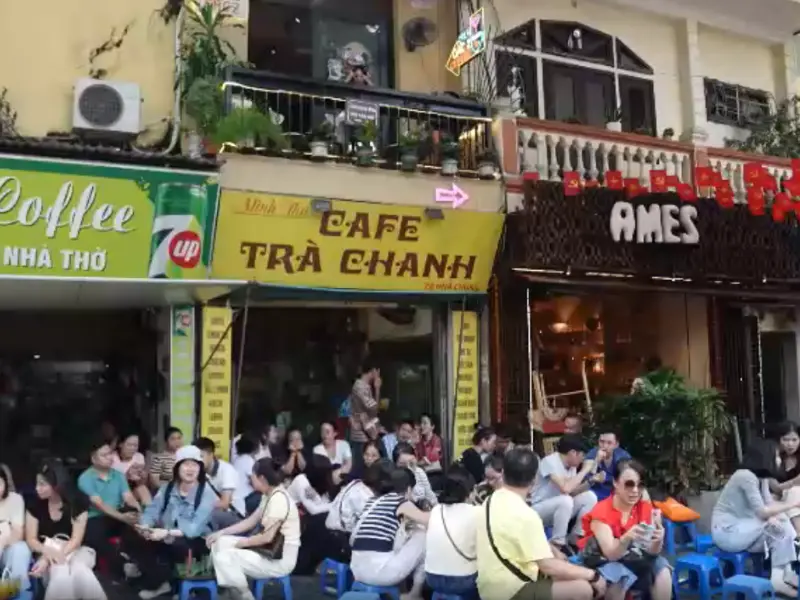
The ritual of Trà Chanh Nhà Thờ (Cathedral Lemon Tea) is the soul of this neighborhood.
The Social Fabric: In 2026, the traditional plastic stool culture persists, but it has gained a new layer of sophistication. It is here that you will see local tech entrepreneurs sitting alongside elderly parishioners, both unified by the view of the spires.
The Sao La Perspective: For our guests, this isn’t just a drink; it is a “Social Audit.” It is the best place to observe the effortless way Hanoi integrates foreign architecture into its daily, egalitarian lifestyle. We recommend an evening visit to witness the “Blue Hour” transition when the Cathedral’s smart-LEDs first illuminate.
15. Boutiques and Brews: The 2026 Artisan Circuit
The streets radiating from the Cathedral—Nha Tho, Ly Quoc Su, and Nha Chung—have evolved into the premier district for “Artisanal Luxury.” This is the home of the “New Vietnam” aesthetic.
The Specialty Coffee Nexus
Hanoi’s coffee culture in 2026 is world-leading, and the Cathedral precinct is its laboratory.
The Balcony Ateliers: Several hidden specialty shops now occupy the upper floors of the colonial-era buildings facing the square. These venues offer “Heritage Roasts”—beans sourced from the Central Highlands and aged in a way that mimics the smoky, historic profile of the Old Quarter.
The “View-to-Value” Ratio: We curate reservations for our guests at specific balconies that provide a direct, eye-level view of the Cathedral’s rose window—ideal for those seeking a quiet space for technical analysis or private reflection away from the street-level bustle.
Curated Commerce
The boutiques here reject mass production in favor of “Ethical Heritage.”
The Silk Revolution: Modern ateliers on Nha Tho Street now utilize NFC-enabled garments. A simple scan of a silk scarf reveals the specific village and the artisan who wove it, ensuring total transparency and supporting the regenerative craft movement of 2026.
Contemporary Art: The galleries surrounding the church have moved toward “Phygital” exhibits, where physical canvases are paired with digital twins, allowing international collectors to acquire Hanoian art with verified provenance on the spot.
16. The 2026 Success Toolkit: Mastering the Immersion
To navigate the heart of Hanoi with executive efficiency, we provide the following Strategic Framework:
1. The “Metro-to-Monument” Strategy
As of April 2026, the Hoan Kiem Metro Station is fully operational.
Logistics: Avoid the unpredictable traffic of the Old Quarter. A 5-minute walk from the Metro exit leads you through the “Incense Alleys” directly to the Cathedral. For those requiring total privacy, we provide Silent EV-Transfers that utilize the specialized “Green Zones” around the church square.
2. Timing and Access
The “VIP Morning”: Arrive at 06:45 AM. The light is soft for photography, the air is at its cleanest, and you can witness the traditional morning Mass without the midday crowds.
The Sunday Protocol: On Sundays, the square is hyper-vibrant. If seeking a quiet contemplative experience, aim for a Tuesday or Wednesday morning.
3. Dress and Etiquette (The 2026 Standard)
While Hanoi is modern, the Cathedral remains a sacred space.
Requirement: Shoulders and knees must be covered to enter the nave. In 2026, the Cathedral provides biodegradable rental wraps at the entrance for those caught unprepared, though we recommend your own tailored linen for maximum comfort in the humidity.
17. 2026 Cathedral FAQ: Expert Insights
Q1: Is it possible to attend a Mass in English or French?
A: Yes. In 2026, the Cathedral maintains a multi-lingual schedule. Typically, the Sunday evening Mass attracts the international community and offers a profound look at the global nature of Hanoi’s faith.
Q2: Can we book the Cathedral for private events or photography?
A: Professional commercial photography requires a permit from the Archdiocese. Private events are strictly religious. However, we can arrange Private Architectural Briefings with local historians in the neighboring buildings that overlook the site.
Q3: How has the Metro affected the atmosphere of the square?
A: The Metro has significantly reduced the number of heavy vehicles in the area, leading to a 30% reduction in ambient noise compared to 2023. The square is now more pedestrian-friendly, enhancing the “Silent Sentinel” vibe of the building.
18. Comparison: The 2026 Neighborhood Matrix
| Venue Type | Primary Appeal | Best For… | Sao La Recommendation |
| Balcony Coffee | Aerial Views / Quiet | Deep Work / Photography | The “Smoked Cinnamon” Cold Brew |
| Sidewalk Tea | Local Immersion | People Watching | Evening Trà Chanh with sunflower seeds |
| Silk Boutiques | Ethical Luxury | High-End Souvenirs | NFC-Tagged Hand-Woven Scarves |
| Art Galleries | Cultural Investment | Collecting / Exploration | The “Phygital” Indigenous Series |
19. Conclusion: The Heartbeat of the Capital
St. Joseph’s Cathedral in 2026 is the ultimate testament to Hanoi’s “Strategic Resilience.” We have explored the Sacred Bedrock of its ancient foundations (Part 1), the Architectural Alchemy of its laser-stabilized facade (Part 2), and finally, the Lifestyle Pulse of the vibrant community that defines its present (Part 3).
In a city that is rapidly scaling into a global tech and financial hub, the Cathedral remains the “Constant.” It is a reminder that while technology moves at the speed of light, the human spirit requires spaces of silence, shadow, and stone to truly thrive. At Sao La Tours, we don’t just show you the Cathedral; we help you find your place within its thousand-year-old story.
Secure Your Hanoi Legacy
The spires are waiting. The coffee is brewing. The history is yours to claim.
Apply for the “Hanoi Executive Heritage” 3-Day Intensive.
Six Centuries of Spirit. One Seamless Modernity.
Sao La Tours – The Authority in 2026 Integrated Heritage & Executive Travel.
Regional HQ: Hanoi – 84 988 488 566
Precision Logistics | Cultural Authority | Excellence Beyond Expectations