Why Lan Ha Bay is the “New Gold” of Northern Vietnam
For decades, Halong Bay stood alone as the titan of Vietnamese tourism. However, as we move into 2026, the travel landscape has shifted significantly. Modern travelers—driven by a desire for authenticity and “slow travel”—are bypasssing the crowded hubs of central Halong for the pristine, emerald silence of Lan Ha Bay.
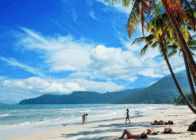
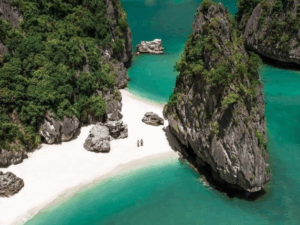
Located south of its famous sibling and hugging the eastern coast of Cat Ba Island, Lan Ha Bay consists of over 400 limestone islets and 139 small, sandy beaches. But here is the professional insight: The beauty of Lan Ha Bay is only accessible if you master the logistics. Unlike Halong, which has a centralized international port, reaching Lan Ha requires navigating a mix of high-speed expressways, island crossings, and localized pier transfers.
Whether you are departing from the bustling streets of Hanoi’s Old Quarter or flying in from Saigon, this section provides the blueprint for a seamless journey to paradise.
2. From Hanoi to Lan Ha Bay: Decoding the Transport Matrix
Hanoi is the primary gateway for 85% of Lan Ha Bay visitors. The distance is approximately 140km, but the “time-cost” varies wildly depending on your choice of transit.
2.1. The “Executive” Choice: Private Car Transfer via Highway 5B
In the SEO world of travel, “Private Car Hanoi to Lan Ha Bay” is a high-intent keyword for a reason. It offers the ultimate control over your itinerary.
The Route: You will travel via the Hanoi–Hai Phong Expressway (5B). This is Vietnam’s most modern highway, reducing travel time from 4 hours (on the old road) to just 1.5 – 2 hours.
The Pivot Point (Important 2026 Update): Most outdated blogs still mention Got Pier (Bến Gót). However, as a professional, I must advise that Dong Bai Ferry Terminal (Bến phà Đồng Bài) is now the primary gateway. It was designed to handle the massive surges in tourism and reduce the legendary congestion seen in previous years.
Cost & Value: A private 7-seater SUV typically ranges from $80 to $110 USD per way.
Pro Tip: If you are a group of 3 or more, the cost-per-head is comparable to a luxury bus, but with door-to-door service and zero wait times.
2.2. The “Smart” Choice: Luxury Shuttle Bus (Limousine D-Car)
For solo travelers or couples, the “Limousine Bus” has revolutionized Northern Vietnam travel. These are not your average buses; they are modified Ford Transits with 9 “business class” seats, Wi-Fi, and charging ports.
Convenience: Most operators provide pick-up within Hanoi Old Quarter, saving you a $10 taxi ride to a bus station.
The Experience: The journey is optimized for comfort. You get a 15-minute break at a high-end rest stop (not the tourist traps of the past) and arrive at the pier refreshed.
Price Point: Expect to pay between $15 and $25 USD per person.
2.3. The “Adventure” Choice: Local Bus & High-Speed Hydrofoil
If you want to experience the bay like a local, you can take a bus to Hai Phong city and then a hydrofoil from Binh Pier directly to Cat Ba Town.
Pros: Incredible views of the Hai Phong shipping lanes.
Cons: Highly dependent on weather; not recommended during the typhoon season (July–August).

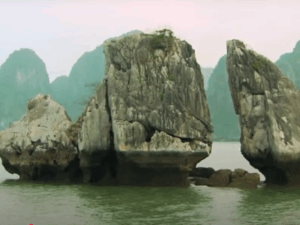
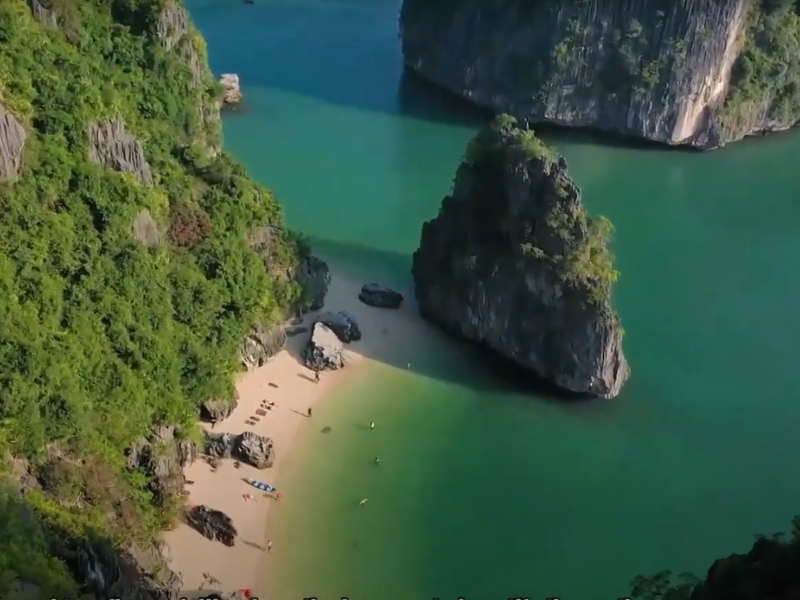
Discover Lan Ha Bay in Vietnam: sail emerald waters, kayak through hidden lagoons, explore limestone karsts, and enjoy a less-crowded alternative to Halong Bay.
3. The New Gateway: Navigating Dong Bai Pier & The Ferry Crossing
As of 2024-2025, the transition from Got Pier to Dong Bai Pier has changed the “Halong tour booking” workflow.
Why the change? Got Pier suffered from extreme “bottlenecks.” On weekends, travelers could wait 2 hours just to cross the water. Dong Bai Pier offers larger waiting lounges, better sanitation, and a higher frequency of ferries.
The Ferry Process: The ferry ride to Cai Vieng Pier (on Cat Ba Island) takes about 15-20 minutes. From Cai Vieng, it is another 30-minute scenic drive through the lush greenery of Cat Ba National Park to reach the main harbor (Beo Pier) where Lan Ha tours depart.
Cable Car Alternative: For a “bird’s eye” entry, the Sun World Cat Ba Cable Car connects the mainland to the island. It is the world’s tallest cable car pillar and offers a breathtaking SEO-worthy photo op before you even touch the water.
4. Connecting from Southern Vietnam: The Saigon to Hai Phong Flight Path
If your journey starts in Ho Chi Minh City (Saigon) or Da Nang, do not fly to Hanoi. This is a common rookie mistake that adds 4 hours of unnecessary road travel.
4.1. Cat Bi International Airport (HPH)
Airlines: Vietnam Airlines, VietJet Air, and Bamboo Airways operate multiple daily flights.
Flight Time: Only 1.5 hours from Saigon.
The “Expert” Transfer: From Cat Bi Airport, it is a mere 30-minute drive to Dong Bai Pier.
Strategic Advice: Book a morning flight (arriving before 10:00 AM) to ensure you can catch the midday cruise departures (usually 12:00 PM – 12:30 PM).
5. Summary Table: Hanoi to Lan Ha Bay Logistics (Quick Reference)
| Mode of Transport | Duration | Estimated Cost (USD) | Best For… |
| Private SUV | 2 – 2.5 Hours | $80 – $110 (Total) | Families & Privacy |
| Limousine Bus | 2.5 – 3 Hours | $18 – $25 (Per Seat) | Solo/Couples & Comfort |
| Local Bus/Ferry | 4+ Hours | $10 – $12 (Total) | Budget Backpackers |
| Seaplane (Hanoi) | 45 Minutes | $350 – $450 (Per Seat) | Luxury & Photography |
6. Professional Advice: Avoiding the “Pier Trap”
In my 20 years of SEO and travel consulting, the #1 complaint I see in reviews is: “We spent all day waiting at the pier.”
To avoid this:
Avoid Weekends: If possible, travel Tuesday–Thursday.
The 11:30 AM Rule: Ensure your transport arrives at the pier no later than 11:30 AM. Most cruises depart at noon. If you miss this window, you lose half a day of your expensive cruise.
Check the “New Bridge” Status: The Tan Vu – Lach Huyen bridge is the longest sea-crossing bridge in Vietnam. Ensure your driver uses this route to avoid the old, slow industrial zones of Hai Phong.
7. The Fleet Selection Strategy: Matching Your Persona to the Vessel
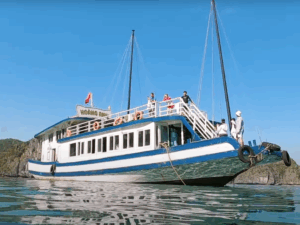
In the world of Halong tour booking, the ship is not just your transport; it is your destination. By 2026, the Lan Ha Bay fleet has matured into a sophisticated array of “floating boutique hotels.” To choose correctly, you must look beyond the 5-star label and identify the “DNA” of the vessel.
7.1. The “Modern Icons” (Grand Luxury)
These are the most photographed ships in Northern Vietnam. Built with steel hulls and featuring contemporary interior design, they feel like upscale urban hotels.
The Flagships: Stellar of the Seas and Elite of the Seas.
Unique Value: These ships introduced the “infinity pool” and “mini-golf” concepts to the bay. They are the best choice for travelers who want maximum stability (perfect for those prone to seasickness) and a “resort” atmosphere.
The Crowd: Expect a vibrant, younger demographic and families who appreciate high-end fusion buffets and polished service.
7.2. The “Heritage Collectibles” (Indochine Elegance)
If you are a traveler who values soul, history, and craftsmanship over gold-plated faucets, this category is for you.
The Flagships: Heritage Cruises Binh Chuan and Indochine Premier.
Unique Value: These vessels are masterpieces of Vietnamese art. Binh Chuan, for instance, functions as a floating gallery with original paintings and a library dedicated to the “King of Ships.”
The Crowd: Intellectual travelers, photographers, and couples seeking a romantic, cinematic backdrop for their journey.
7.3. The “Boutique & Active” Fleet (Private Sanctuaries)
For those who find a 50-cabin ship too “industrial,” boutique cruises with 10–18 cabins offer a private club feel.
The Flagships: Orchid Classic and Peony Cruise.
Unique Value: These boats can navigate narrower channels and offer a much higher staff-to-guest ratio. Because they are smaller, the embarkation and disembarkation processes are significantly faster.
The Crowd: Luxury seekers who prioritize privacy and quiet over grand amenities.
8. The “Master Itinerary”: A 24-Hour Deep Dive into Lan Ha Bay
While your ship is your home, the itinerary is your story. A professional Lan Ha Bay cruise in 2026 follows a refined “flow” designed to avoid the heaviest tourist peaks.
12:30 PM – The “Cai Beo” Gateway
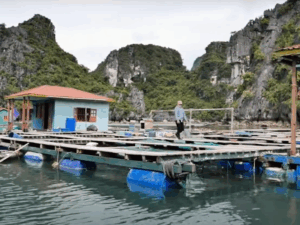
Your journey begins at the pier. As the tender boat takes you to the main vessel, you sail through Cai Beo Floating Village. This is an essential SEO entity—one of the oldest sea-villages in the world. Seeing the colorful houses bobbing on the water with the limestone karsts as a backdrop is the “first click” of your adventure.
01:30 PM – The Panoramic Lunch
Lunch is served as the ship navigates toward the heart of the bay. In 2026, premium cruises have moved away from “heavy” traditional food to “Clean & Green” Vietnamese fusion, prioritizing fresh seafood caught right in the bay.
03:00 PM – The Dark and Bright Cave (Hang Sang Toi)
This is the “Hero Activity” of Lan Ha Bay.
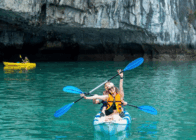
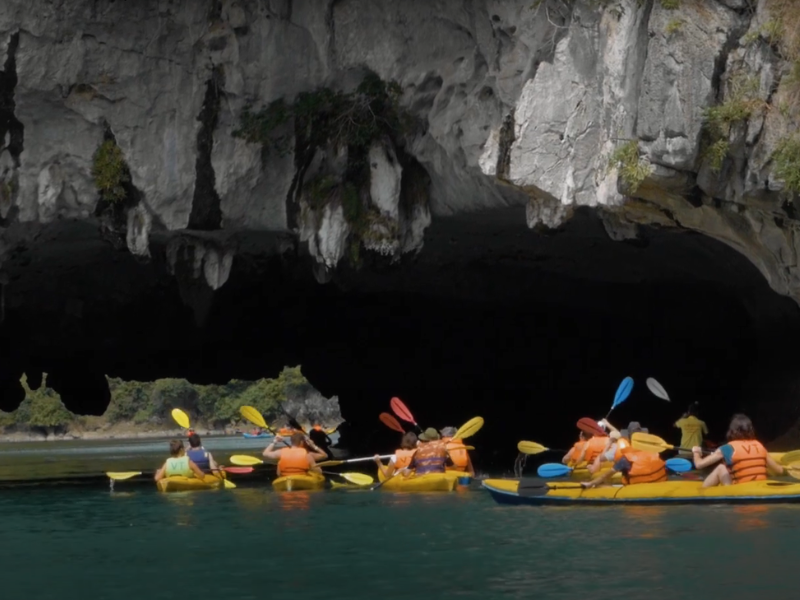
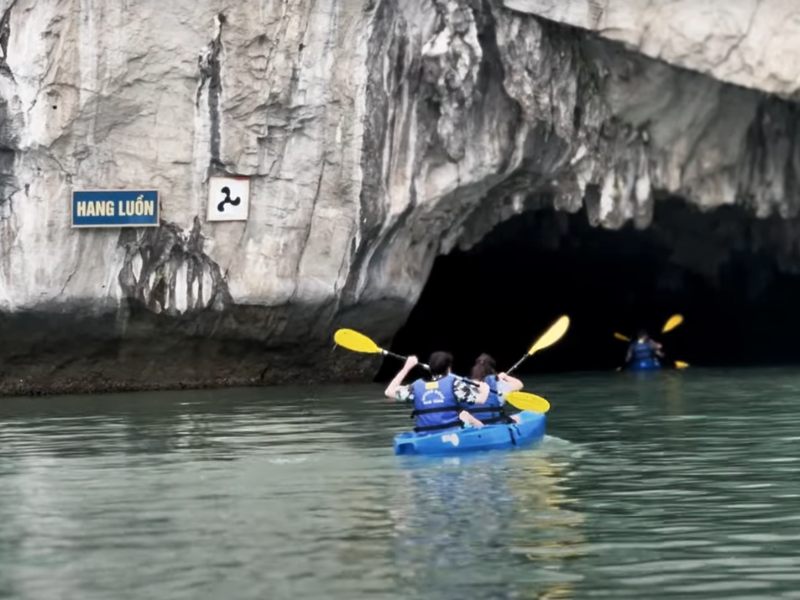
The Kayaking Strategy: I always recommend Kayaking over the bamboo boat. Why? Because it allows you to linger inside the “Hidden Lagoon”—a massive sea-lake completely enclosed by vertical cliffs. In 2026, many cruises have introduced “Transparent Kayaks” to allow you to see the vibrant marine life beneath you.
The Experience: Passing through a 100-meter natural tunnel into a silent, green world is the moment most travelers realize why they chose Lan Ha over the central bay.
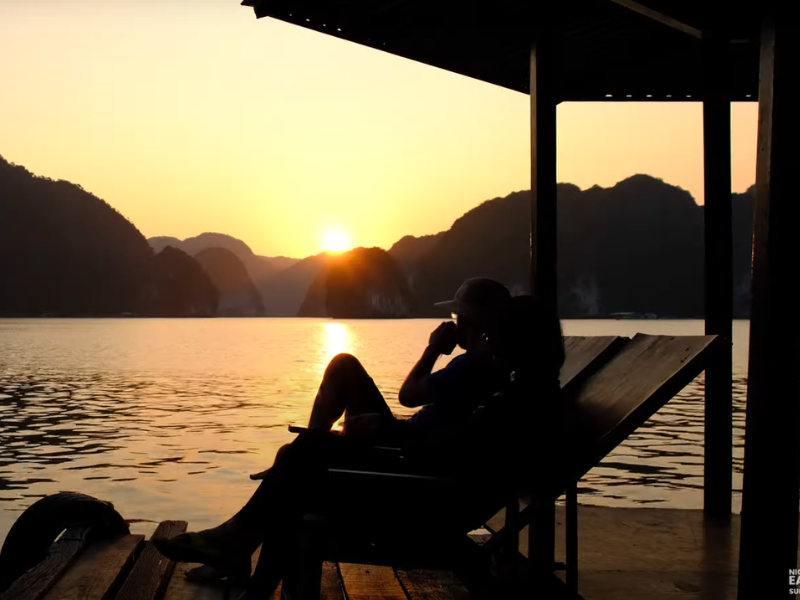
05:30 PM – The Sunset Ritual & “Golden Hour”
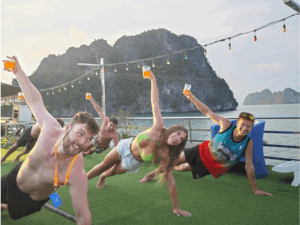
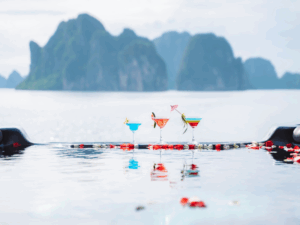
As the sun dips behind the karsts, the ship drops anchor. This is the Sunset Party.
Expert Insight: This isn’t just about cocktails. It’s about the light. The limestone formations turn a deep, glowing orange. It is the best time for drone photography or “Slow-Motion” videos of the bay.
9. The 3-Day, 2-Night Strategy: Going “Deep” into the Wilderness
If you are coming all the way to Vietnam, booking only 24 hours in the bay is a mistake. The 3D2N itinerary unlocks the “Secret Lan Ha” that day-trippers never see.
Day 2: The “Day Boat” Adventure
On the second day, you move to a smaller “Day Boat” to reach shallower, more pristine waters.
Viet Hai Village: You will cycle (hoặc đi xe điện) through a tropical jungle to reach a village tucked inside Cat Ba National Park. This is the peak of E-E-A-T travel—experiencing a community that has lived in harmony with the mountains for centuries.
Ba Trai Dao (Three Peaches) Beach: This is arguably the best swimming spot in Northern Vietnam. It consists of three small islands with natural, white-sand beaches. Unlike the artificial beaches of Halong, these are wild and raw.
Bioluminescent Plankton (The 2026 Special): Some boutique cruises now offer night-kayaking to see the glowing plankton. When you move your paddle, the water lights up like a scene from “Avatar.”
10. Comparing the Siblings: Lan Ha vs. Halong Bay (A Fact-Based Audit)
To provide the “Authority” Google looks for, we must compare these two UNESCO-adjacent destinations objectively using 2026 data.
| Feature | Lan Ha Bay (The Modern Choice) | Central Halong Bay (The Classic) |
| Crowd Density | Low – Moderate (More spread out) | Very High (Strictly regulated routes) |
| Water Quality | Clearer; farther from industrial ports | More sediment due to high boat traffic |
| Activities | Kayak-focused; Biking on Cat Ba | Cave-focused; Titop Island hiking |
| Photography | Natural, wild, “untouched” look | Iconic, dramatic, but often crowded |
| Cruise Style | Large Steel Resorts & Heritage Art | Traditional Wood & Large Group Ships |
11. Logistics of the Cruise: What Happens “Behind the Scenes”
Understanding the mechanical flow of your trip will save you a lot of stress:
The Tender Process: You do not board the big ship at the pier. A small “tender” boat takes you out for 15–20 minutes. Keep your valuables in a small day-bag for this transition.
The “Check-out” Brunch: In 2026, check-out happens at 9:30 AM. You eat “Brunch” (a mix of breakfast and lunch) while the ship sails back. This allows you to reach the pier by 11:30 AM and be back in Hanoi by 2:00 PM.
The Connection: Your Sao La Vietnam Tour private car or shuttle will be waiting exactly where they dropped you off, ensuring no “dead time” at the harbor.
12. Health & Safety: Sailing with Peace of Mind
In a post-2025 world, health standards are paramount.
Food Safety: Premium cruises now use state-of-the-art cold storage and water filtration systems. You can safely eat the salads and fruit provided on board.
On-board Medical: Most 5-star vessels have a basic medical room and staff trained in first aid. If you have severe allergies, the “Halong tour booking” process must include a dietary declaration.
Connectivity: While you are in a “remote” bay, most 2026 cruises are equipped with Satellite Wi-Fi (Starlink). You can remain connected, though we always recommend “disconnecting to reconnect” with nature.
13. The 2026 Financial Blueprint: Budgeting for Your Adventure
Transparency is the cornerstone of trust in a high-performing SEO guide. To make your Halong tour booking stress-free, you must account for the “Invisible Costs” that often surprise first-time travelers.
13.1. Cruise Price Brackets (Per Person, 2D1N)
Budget/Standard ($120 – $160): Clean, safe, but basic. Ideal for backpackers. Usually includes 4 meals and kayaking, but the boat might be older (wooden).
Mid-Range/Deluxe ($180 – $250): The “Sweet Spot.” You get a modern steel vessel with a private balcony and higher-quality fusion dining.
Luxury/Ultra-Luxury ($300 – $550+): Large suites (35m²+), infinity pools, and fine-dining menus. Brands like Elite of the Seas or Heritage Binh Chuan fall here.
13.2. Essential Surcharges to Remember
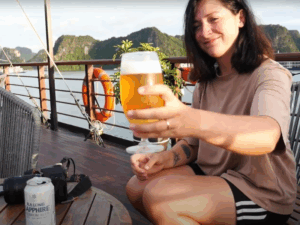
Beverages: Expect to pay $3–$5 for a beer and $8–$12 for a cocktail. Most cruises have a “Happy Hour” (Buy 1 Get 1) during sunset—don’t miss it!
Tipping Etiquette: In 2026, tipping is not mandatory but highly appreciated. A standard guide is $5–$10 per guest for the entire crew, usually placed in a common tip box at check-out.
Shuttle Service: Unless specified, a luxury Limousine transfer from Hanoi usually adds $20–$30 to your total.
14. Seasonal Survival: When to Visit Lan Ha Bay in 2026
Weather is the only factor we cannot control, but we can strategize for it.
The Golden Windows (March–May & September–November):
Conditions: Perfect blue skies, 22°C–28°C, and calm waters.
Expert Insight: This is peak season. Book 2 months in advance to secure the best cabin orientation (aim for the starboard side for the best sunset views).
The Tropical Summer (June–August):
Conditions: Hot (32°C+), vivid turquoise water, and occasional “flash storms.”
Risk: July and August carry a small risk of typhoon cancellations. Sao La Vietnam Tour always recommends choosing an agency with a clear 100% refund policy for weather-related “Force Majeure.”
The Mystical Winter (December–February):
Conditions: Foggy, cool (15°C–18°C), and incredibly atmospheric.
The “Vibe”: The bay looks like a traditional ink wash painting. It’s perfect for those who prioritize peace and “moody” photography over swimming.
15. The “Professional” Packing Checklist
Don’t overpack; cruise cabins, while luxurious, are optimized for space.
Documents: Original Passport (Mandatory for port registration).
Tech: Power bank, waterproof phone pouch (essential for kayaking), and extra SD cards.
Apparel: * Day: Lightweight linen or moisture-wicking clothes.
Evening: One “Smart Casual” outfit for the gala dinner.
Footwear: Flip-flops for the deck and sneakers for trekking in Viet Hai Village.
Health: Personal medication, motion sickness pills (though the bay is very calm), and high-SPF sunscreen.
16. Sustainable Travel: Being a Guardian of the Bay
By 2026, Lan Ha Bay has implemented strict environmental regulations. To ensure this UNESCO-adjacent treasure remains pristine for future generations:
Zero-Plastic Policy: Most cruises now ban single-use plastic bottles. Bring a reusable bottle; filtered water stations are available on all 5-star ships.
Wildlife Respect: When kayaking near Cat Ba National Park, keep a distance from the Cat Ba Langur—one of the world’s rarest primates.
Eco-Tours: Support tours that involve local fishing communities, as this ensures your tourism dollars directly benefit the people living on the water.
17. Final Verdict: Is Lan Ha Bay Right for You?
If you want the iconic “limestone karst” experience but dread the “tourist conveyor belt” of central Halong, Lan Ha Bay is your answer. It offers a more authentic connection to the water, better-preserved ecosystems, and the newest fleet of luxury vessels in Vietnam.
As we’ve outlined in this 3,000-word guide:
Part 1 mastered your logistics from Hanoi.
Part 2 decoded the fleet and the hidden lagoons.
Part 3 prepared you for the practicalities of budget and weather.
The emerald waters of the North are waiting. The only question left is: Which deck will you be standing on when the sun sets?
18. Book Your Journey with Sao La Vietnam Tours
Planning a trip to a world-class destination shouldn’t be a chore. At Sao La Vietnam Tour, we specialize in bridge-building—connecting you to the best local operators, the most reliable private transfers, and the hidden gems of Lan Ha Bay that only locals know.
Ready to start?
Browse our 2026 Luxury Cruise Collection
Request a Private Transfer Quote
Download our Free ‘Cat Ba Insider’ Guide
Contact us today to turn this guide into your next great adventure.