1. The 2026 Manifesto: Why We Walk
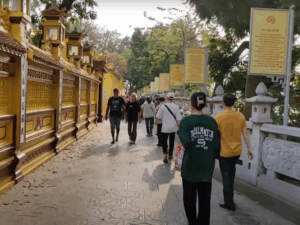
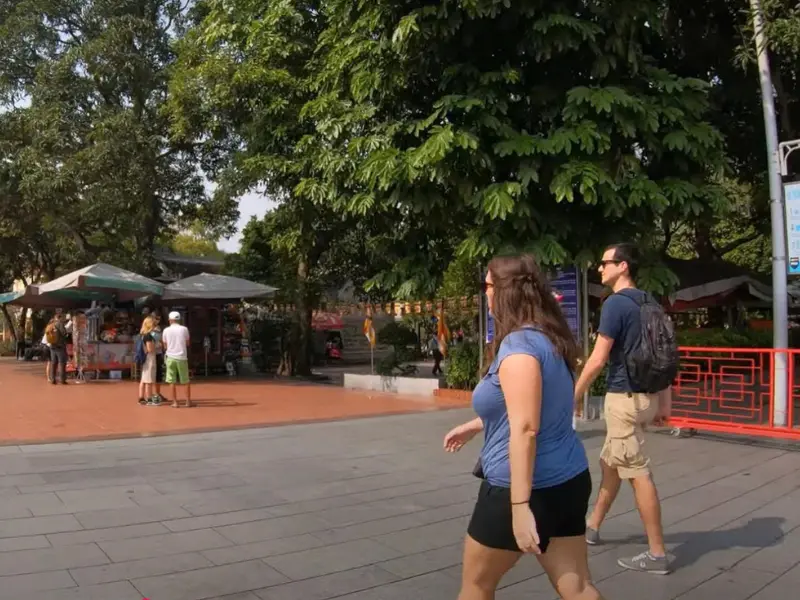
Hanoi in 2026 is a city that never stops moving. From the buzzing electric motorbikes to the rapid expansion of its suburban skyline, the capital of Vietnam is a titan of energy. However, for the discerning traveler, the true magic of Hanoi doesn’t happen at 40 miles per hour. It happens at the pace of a human heartbeat.
At Sao La Vietnam Tours, we have spent years mapping the “Invisible Hanoi”—the city that exists between the car doors and the tourist buses. A Hanoi walking tour is not just a way to save money or get exercise; it is a commitment to observation. It is about noticing the moss growing on a 200-year-old pagoda wall, the specific rhythm of a street vendor’s cry, and the intricate French-colonial shutters that most people drive past without a second glance.
In 2026, as travelers seek more “Authentic” and “Sustainable” experiences, walking has become the ultimate luxury. It allows you the freedom to stop, to smell, to taste, and to engage. This is the Sao La Philosophy: We don’t just show you Hanoi; we teach you how to read its streets.
2. Journey 1: The Mural Route, The Northern Gate, and Truc Bach Zen
Our first recommended route is a masterclass in “Visual History.” This 4-kilometer walk bridges the gap between the gritty realism of the railway and the high-society elegance of the lakes.
2.1. Phung Hung Mural Street: The Canvas of Time
The journey begins at Phung Hung Street, where the massive stone arches of the historic railway have been transformed into a public art gallery.
The 2026 Perspective: These murals were originally created to celebrate Hanoi’s heritage, but by 2026, they have become a living part of the community. You will see local artisans selling traditional toys and elders playing chess right under the paintings of ancient mid-autumn festivals.
The Sao La Guide Tip: Our guides will point out the “Hidden Arches”—segments of the wall that aren’t painted but hold secret stories of the “Subsidy Period” (Thời Bao Cấp) when these arches served as homes for local families.
2.2. Phan Dinh Phung Boulevard: The Canopy of Silence
Walking north through Hang Cot, you eventually reach Phan Dinh Phung Street. In 2026, this remains the most photographed street in Hanoi, and for good reason.
The Atmosphere: Enormous Sấu (dracontomelon) trees form a natural cathedral of green. The air here is noticeably cooler, scented with damp earth and ancient stone.
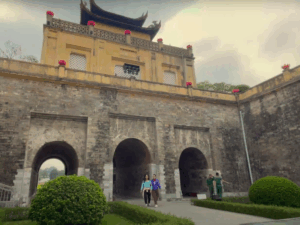
The Northern Gate (Cửa Bắc): We stop at the only remaining gate of the original Hanoi Citadel. Look closely at the brickwork: you can still see the indentations from French cannonballs fired in 1882. This is history you can touch.
Cua Bac Church: Just across the street, this church is a stunning example of “Eclectic Architecture,” blending Catholic structure with traditional Vietnamese “Yin-Yang” roof tiles. It is a symbol of Hanoi’s layered identity.
2.3. Truc Bach Lake: The Art of the Afternoon Stroll
Continuing toward Hung Vuong Street, the urban density opens up to reveal the shimmering waters of Truc Bach Lake.
The Spiritual Stop: We visit Quan Thanh Temple, one of the four “Sacred Guardians” of Hanoi. Inside, the massive bronze statue of Huyen Thien Tran Vu is a masterpiece of 17th-century casting.
The Walk on Water: Thanh Nien Street (The Road of Youth) separates West Lake from Truc Bach. In 2026, the pedestrian paths have been widened, making it the perfect spot for “People Watching.”
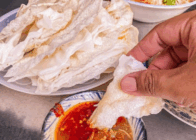
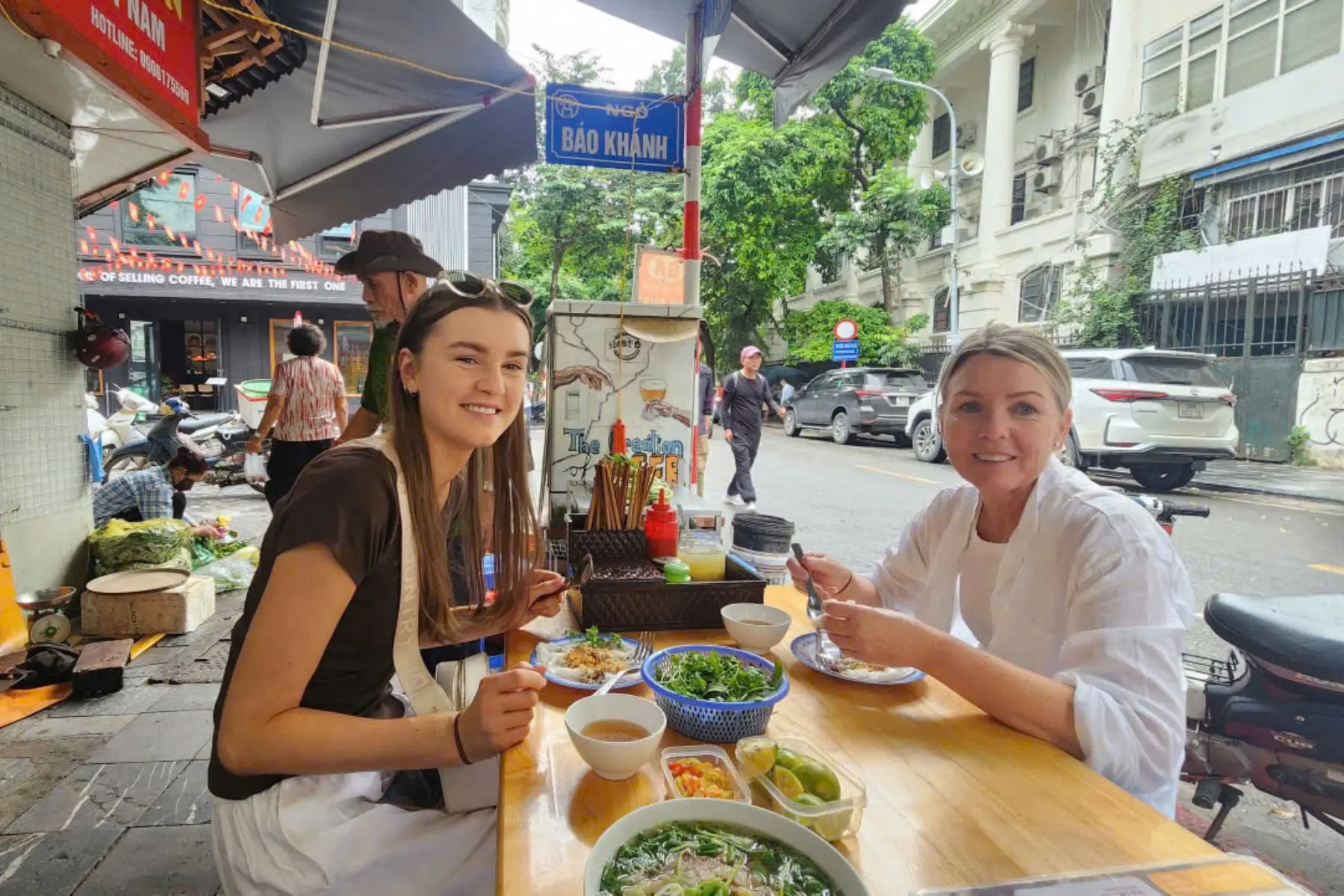
The Reward: We finish this segment at Ngu Xa Street. Our Hanoi private tour guide will lead you to a family-run stall that has been making Phở Cuốn (Fresh Spring Rolls) for three generations. This is the “Fuel of the Walker”—light, fresh, and deeply Hanoian.
3. Journey 2: Hoan Kiem Lake & The French Quarter – The Indochina Romance
This route explores the transition from the “Sacred Heart” of the city to the colonial grandeur that earned Hanoi the nickname “The Paris of the East.”
3.1. Hoan Kiem Lake: The Morning Ritual
In 2026, the Hoan Kiem Lake walking area has been expanded into a permanent pedestrian zone from Friday to Sunday.
The Experience: Start at the The Huc Bridge (The Morning Sunlight Bridge). Instead of just taking a photo of the red bridge, we walk around the lake to observe the “Hanoi Morning Rituals”—Tai Chi, fan dancing, and the intense concentration of local joggers.
St. Joseph’s Cathedral: A short walk up Ly Quoc Su brings you to the neo-Gothic Cathedral. In 2026, the surrounding cafes have become hubs for “Creative Hanoi,” where you can sip a Bạc Xỉu while admiring the weathered stone facade of the church.
3.2. The Museum of Resilience: The Women’s Museum
Walking down Ba Trieu, we enter the Vietnamese Women’s Museum.
Why We Include It: A walking tour is incomplete without understanding the “Human Infrastructure” of the city. This museum showcases the strength of the women who built and defended this nation. In 2026, new digital exhibits allow you to “hear” the stories of the street vendors you see every day on your walk.
3.3. The French Quarter: Boulevards of Grandeur
Passing the emerald greenery of Reunification Park (Thống Nhất), we head toward the Opera House.
The Architectural Contrast: The streets here—Nguyen Du, Tue Tinh, and Trang Tien—are wider, straighter, and lined with yellow-walled colonial villas.
The Finale: We conclude at the Hanoi Opera House. In 2026, Sao La Vietnam Tours partners with local historians to provide “Exclusive Exterior Narratives,” explaining how this building became the center of the city’s social life in the early 1900s.
The 2026 Treat: We end the walk at a boutique chocolate shop on Trang Tien, where you can sample world-class Vietnamese cacao—the perfect modern ending to a historic journey.
4. Strategic Advice for the Part 1 Walker
Before you set out on these two routes, keep these “Sao La Professional” tips in mind:
Timing is Everything: Start the Truc Bach route around 3:00 PM to catch the “Golden Hour” light on the lake. Start the French Quarter route at 8:00 AM to see the city waking up.
The “Hanoi Cross”: When crossing the street, maintain a slow, steady pace. Do not stop. The motorbikes are like a school of fish; they will flow around you if you are predictable.
Digital Maps vs. Human Storytellers: Google Maps works well in 2026, but it won’t tell you which yellow villa was a secret meeting spot for revolutionaries. This is why a Sao La tour guide is essential for “In-depth Insights.”
5. Journey 3: The 36 Streets Labyrinth – A Sensory Deep Dive
If Part 1 was about the “Face” of Hanoi, Part 2 begins with its “Gut.” The Hanoi Old Quarter (Phố Cổ) is a 1,000-year-old commercial ecosystem that refuses to be tamed by modernity. In 2026, while skyscrapers rise in the distance, these 36 streets remain a masterpiece of “Organized Chaos.”
5.1. The Awakening: Egg Coffee at a Hidden Sanctuary
Our journey begins at Cafe Pho Co on Hang Gai Street. This isn’t just a coffee stop; it’s a lesson in Hanoian spatial intelligence.
The Entrance: To find it, you must walk through a silk shop, down a narrow corridor, and past a family altar.
The View 2026: We climb to the top floor to sip the iconic Egg Coffee. From this height, you can see the red-tiled roofs stretching like scales toward the horizon. In 2026, our Hanoi private tour guide will point out the “Secret Gardens” built on these rooftops—private oases that most tourists never suspect exist.
5.2. Hang Dao to Dong Xuan: The Pulse of Trade
Walking toward Dong Xuan Market, we navigate the streets named after the goods they once sold: Hang Bac (Silver), Hang Ma (Paper Offerings), and Hang Thiec (Tin).
The Sensory Experience: In 2026, the sounds of hammers on metal in Hang Thiec still compete with the honks of electric scooters.
Dong Xuan Market: We don’t just visit the main hall. We take you to the Cau Dong side-alleys, where the air is thick with the scent of star anise, dried squid, and fermented fish sauce (Nước Mắm). This is where the city’s top chefs come to source their “Secret Ingredients.”
6. Journey 4: The Iron Memory – Long Bien Bridge & The Banana Island Oasis
This is the most “rugged” segment of our Hanoi walking tours. It is a transition from the dense urban fabric to the raw, agrarian fringe of the city.
6.1. Long Bien Bridge: The Eiffel of the East
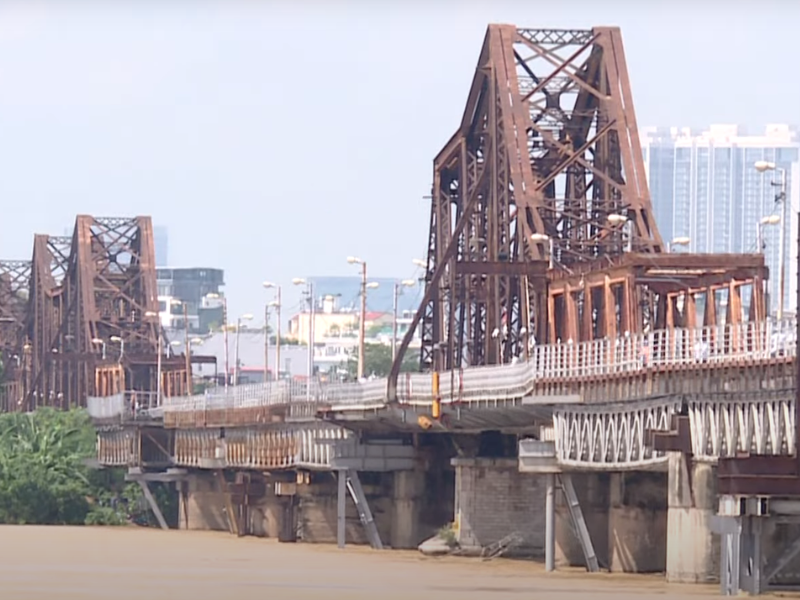
Designed by the firm of Gustave Eiffel’s contemporaries, the Long Bien Bridge is a rusted masterpiece of iron and resilience.
The Walk 2026: Walking along the narrow pedestrian path is an adrenaline-filled experience. As the vintage trains rattle the iron frame, you feel the vibration in your very bones.
The Perspective: From the mid-point of the bridge, you look down upon a sight that seems impossible in a capital city: a vast, emerald-green jungle sitting in the middle of the Red River. This is our next destination.
6.2. Banana Island (Bãi Giữa): The “Secret Jungle”
Descending a steep, rusted staircase from the bridge, we enter Banana Island. In 2026, this area remains a sanctuary for those seeking to escape the “City of Noise.”
The Landscape: Thousands of banana trees, guava orchards, and vegetable plots create a dense canopy. The temperature drops by 3-4°C instantly.
The Floating Settlements: We walk past the floating houses where families have lived for decades, disconnected from the city’s power grid, living in harmony with the river’s tides.
The Sao La Ethics: We visit these areas with a “Zero-Impact” policy. We support the local farmers by purchasing fresh fruit directly, ensuring our presence provides a direct economic benefit to the island’s residents.
7. The Art of “Alleyway Navigation” (Hệ thống Ngõ Ngách)
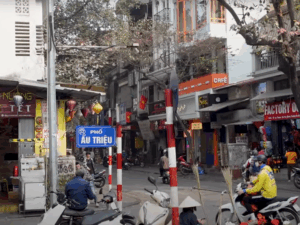
Hanoi is a city of layers. The main streets are the skin, but the alleys (Ngõ) are the veins. In 2026, Sao La Vietnam Tours has perfected the “Alleyway Navigation” model.
The 1-Meter Challenge: Some of the most atmospheric parts of Hanoi are alleys so narrow that two people cannot pass each other. We take you through these shortcuts to find “Communal Courtyards” (Sân chung) where 4-5 families share a single tap and a centuries-old banyan tree.
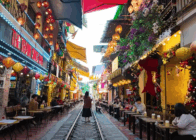
The Train Street Protocol: In 2026, the famous “Train Street” (Phùng Hưng/Trần Phú) is strictly regulated. Our guides know the legal “Viewing Spots” where you can safely enjoy a coffee just inches from the passing train while respecting local safety laws and resident privacy.
8. Strategic Advice for the Part 2 Explorer
Walking the Old Quarter and Long Bien Bridge requires a different mindset than the French Quarter.
Footwear is Non-Negotiable: Forget sandals. Hanoi’s sidewalks in the Old Quarter are uneven, often wet from market runoff, and serve as communal kitchens. Wear sturdy, closed-toe walking shoes.
Hydration Strategy: Avoid the colorful “street drinks” if you have a sensitive stomach. Look for the Sao La “Hydration Hubs”—vetted tea stalls where we provide our guests with purified water or fresh coconut water.
The “Hanoian Flow”: When crossing the Long Bien Bridge path or the busy Old Quarter intersections, maintain a steady pace. Do not make sudden movements. The motorbike riders are expert navigators; they will calculate their path based on your constant speed.
9. Journey 5: The Ultimate Street Food Odyssey – A Flavorsome Walk
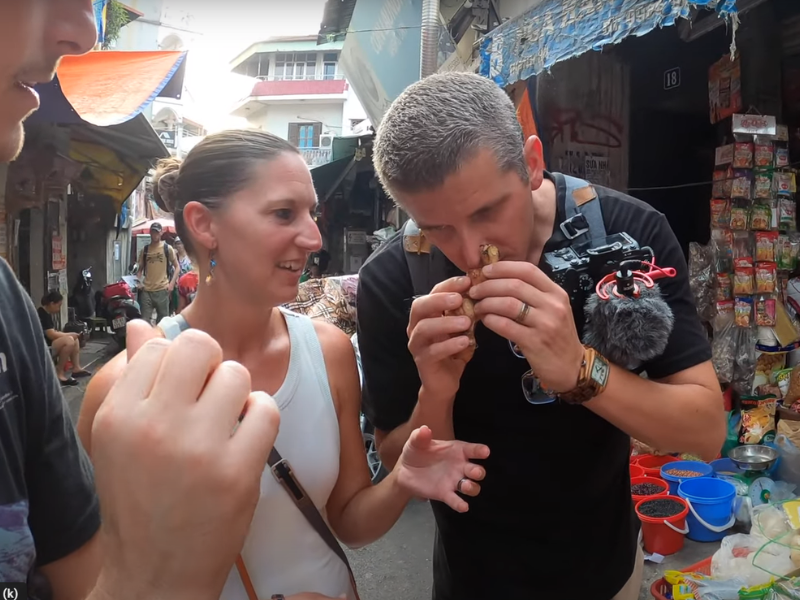
In 2026, the Hanoi street food tour has evolved into a global culinary phenomenon. Walking is the only way to earn your appetite as you move through the “Alleyway Kitchens” of the Old Quarter. At Sao La Vietnam Tours, we don’t just take you to eat; we take you to meet the artisans who have spent 40 years perfecting a single dish.
9.1. The “Hidden Wall” Stalls
Our walk begins at a stall tucked literally into a crevice of a 100-year-old French wall near Hang Chieu.
Must-Try: Bún Chả “Smoky Alley”: Forget the famous tourist spots. We visit a family that still grills their pork over hand-fanned charcoal in a narrow alley. The scent of caramelized meat and fish sauce is your GPS.
The Sao La Integrity: In 2026, hygiene is a top priority. We only visit stalls that pass our “Fresh-Batch Audit,” ensuring that the broth is made daily and the herbs are triple-washed in purified water.
9.2. The “Dry Noodle” Secret and Seasonal Delights
As we walk toward the Big Church (St. Joseph’s), we stop for Phở Trộn (Dry Phở).
The Flavor Profile: Unlike the traditional soup, this version uses a secret soy-based sauce, crunchy peanuts, and fried shallots. It is the perfect “walker’s meal”—light enough to keep you moving but rich enough to satisfy.
The 2026 Seasonal Twist: If you are walking in March 2026, we look for the vendors selling Bánh Trôi Tàu (warm ginger dumplings). If it’s autumn, we seek out the Cốm (green rice) wrapped in lotus leaves, sold by itinerant vendors on Phan Dinh Phung Street.
10. Journey 6: The Cooking Class & Market Masterclass – From Sidewalk to Sanctuary
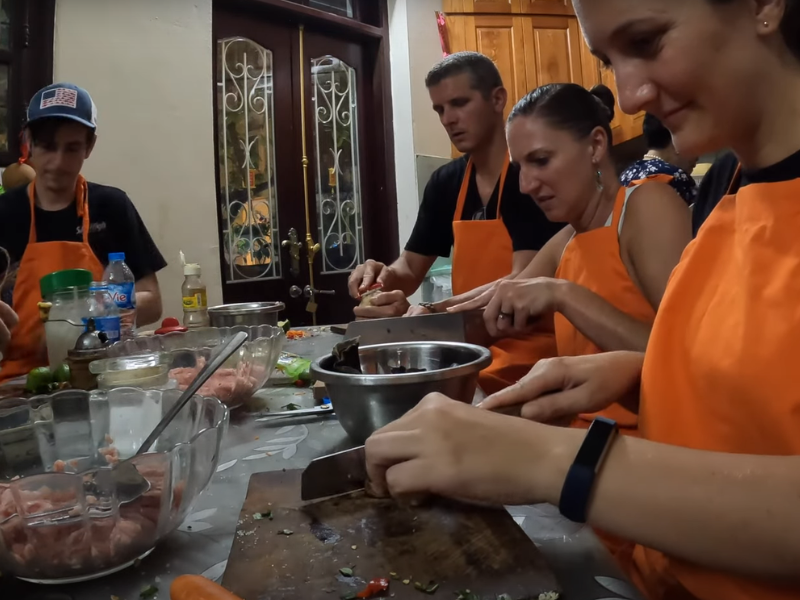
For those who want to take a piece of Hanoi home, the Hanoi cooking class and market tour is the ultimate hands-on walking experience. It bridges the gap between the chaotic wet market and the refined Hanoian villa.
10.1. The Market Audit (8:00 AM)
Your journey begins at the Chau Long Market. This is the “Engine Room” of Hanoian nutrition.
The Educational Walk: Your guide teaches you how to identify 15 types of aromatic herbs, the difference between “young” and “old” ginger, and how to pick the freshest river fish.
The Shopping Culture: You will watch the “Morning Rush”—a high-speed ballet of motorbikes and market baskets. This is where you see the real-time economy of Vietnam in 2026.
10.2. The Villa Cooking Session
We walk to a secluded French-colonial villa nearby. In 2026, these villas have become exclusive hubs for “Culinary Diplomacy.”
The Menu: You won’t just make spring rolls. You’ll master the Banana Flower Salad (an architecture of textures) and the iconic Egg Coffee (the “Tiramisu of the East”).
The Reward: You enjoy your 4-course creation on a balcony overlooking the tangled power lines and red roofs of the city—the quintessential Hanoi view.
11. Voices of the Sidewalk: 2026 Guest Reviews
What makes Sao La Vietnam Tours the top choice for walking adventures? Here is what our guests from the 2026 season have to say:
“A Masterclass in Navigation and Culture” “I thought I could explore the Old Quarter with Google Maps, but I was wrong. My Sao La guide, Minh, took me through alleys so narrow I had to walk sideways, leading to a hidden temple I never would have found. The history he shared wasn’t from a textbook; it was about his own grandfather’s life on these streets. Truly an in-depth local insight.” — David R., London (Tour Date: January 2026)
“The Best Way to Eat Hanoi” “The street food walking tour was the highlight of our Vietnam trip. As vegetarians, we were worried, but our guide curated a ‘Jain-friendly’ and ‘Veg-heavy’ route that was mind-blowing. The walk through Banana Island afterward was the perfect way to digest. Highly recommend Sao La for their attention to detail.” — Priya S., Delhi (Tour Date: February 2026)
12. The 2026-2027 Walker’s FAQ: Essential Intel from Ms. Trang
To ensure your Hanoi walking tour is flawless, our lead strategist, Ms. Trang, has compiled the most frequent questions for the 2026 season.
Q1: Is Hanoi walkable for people with varied fitness levels?
Answer: Yes, but strategy is key. Our French Quarter walk is flat and shaded, suitable for everyone. The Long Bien Bridge and Banana Island walk is more rugged and requires about 8km of stamina. We can always “short-circuit” any route with a 5-minute electric taxi ride if you feel tired.
Q2: What is the “Walking Etiquette” in the Old Quarter 2026?
Answer: The sidewalks are often “living rooms” or “parking lots.” In 2026, the rule is still: Walk on the edge of the road. Maintain a slow, predictable pace. Do not stop suddenly to take a photo. The motorbikes will flow around you like a school of fish if you stay steady.
Q3: What should I wear for a 10km walking day?
Answer: Hanoi is humid. Wear moisture-wicking fabrics (Linen or Bamboo). Sturdy, closed-toe sneakers are a must—do not wear flip-flops on the Long Bien Bridge. Always carry a small umbrella; in March 2026, “spontaneous drizzles” are the city’s favorite surprise.
Q4: How do I handle payments at street food stalls?
Answer: While many stalls in 2026 accept QR-code payments (linked to international apps), we still recommend carrying about 500,000 VND in small bills (10k, 20k, 50k) for the smallest vendors and tea stalls.
13. Strategic Advice: Why Booking with a Private Guide is a 2026 Necessity
While Hanoi is safe, its complexity can be overwhelming. A Hanoi private tour guide acts as your:
Cultural Translator: Explaining why people are burning “Hell Money” on the sidewalk today.
Safety Buffer: Helping you cross the chaotic intersections of Hang Dao and Cau Go without fear.
Food Auditor: Ensuring that the Phở you are eating is made with the highest quality ingredients.
14. Conclusion: The Labyrinth Awaits Your First Step
A journey through Hanoi is not a sprint; it is a slow, rhythmic dance with history. By choosing to walk, you have seen the rust on the Long Bien Bridge, smelled the star anise in the Dong Xuan air, and felt the cool breeze of Banana Island. You have moved from being a “Tourist” to being a “Witness” to the city’s evolution.
At Sao La Vietnam Tours, we don’t just provide guides; we provide the keys to the city’s secret doors. Whether you seek the “Instagram-perfect” mural or the “Jain-safe” street snack, Ms. Trang and our team of local storytellers are ready to lead the way.
Hanoi is ready. Your shoes are laced. The story starts now.
Sao La Vietnam Tours – Exploring the Soul of Hanoi, One Step at a Time.