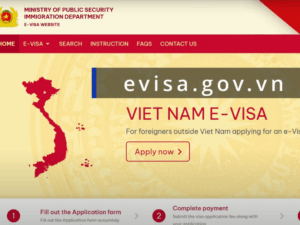
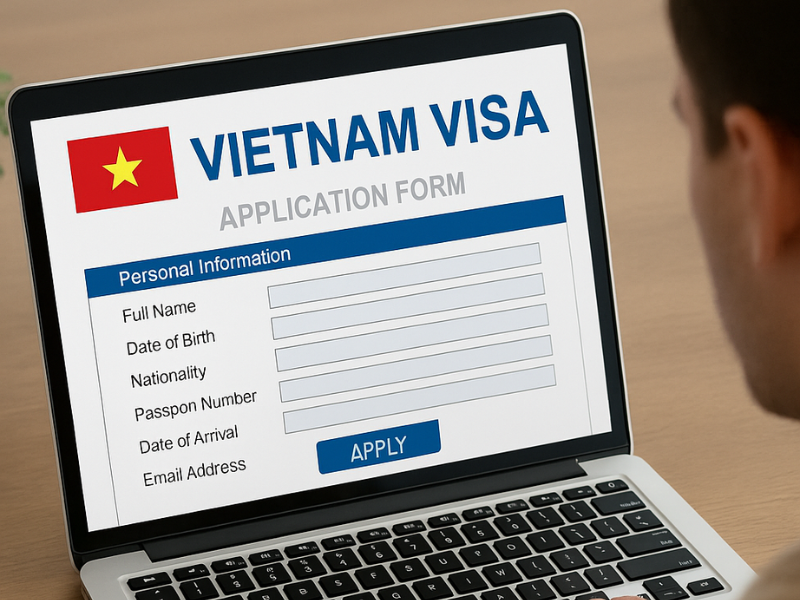
The Evolution of the Vietnam E-visa
Vietnam is not just a dream destination with Ha Long Bay or Hoi An Ancient Town; the nation has opened its doors to travelers with a significantly upgraded Vietnam E-visa (electronic visa) process. Understanding this process is the crucial first step to ensuring your journey is smooth and hassle-free.
Key Update (2023 – 2025): The validity period for the Vietnam E-visa has been extended to 90 days for citizens of many countries. Leverage this change to plan longer trips or utilize multiple-entry options.
I. Main Visa Types and Their Purpose
Choosing the correct visa type determines your length of stay and your rights while in Vietnam.
1. Vietnam E-visa (Electronic Visa)
Purpose: Personal tourism, short-term family visits, or non-work related business trips.
Validity: Maximum of 90 days. Can be for single entry or multiple entry.
Pros: Fully online process, no embassy visit required, and available to citizens of over 80 countries.
Cons: Only valid for entry/exit at designated ports of entry.
2. Traditional Visa (Embassy Stamped)
Purpose: Typically required for stays longer than 90 days, or for citizens whose countries are not eligible for the E-visa.
Procedure: Requires submission of physical documents directly to the Vietnamese Embassy or Consulate in your home country.
3. Business/Work Visa
Purpose: Legal employment or long-term business activities.
Note: This usually requires sponsorship and an invitation letter from a Vietnamese company, often along with a Work Permit. The Vietnam E-visa cannot replace this type of visa for long-term employment.
II. Step-by-Step Guide to the Vietnam E-visa Online Application
The E-visa application process is entirely conducted on the official Vietnamese Immigration website. Accuracy is paramount.
Step 1: Digital Document Preparation (The Most Critical Step)
Properly preparing your digital documents is the single biggest factor determining the success of your Vietnam E-visa application.
Portrait Photo: Digital photo, 4×6 cm (passport style), with a white or light blue background. The photo must be straight-on, no hats, no sunglasses. Incorrect photo formatting is the most common reason for application rejection.
Passport Data Page Photo: A clear, high-resolution photo of your passport’s personal data page, free from glare or obstructions. The passport must be valid for at least 6 months from your intended date of exit.
File Format: All images must be in JPG format. File sizes must be manageable (typically under 1MB).
Step 2: Completing the Official Application Form
Access the official E-visa portal and begin filling out the form.
Information Accuracy: The Full Name, Date of Birth, and Passport Number must match your passport absolutely 100%, including punctuation and name order.
Entry/Exit Gates: Clearly specify the exact airport or border gate you intend to use. The E-visa is only valid at the specific ports you register.
Step 3: Review and Submission
Receive Registration Code: After completion, the system will provide a Registration Code. You must save this code to check your application status and retrieve your final visa result.
Payment of Government Fee: Pay the Vietnam E-visa fee using a credit card. This is a non-refundable administrative fee, even if your application is ultimately denied.
III. Detailed Analysis of Cost and Processing Time
Clarity regarding fees and turnaround times is critical for a professional E-visa guide.
1. Government Fee Structure
Single Entry Fee: The official government fee for a single-entry Vietnam E-visa is currently $25 USD.
Multiple Entry Fee: The fee for a multiple-entry 90-day Vietnam E-visa is currently $50 USD.
Important: This is a non-refundable administrative fee. Double-check all details before making the payment.
2. Processing Time Breakdown
Standard Processing: The typical turnaround time is 3 working days (excluding weekends and Vietnamese national holidays).
Urgent Processing: If time is critical, some authorized third-party agencies can facilitate processing in 1 to 2 working days for an additional service fee.
Peak Seasons: During high travel seasons (Tet, Christmas, Summer), standard processing may be delayed. Planning to apply early is the best defense against delays.
IV. Troubleshooting and Common Mistakes
1. Most Common Reasons for E-visa Rejection
Photo/Passport Error (Blurred Image): Failure to comply with the 4x6cm photo rule, using a reflective or outdated photo, or submitting a blurred scan of the passport data page. Poor photo quality often triggers an automatic system rejection.
100% Data Mismatch: Any minor spelling error, incorrect name order, or date of birth discrepancy that does not match the passport exactly will result in rejection. This is strictly non-negotiable.
Incorrect Entry Gate: Applying for an E-visa for a specific airport but attempting to enter via an undesignated land border. The E-visa is only valid at the specific port you registered.
2. What To Do If Your E-visa Application Is Denied
Check the Reason: Use your Registration Code to retrieve the application status and understand the official reason for denial.
Re-apply (Carefully): If the error was a minor fixable issue (like photo format), you must correct it and submit a new application. You will be required to pay the government fee again.
Contact the Embassy: If denied multiple times or if you are running out of time, immediately contact the Vietnamese Embassy in your country to explore traditional visa options.
V. Scams, Warnings, and Alternatives
1. Warning Against Fake Websites
Official Channel: Always apply through the official Vietnamese Government website.
Avoid Excessive Fees: Be wary of third-party websites charging exorbitant processing fees (often over $100 USD). These sites are intermediaries and cannot genuinely speed up the government’s standard processing time.
2. Visa Exemptions and Visa On Arrival (VOA)
Visa Exemptions: Always check the official visa exemption list for your nationality (usually 15 to 45 days).
VOA (Special Cases): Visa On Arrival is only for air arrivals and absolutely requires a pre-arranged Approval Letter obtained before check-in. VOA is less common now that the E-visa is widely available.
VI. Real Traveler Experiences and Testimonials (Social Proof)
Learning from others who have successfully navigated the process boosts traveler confidence and demonstrates the practical utility of the E-visa system.
Case Study 1: The Digital Nomad’s 90-Day E-visa
Michael, a digital nomad from the US, shares his experience obtaining the newly extended 90-day multiple-entry Vietnam E-visa. He found the online application straightforward but emphasized the importance of saving his Registration Code immediately, which he used to quickly print his visa upon approval three days later. Michael highlighted the new 90-day flexibility as essential for remote workers.
Case Study 2: Family Trip and Documentation
The Lee family, traveling with two children, discussed their application process. They stressed the need for clear, recent, and correctly formatted portrait photos for all family members, including minors. They confirmed that applying for multiple E-visas at once (with one payment) was efficient and received their visas simultaneously.
Testimonial
“The online E-visa application took the stress out of planning. I was initially worried about the photo requirements, but following the exact guide meant my application was approved in 72 hours. It made organizing my trip so much simpler.” — Sarah K., Solo Traveler from Canada.
VII. Latest Updates on Vietnam Visa Policies and Regulations
A strong Pillar Page must always reflect the current regulatory environment.
90-Day Validity: The extension of the Vietnam E-visa validity from 30 days to 90 days for major markets has been the most significant recent update, making multi-entry trips vastly easier.
Expansion of Eligible Countries: The government continues to periodically expand the list of countries eligible for the E-visa, simplifying entry for global travelers. Always check the official eligible country list.
Online Extension: In certain circumstances, extensions for longer stays may now be processed online, reducing the need for foreign travelers to physically visit immigration departments.
VIII. Strategic Conclusion and Call to Action
Conclusion: Your Hassle-Free Journey Awaits
Obtaining your Vietnam E-visa is the final essential logistical step before embarking on your adventure. By understanding the different visa types, following the step-by-step application guide, and learning the troubleshooting tips, you ensure a smooth and hassle-free entry process.
Strategic Call to Action (Connecting Visa to Tour Service)
Having the privilege of traveling to Vietnam with Sao La Vietnam Tours means experiencing one of the most incredible countries in Southeast Asia firsthand.
When you book your customized Vietnam tour, you gain more than just an itinerary; you receive complimentary, dedicated visa consulting and document vetting services. Our local team will verify your passport data and intended entry/exit gates before you submit your E-visa application to guarantee accuracy and minimize the risk of costly rejections.
Ready to start your Vietnam adventure? Secure your travel logistics and your peace of mind simultaneously.
Click here to request your custom itinerary and complimentary visa consultation.
Meet the Expert Who Designed This Guide
Written by [Insert Expert Name Here], Lead Visa & Custom Travel Specialist at Sao La Tours
The author has over [X] years of experience advising clients on complex Vietnamese entry requirements and holds an expert understanding of current immigration policies.