Vietnam adventure tours transcend mere sightseeing; it is about pushing personal boundaries, connecting with rugged landscapes, and engaging with remote ethnic cultures. Unlike traditional travel, high-quality Vietnam adventure tours demand rigorous safety protocols, specialized local knowledge, and an unwavering commitment to operational excellence.
The Sao La Standard: Safety Criteria for Vietnam Adventure Tours
For any tour involving risk (motorbiking, trekking, caving), safety assurance is the core element of Trustworthiness (T). We establish the non-negotiable standards that define a premium Vietnamese adventure tour.
Guide Expertise and Certification (The Human Factor)
The guide is the single most important safety element in Vietnam adventure tours.
Mandatory Training: All lead guides must possess certifications in wilderness first aid (e.g., WFA or WFR) and advanced navigation/rescue protocols relevant to the specific terrain (mountain or cave).
Local Knowledge: Guides must be local to the region being explored (e.g., H’mong guides for Sapa treks, Tay guides for Ba Be) to ensure unparalleled knowledge of weather patterns, emergency egress points, and cultural sensitivity.
Language Fluency: Guides must be fluent in both English and the relevant local ethnic dialect for communication during emergencies or cultural exchanges.
Equipment and Logistics (The Gear Factor)
Poor equipment and logistics turn an adventure into a hazard.
Vetted Gear: All specialized equipment (helmets, harness systems, ropes, kayaking vests) must be internationally certified (CE or UIAA standard) and subject to documented, professional inspection before every tour.
Emergency Protocol: Every trip must have a clear, pre-planned emergency evacuation route, satellite communication devices (where cell service is absent, e.g., Ma Pi Leng Pass, remote Fansipan routes), and a minimum Guide-to-Client Ratio of 1:4 for trekking and caving.
Permitting: Ensuring all required border zone permits (for Hà Giang, Cao Bằng) or National Park entry clearances are legally secured, which is a mandatory standard for all premium Vietnam adventure tours to prevent costly delays or fines.
Difficulty Rating System (The Planning Factor)
We use a universal rating system to help you choose the best Vietnam adventure tours matching your fitness level:
| Rating | Definition | Physical Requirement | Example Adventure |
| Level 1 (Easy) | Minimal physical challenge, well-maintained paths. | Can walk comfortably for 3–4 hours/day. | Ba Bể Boat/Cave Tour. |
| Level 2 (Moderate) | Day-long activity, steep ascents/descents, varied terrain. | Good cardiovascular fitness, comfortable with uneven ground. | Hà Giang Loop (as a passenger), Sapa 1-Day Trek. |
| Level 3 (Strenuous) | Multi-day commitment, high altitude/remote areas, rough conditions. | Excellent fitness, endurance, capable of carrying a small pack. | Fansipan Summit Trek (2-Day Route), Advanced Caving. |
Top Destinations for Epic Vietnam Adventure Tours
The North offers Vietnam’s most rewarding and challenging adventures, leveraging its dramatic mountains and ancient caves.
The Hà Giang Loop: Motorbike Expedition (Level 2/3)
As one of the most thrilling Vietnam adventure tours, the Hà Giang Loop is widely regarded as the most spectacular mountain route in Southeast Asia, offering sheer drops, ethnic villages, and unparalleled panoramas.
The Adventure: A 3-to-5-day journey through the Đồng Văn Karst Plateau Geopark, traversing steep passes including the iconic Ma Pi Lèng.
Key Adventure Elements: Motorbiking (as driver or passenger Xe Ôm), cultural immersion in remote ethnic villages (Lô Lô, H’Mông), and high-altitude road travel.
Difficulty Analysis (Expertise):
Level 2 (Passenger): Moderate, requires tolerance for long days on winding roads and varying accommodation.
Level 3 (Driver): Strenuous, requires extensive experience driving manual motorbikes, especially in rain or fog, due to steep inclines and tight turns.
Safety Focus: [Sao La Tours] requires all drivers, especially Xe Ôm (local motorbike taxi drivers), to undergo regular defensive driving training and use high-quality, full-face helmets.
Conquering Fansipan: The Roof of Indochina Trek (Level 3 Strenuous)
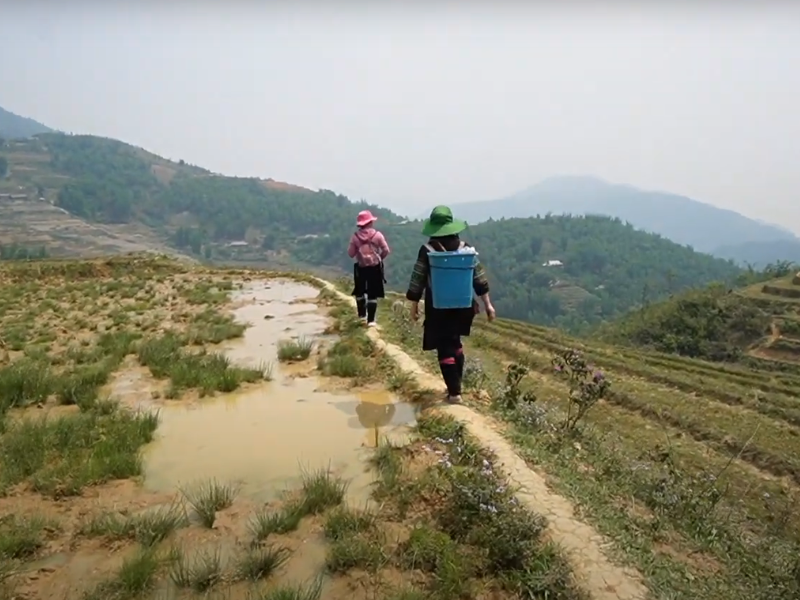
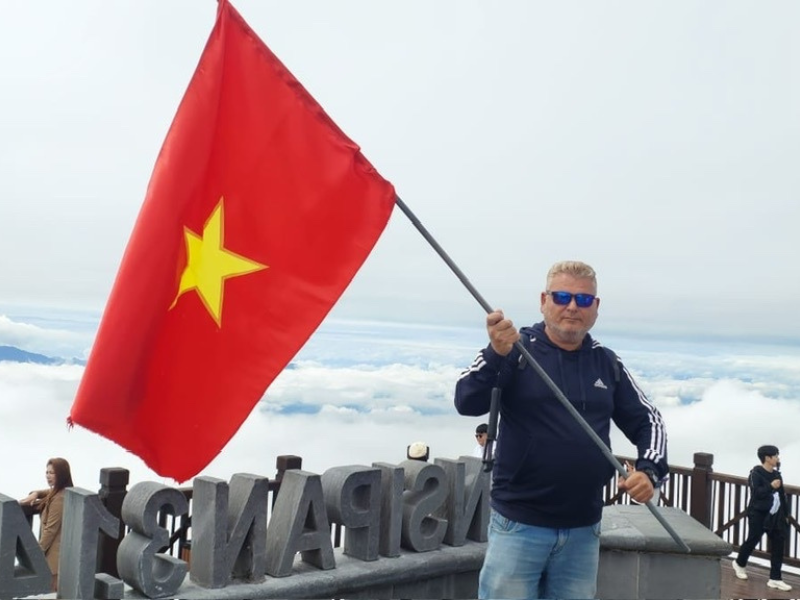
For travelers seeking high-altitude Vietnam adventure tours, conquering Fansipan (3,143m) near Sapa stands as the ultimate test of endurance through dense rainforests.
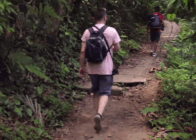
The Adventure: A 2-to-3-day ascent/descent through Hoàng Liên National Park, navigating slippery roots, bamboo forests, and steep muddy slopes to reach the summit plateau.
Key Adventure Elements: Multi-day strenuous trekking, camping/basic shelter stay, and adaptation to temperature extremes (freezing near the summit in winter).
Difficulty Analysis (Expertise): The 2-day route is extremely demanding. The 3-day route (recommended for Level 3 travelers) provides better acclimatization and reduces daily mileage. It requires solid ankle support and preparation for humidity and mud.
Safety Focus: Mandatory porter support (critical for logistics and emergency aid), satellite communication checks at high camps, and strict time cut-offs enforced by the guide to ensure summit safety and descent before dark.
Specialized Adventure Niches: Subterranean and Hydro Challenges
These adventures require specific expertise, certified equipment, and highly detailed logistical planning, defining them as truly specialized experiences.
Northern Caves Exploration: Subterranean Adventure (Level 1/2/3)
The best Vietnam adventure tours offer a blend of accessible cave wonders and demanding, multi-day expeditions.
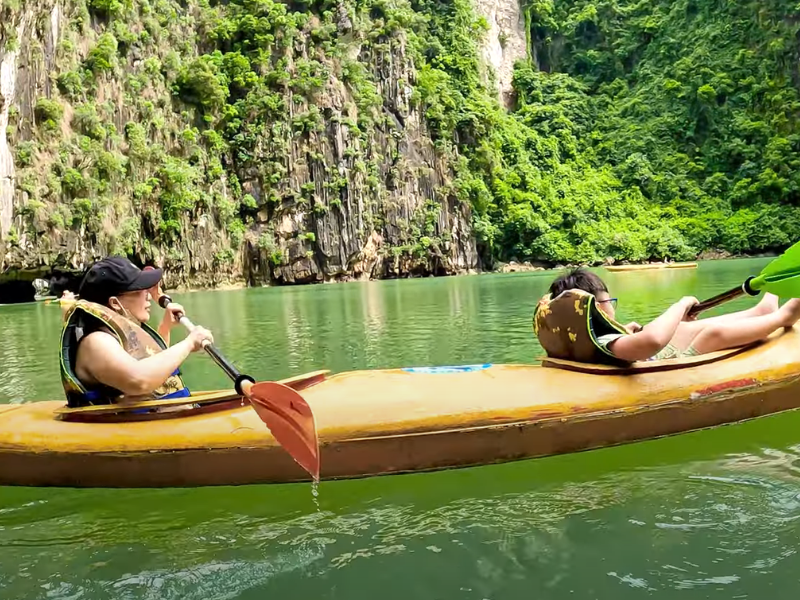
The Adventure: Exploring vast cave systems by boat (Ba Bể National Park), on foot, or by kayak (Ha Long Bay lagoons). The best tours offer a blend of accessible wonders and demanding, multi-day expeditions.
Key Adventure Elements: Boating through underground rivers (e.g., Ba Bể’s Puông Cave), caving/spelunking, and navigating unique subterranean environments.
| Caving Type | Location (Expertise Focus) | Difficulty | Safety Vetting Focus |
| Boat/Easy Cave | Ba Bể Lake (Puông Cave), Ha Long Bay (Sửng Sốt, Hang Luồn). | Level 1 (Easy) | Boat licensing, life jacket inspection, controlled group access. |
| Multi-day Expeditions | Quảng Bình (Phong Nha/Sơn Đoòng region). | Level 3 (Strenuous) | UIAA-certified harnesses/ropes, certified cave guides, specialized rescue teams. |
Expert Insight (E-E-A-T): While accessible caves like those in Ha Long Bay are stunning, the true Level 3 caving experience—requiring overnight stays and specialized gear—is concentrated in Quảng Bình (Central Vietnam), home to the world’s largest caves. A high-quality tour operator (like Sao La Tours) can secure the necessary permits and certified guides for these rare expeditions.
Central Highlands Canyoning & Water Sports (Level 2 Strenuous)
The temperate climate and rugged river systems around Đà Lạt make it the prime location for specialized Vietnam adventure tours focusing on high-adrenaline, water-based activities rarely found elsewhere in the country.
The Adventure: Navigating down river canyons using techniques like rappelling (abseiling) down waterfalls, natural water sliding, and free jumping into deep pools.
Key Adventure Elements: Controlled descent (rappelling), swimming, and high-impact activity.
Difficulty Analysis (Expertise): Requires comfort with heights, strong swimming ability, and trust in the equipment. The physical effort is concentrated, making it demanding but short-lived.
Safety Focus: Non-negotiable. Guides must be certified by international canyoning organizations. Equipment (helmets, harnesses, ropes) must be rigorously checked before and after every use. A 1:4 guide-to-client ratio is essential due to the high-risk nature of rappelling.
Southern Vietnam Adventure Tours: Cultural Immersion and Endurance
While less focused on vertical challenges, Southern Vietnam offers unique endurance and historical adventures.
The Cu Chi Tunnels & Mekong Delta Expedition (Level 2 Endurance)
This adventure focuses on extreme environments, endurance cycling, and historical exploration.
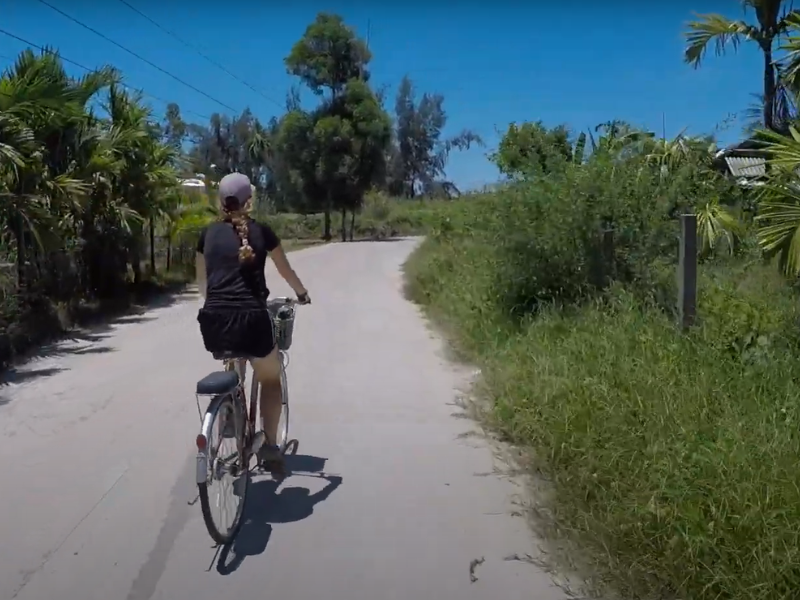
The Adventure: Combining the physical challenge of navigating the tight, claustrophobic tunnels of Củ Chi with multi-day cycling or kayaking expeditions through the intricate waterways of the Mekong Delta.
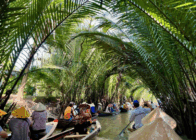
Key Adventure Elements: Claustrophobic exploration (tunnels), multi-day cycling on flat but potentially long routes, and kayaking through mangrove forests.
Difficulty Analysis (Expertise): Primarily an endurance test (Level 2), requiring the physical stamina for long cycling days (30-50km) and mental fortitude for the dark, cramped tunnels.
Safety Focus: The Delta requires specific safety awareness regarding local boat traffic and water quality. Cycling tours require backup vehicles, high-visibility gear, and comprehensive first aid kits.
The South-Central Coast: Surfing and Diving (Level 2/3)
The coastline offers seasonal, ocean-based adventures that appeal to experienced water sports enthusiasts.
The Adventure: Catching seasonal waves at beaches near Đà Nẵng/Hội An or Mũi Né (Surfing). Exploring the diverse coral reefs and marine life around Phú Quốc or Côn Đảo (Diving/Snorkeling).
Key Adventure Elements: Seasonal dependence, PADI/SSI certification (for diving), and boat safety.
Difficulty Analysis (Expertise): Level 2 for experienced swimmers/snorkellers; Level 3 for certified divers or surfers tackling larger swells.
Safety Focus: Use of certified dive operators (PADI/SSI), modern oxygen and boat safety equipment, and checking local wave/current forecasts rigorously.
Logistics and Cost Analysis: Planning Your Adventure Budget (Conversion)
Vietnam adventure tours have a significantly higher cost structure than traditional tours due to mandatory safety equipment.
The Cost Premium: Why Adventure is Priced Higher
| Cost Component | Standard Tour (Bus/Hotel) | Adventure Tour (Trek/Cave/Canyon) | Justification for Price |
| Guide Wages | Standard daily rate. | Significantly higher. Based on specialized certification (WFA, Canyoning). | Expertise and responsibility for client safety. |
| Equipment Costs | Minimal (Water, First Aid). | High. Ropes, harnesses, helmets, satellite phones, specialized vehicles. | Mandatory gear replacement and international certification costs. |
| Permits & Fees | Standard National Park entry. | Special Permits. Border zone access (Hà Giang), restricted cave entry (Quảng Bình). | Legal access to sensitive, remote, or controlled areas. |
| Logistics/Porter | Minimal. | Required. Porters for Fansipan; backup vehicle for Hà Giang Loop/Cycling. | Ensuring comfort, safety, and logistical stability in remote areas. |
Sample Pricing Structure (Per Person, Estimated)
| Adventure Tour | Duration | Difficulty (Level) | Estimated Cost (USD) | What the Price Guarantees |
| Hà Giang Loop | 3-4 Days | Moderate/Strenuous (2/3) | $300 – $550 | Vetted driver, quality bike, border permits, clean accommodation. |
| Fansipan Trek | 2-3 Days | Strenuous (3) | $250 – $400 | Certified guide, porters, high-quality camping gear, park fees. |
| Dalat Canyoning | 1 Full Day | Strenuous (2) | $60 – $90 | Certified guide, CE/UIAA gear, insurance cover, all fees. |
| Mekong Cycling | 3 Days | Moderate (2 Endurance) | $350 – $600 | Quality bicycle rental, backup vehicle support, local accommodation. |
Note: All prices for our Vietnam adventure tours include certified guides, top-tier safety gear, and required national park permits.
Strategic Timing and Physical Requirements
Choosing the right time of year is critical for safety and overall experience when booking Vietnam adventure tours, especially for mountain and water-based itineraries.
Northern Treks (Hà Giang, Sapa, Cao Bằng): Best Season: September to December (Dry, cool) and March to May (Warm, clear). Avoid: June to August (Heavy rain, high landslide risk, extreme humidity).
Central Canyoning (Dalat): Best Season: November to April (Dry season, ideal water levels). Avoid: Peak rainy season (July/August) can cause dangerously high, fast-flowing water.
Southern Adventures (Mekong, Côn Đảo): Best Season: December to April (Dry and sunny).
The Critical Safety Guarantee: Our Commitment to Risk Management (Trust)
When booking Vietnam adventure tours, safety is not just a feature; it is the core product.
Risk Mitigation Protocols: The Three-Tier Defense
Our approach to managing the inherent risks of adventure is layered, ensuring preparation for all foreseeable scenarios.
Tier 1: Pre-Departure Vetting:
Health Screening: Mandatory questionnaire to assess pre-existing conditions and fitness against the specific Difficulty Rating (Level 1-3) of the chosen tour.
Gear Inspection: Detailed, documented check of all ropes, harnesses, and helmets by the Lead Guide the day before departure.
Tier 2: On-Site Execution:
Emergency Communication: Guides carry tested satellite phones or high-frequency radios in areas without reliable cellular service (Ma Pi Lèng, Fansipan high camps).
Pacing and Hydration: Strict adherence to pacing appropriate for the group’s fitness level, prioritizing acclimatization and mandatory water/electrolyte breaks.
Weather Contingency: Immediate implementation of pre-planned alternative routes or shelter during unexpected severe weather.
Tier 3: Post-Incident Management:
Insurance Verification: Mandatory confirmation that every client has valid travel insurance before the tour begins.
Evacuation Partnerships: Pre-established agreements with local clinics, regional hospitals, and helicopter service providers (where available) to ensure the fastest possible evacuation and transport to advanced care.
Ethical and Environmental Adventure
Operating sustainable Vietnam adventure tours means prioritizing the preservation of local environments and ethnic cultures.
Leave No Trace (LNT): All tours operate under strict LNT principles, ensuring no litter is left, trails are not damaged, and waste is properly disposed of outside National Parks.
Support Local Communities: [Sao La Tours] partners directly with ethnic minority communities (H’Mông, Dao, Tày) for guides, porters, and homestay accommodation, ensuring that a significant portion of the tour cost directly supports local economic development and preserves traditional ways of life.
Beyond the Thrill: Cultural Immersion and Learning (Expertise)
True adventure includes engaging with the human landscape. Our tours are designed to be culturally challenging as well as physically demanding, fostering deep Experience (E).
The Power of Local Stay and Dialogue
We prioritize authentic immersion over tourist comfort in remote areas.
Homestay Commitment: Accommodation in local, family-run homestays (especially in Hà Giang, Sapa, and Mekong Delta) is non-negotiable. This is where the true learning happens—sharing a meal, communicating (via the guide), and witnessing daily life.
Contextualizing the Terrain: Guides do more than point out scenery; they explain the historical, political, and cultural significance of the mountains (e.g., the history of the Ma Pi Lèng Pass construction) or the ethnic textiles being woven.
Ethical Photography: Guides instruct clients on appropriate etiquette when photographing ethnic minorities, ensuring respect for privacy and traditions.
Adventure and History: The South’s Unique Challenge
While the North focuses on nature, the Southern adventures blend physical and historical endurance.
Cu Chi Tunnels Immersion: The tour is not just about crawling; it is about understanding the sheer physical hardship and mental resilience required during the wartime era, making the experience deeply profound and challenging in a historical sense.
Mekong Delta Endurance: Cycling or kayaking through the Delta is an endurance test that connects travelers directly to the resilience and resourcefulness of life lived entirely on the water.
The Final Call: Securing Your Vetted Adventure (Conversion)
This ultimate closing section synthesizes all the information—the thrill, the safety, the expertise—into a clear, urgent call for action.
Booking Logistics & Availability
Small Group Focus: Remind the traveler that due to the complexity and safety requirements (1:4 Guide-to-Client Ratio), all our adventure tours operate on strictly limited capacity. Availability, especially during peak seasons (Sept–Dec), is highly restricted.
Booking Window: We recommend booking specialized tours (Canyoning, Multi-day Treks) at least 4 to 6 weeks in advance to secure guides and permits.
The Decision Threshold: Why Choose Vetted Adventure?
The Risk of Uncertified Tours: The difference between budget trips and professional Vietnam adventure tours comes down to certified ropes, mandatory satellite communication, and fully insured guides. Choosing budget operators often means compromising on safety.
The Guarantee: When you book a Level 3 (Strenuous) adventure with us, you are guaranteed internationally certified equipment, emergency protocols vetted by our safety team, and expert local guides dedicated to your safety above all else.
STOP HESITATING. START CLIMBING.
Don’t leave your experience to chance. Trust Sao La Tours—the experts in premium Vietnam adventure tours who prioritize safety, local knowledge, and authentic experiences above all else.