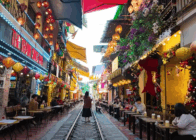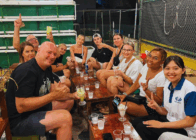
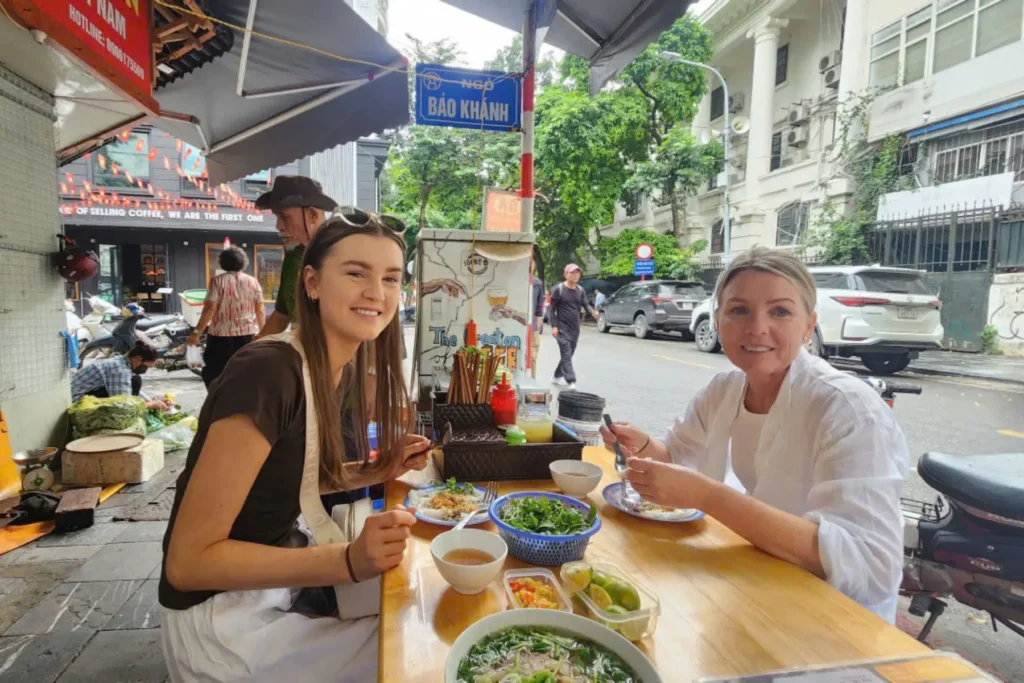
The Soul of Hanoi is on the Sidewalk
If you want to understand the heart of Vietnam, you must leave the dining rooms of five-star hotels and find a small plastic stool on a buzzing street corner. In 2026, the Vietnam food tour Hanoi remains the most authentic way to connect with the city’s thousand-year-old heritage.
At Sao La Vietnam Tour, we believe that street food is the “Living Museum” of Hanoi. Each bowl of noodles tells a story of regional migration, French colonial influence, and the sheer creativity of the Vietnamese people. This guide is your invitation to step into the aromatic maze of the Old Quarter, where every alleyway promises a new discovery.
2. The Golden Standard: Pho Bo (Vietnamese Beef Noodle Soup)
No Vietnam food tour can begin without paying homage to Pho. In 2026, Pho is more than a dish; it is a global icon, yet its true essence can only be captured in the humid morning air of Hanoi.
2.1. The Architecture of the Broth
The secret of a legendary Pho Bo lies in the patience of the chef.
The “Clear Gold” Fact: A true Hanoi broth is never cloudy. It is achieved by simmering beef bones, oxtails, and shanks for over 12 hours, constantly skimming the surface.
The Aromatics: Charred ginger, roasted shallots, cinnamon, and star anise are added to create a complex, earthy fragrance that defines the streets of the Old Quarter at 6:00 AM.
The 2026 Expert Tip: We take our guests to the “No-Name” stalls—places where the recipe has been passed down for four generations. Look for the stall with the largest pile of discarded lime wedges; that’s where the locals eat.
2.2. The Texture of the Rice Noodle
Unlike dried pasta, the rice noodles (Bánh Phở) in Hanoi are often handmade and steamed daily. They are soft, velvety, and designed to soak up the essence of the broth. Whether you prefer your beef “Tái” (rare and tender) or “Chín” (well-done brisket), the balance of fresh herbs and a dash of northern chili vinegar creates a breakfast that is both nutritious and soul-warming.
3. The Colonial Legacy: Banh Mi (The Vietnamese Sandwich)
If Pho is the soul of Vietnam, Banh Mi is its most successful fusion. Born from the French baguette, the Vietnamese Banh Mi has evolved into a world-class street snack that balances textures and flavors perfectly.
3.1. The “Crunch” Factor
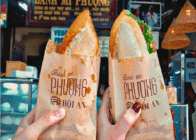
The Hanoi Banh Mi is distinct from its southern counterpart. It is often smaller, crustier, and more focused on the quality of the pate.
The Filling Symphony: A traditional Hanoi Banh Mi starts with a layer of rich, homemade liver pate, followed by slices of pork bologna (Chả Lụa), head cheese, and a handful of pickled carrots and daikon.
The “Hanoi Twist”: In 2026, we see a rise in “Bánh Mì Trâm”—where the bread is served with a side of savory gravy for dipping.
Why it Works: It is the ultimate contrast—warm, crunchy bread meeting cool, crisp cucumbers and spicy chili sauce. It is the perfect “grab-and-go” fuel for a morning of sightseeing.
4. The Artistic Delicate: Banh Cuon (Steamed Rice Rolls)
For those who prefer a lighter start, Banh Cuon offers a masterclass in culinary dexterity. Watching a street vendor make Banh Cuon is like watching a silent ballet.
4.1. The “Paper-Thin” Technique
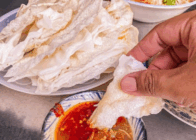
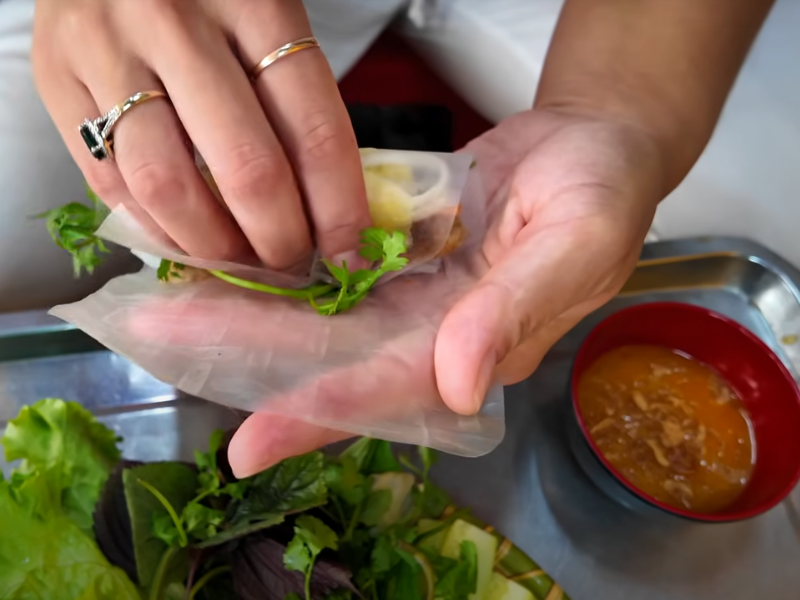
The Steam: Using a large pot covered with a taut cloth, the chef spreads a fermented rice batter into a circle so thin it is almost translucent.
The Filling: A savory mix of minced pork and wood-ear mushrooms is folded inside, then topped with crispy fried shallots.
The Dipping Sauce (The Highlight): This is where the magic happens. The sauce is a delicate balance of fish sauce, lime, sugar, and a drop of Cà Cuống (giant water bug essence)—a rare, traditional ingredient that adds an unmistakable floral aroma.
5. Summary: Your Morning Gastronomic Map
| Dish | Best Time to Eat | Sensory Profile | Sao La Insider Tip |
| Pho Bo | 6:30 AM – 8:30 AM | Savory, Aromatic, Warm. | Add a few “Quẩy” (fried dough sticks) to soak up the broth. |
| Banh Mi | Anytime | Crunchy, Spicy, Rich. | Ask for “Extra Pate” for the most authentic Hanoi flavor. |
| Banh Cuon | 7:00 AM – 9:30 AM | Delicate, Silk-like, Fragrant. | Pair it with “Chả Quế” (roasted cinnamon pork) for a full meal. |
6. Navigating the Alleys: Why a Guide Matters in 2026
Hanoi’s food scene is a moving target. The best “Pho” stall yesterday might be closed for a family wedding today.
The Sao La Edge: Our food tours are led by “Street Food Detectives”—guides who live in the Old Quarter and know exactly which grandmother is making the freshest Banh Cuon this morning.
Safety & Hygiene: We pre-screen every stall for hygiene standards, ensuring you experience the grit of the street without the risk.
7. The President’s Choice: Bun Cha (Grilled Pork with Vermicelli)
If Pho is the soul of the morning, Bun Cha is the undisputed king of the Hanoi lunch hour. In 2026, this dish remains a global sensation, largely thanks to a famous dinner between Anthony Bourdain and President Barack Obama in a humble Hanoi shophouse years ago.
7.1. The Alchemy of Charcoal
The magic of Bun Cha is not in the kitchen, but on the sidewalk.
The “Smoky” Fact: At Sao La Vietnam Tour, we lead you toward the scent. The pork—both minced patties and thinly sliced belly—is marinated in fish sauce, sugar, and shallots, then grilled over red-hot charcoal until the fat caramelizes and the edges are perfectly charred.
The Dipping Broth: This is the heart of the dish. It is a warm, sweet-and-sour concoction of fish sauce, vinegar, and sugar, filled with crunchy slices of green papaya and carrot.
The Ritual: Dip a nest of fresh rice vermicelli (Bún) and a handful of perilla and lettuce into the bowl. Each bite is a symphony of smoke, sweetness, and fresh herbal notes.
8. The Artistic Heritage: Cha Ca La Vong (Grilled Fish with Dill)
Cha Ca is more than a meal; it is an experience that borders on fine art. Originating from the Doan family on Hang Son Street (now renamed Cha Ca Street), this dish is so iconic that an entire street was named after it.
8.1. Turmeric and Greenery
The Fish: Traditionally made from Hemibagrus (Cá Lăng), the fish is marinated in galangal, turmeric, and fermented rice before being grilled over coals.
The Table-Side Performance: In 2026, the tradition continues. A sizzling pan of fish is placed on your table over a small stove. Your guide from Sao La will show you how to add heaps of fresh dill and scallions into the pan. As the greens wilt, they release an incredible aroma that infuses the fish.
The Final Touch: Eat it with rice vermicelli, roasted peanuts, and a dash of Mam Tom (shrimp paste) with lime and chili. It is a bold, sophisticated flavor profile that represents the refined palate of old Hanoi.
9. The Crispy Seashore: Nem Cua Be (Crab Spring Rolls)
While many spring rolls in Vietnam are cylindrical, the Nem Cua Be is a large, square parcel of indulgence. Originally from the coastal city of Hai Phong, it has become a staple of the Vietnam food tour Hanoi.
9.1. The “Golden Crunch”
The Filling: This is a rich mixture of sea crab meat, minced pork, shrimp, wood-ear mushrooms, and bean sprouts. The “Brick Crab” (Cua Gạch) provides a creamy, savory depth that is unmistakable.
The Double-Fry Technique: To achieve that legendary “shatter-on-impact” crunch, the rolls are fried twice. The result is a golden, bubbly rice paper skin that yields to a moist, flavorful interior.
Pro-Tip: We usually serve this alongside Bun Cha. The acidity of the Bun Cha broth perfectly cuts through the richness of the fried crab roll.
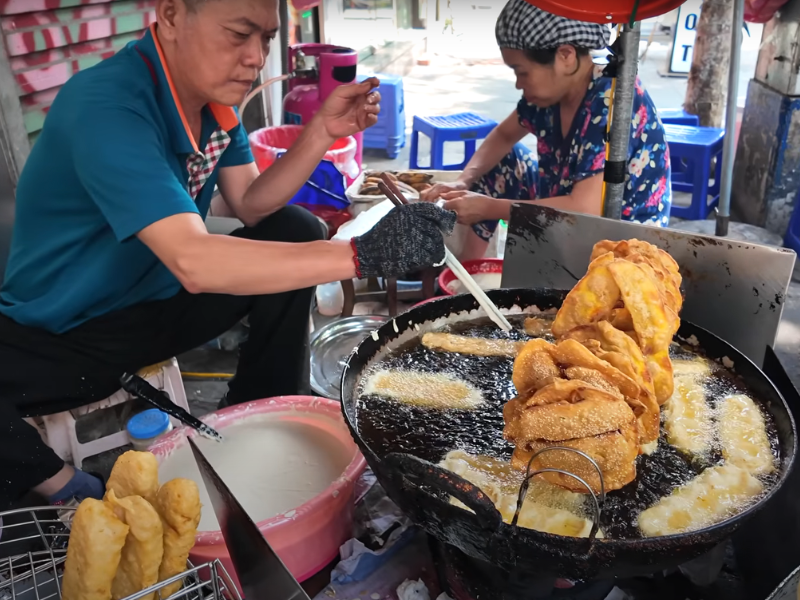
Savor authentic dishes, explore street markets, and enjoy culinary traditions from Hanoi to Ho Chi Minh City.
10. The Winter’s Comfort: Bun Ca (Fish Noodle Soup)
For those gray, misty Hanoi days in autumn or winter, Bun Ca is the ultimate comfort. While not as famous as Pho, it is a local favorite for its vibrant colors and balanced flavors.
10.1. The “Tangy” Broth
The Foundation: The broth is light and clear, made from fish bones and pork bones, simmered with fresh tomatoes and pineapple to create a natural sweetness and a subtle tang.
The Texture Mix: A bowl of Bun Ca is a festival of textures. You have the crunch of deep-fried fish fillets, the chewiness of fish cakes (Chả Cá), and the softness of blanched water spinach or celery.
The “Vinegar” Secret: Adding a spoonful of garlic-infused rice vinegar and a pinch of dried chili flakes transforms the bowl into a spicy, sour masterpiece that clears the sinuses and warms the heart.
11. Strategic Lunch Table: Comparison of Flavors
| Dish | Primary Texture | Key Flavor Note | Best Paired With… |
| Bun Cha | Tender & Smoky | Sweet-and-Sour | Nem Cua Be (Square Spring Rolls). |
| Cha Ca La Vong | Sizzling & Soft | Turmeric & Dill | A cold glass of Hanoi Draft Beer. |
| Nem Cua Be | Ultra-Crispy | Rich Seafood Umami | Fresh herbs and fish sauce. |
| Bun Ca | Warm & Tangy | Tomato & Pineapple | A rainy Hanoi afternoon. |
12. The Liquid Gold: Ca Phe Trung (Hanoian Egg Coffee)
If Pho is the king of solids, Egg Coffee is the queen of liquids in the capital. Created in the 1940s during a milk shortage, this drink has become a symbol of Hanoian creativity.
12.1. The “Tiramisu” of Vietnam
The Alchemy: We take you to the hidden, narrow hallways that lead to the city’s oldest cafes. Here, egg yolks are whisked with condensed milk and sugar until they transform into a thick, airy foam. This “custard” is then poured over a base of strong, bitter Vietnamese Robusta coffee.
The Experience: In 2026, Sao La Vietnam Tour prefers the traditional style: the cup is placed in a bowl of warm water to maintain its temperature. You don’t just drink it; you use a small spoon to savor the creamy top layer before letting the bold coffee cut through the sweetness. It is rich, dense, and feels like a warm hug in a cup.
13. The Sidewalk Social: Bia Hoi (Hanoi Draft Beer)
As the sun sets, the energy of the city shifts to the street corners. Bia Hoi is more than just a light beer; it is the social glue of Hanoi.
13.1. The “Freshness” Fact
Brewed Daily: Bia Hoi is unpasteurized and brewed every morning. It has a light, crisp taste with about 3% alcohol, making it the perfect refreshment after a long day of walking.
The Culture of the “Plastic Stool”: We visit Bia Hoi Junction (Ta Hien Street). Here, high-ranking officials sit next to backpackers and street vendors on tiny blue stools. It is the ultimate equalizer.
The Pairing: To drink Bia Hoi like a local, you must have “Mồi” (drinking snacks). We recommend Lạc Luộc (boiled peanuts) or Nem Phùng (fermented pork wrapped in fig leaves).
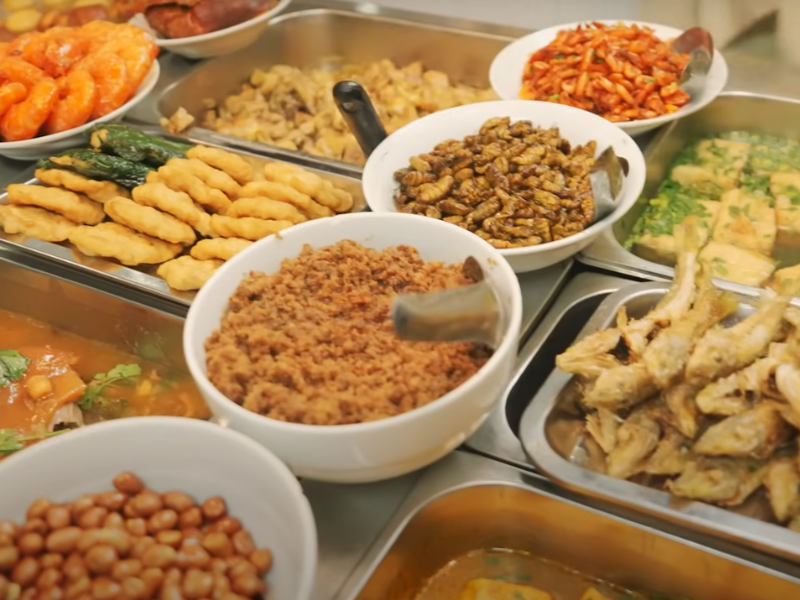
14. The Gentle Finish: Tra Da (Iced Tea) & Street Desserts
For a truly local end to your Vietnam food tour Hanoi, we look for the “Tra Da” stalls—the smallest units of Hanoian commerce.
14.1. The “Beginning of Gossip”
Tra Da: For just a few thousand Dong, you get a glass of diluted green tea over ice. It is the background noise of Hanoi life—where neighbors trade news and travelers rest their feet.
Che (Sweet Soup): If you have a sweet tooth, we explore the world of Che. From Che Khuc Bach (lychee and almond panna cotta) to Che Do Den (black bean soup), these desserts are light, cold, and use natural sweetness from coconut milk and lotus seeds.
15. FAQ: Navigating Your Hanoi Food Tour in 2026
Q1: Is street food in Hanoi safe for my stomach?
Answer: At Sao La Vietnam Tour, we only visit vendors with high turnover (fresh ingredients) and visible hygiene practices. We recommend “Following the Crowds”—if a place is packed with locals, it’s usually safe and delicious.
Q2: I am vegetarian/vegan. Can I still join a Hanoi Food Tour?
Answer: Absolutely! Hanoi has a rich “Ăn Chay” (Buddhist vegetarian) tradition. We can customize the tour to include Banh Mi with Tofu, Vegan Pho, and Fried Spring Rolls stuffed with taro and mung beans.
Q3: What should I bring on a 4-hour walking food tour?
Answer: Wear comfortable walking shoes, bring a small bottle of water, and most importantly—an empty stomach! We also recommend a small pack of hand sanitizer and tissues, though most stalls provide them.
16. Conclusion: A Journey Beyond the Plate
A Vietnam food tour Hanoi is not just about calories; it is about the stories of the people who make the food. It is the sound of the scissors cutting the Banh Mi, the sizzle of the Cha Ca pan, and the laughter shared over a glass of Bia Hoi.
When you book with Sao La Vietnam Tour, you aren’t just getting a guide; you are getting a friend who knows the “Secret Map” of the city’s flavors. From the first steam of Pho to the last sip of Egg Coffee, we ensure your gastronomic journey is as enriched as the history of Hanoi itself.
17. Taste the Legend with Sao La Vietnam Tour
Your table on the sidewalk is waiting. Let’s explore the delicious soul of Hanoi together.
Contact us today – Because the best way to see Hanoi is to eat it!