
Vietnam is a paradise for motorbike enthusiasts, offering breathtaking routes like the Ha Giang Loop and the Ho Chi Minh Trail. Choosing to travel vietnam on motorbike gives riders an unmatched sense of freedom. This guide covers the best motorbike loops, tips on renting vs. buying, safety essentials, and gear recommendations to ensure an unforgettable adventure on Vietnam’s roads.
Why You Should Travel Vietnam on Motorbike
Vietnam’s stunning landscapes, diverse terrain, and vibrant culture make it a top destination for motorbike touring. Riding through winding mountain roads, lush rice fields, and coastal highways offers an unparalleled sense of freedom and adventure.
Whether you’re an experienced rider or a beginner, Vietnam’s motorbike culture is welcoming and offers a unique way to experience the country beyond the usual tourist spots.
Beyond the stunning scenery, choosing totravel vietnam on motorbike represents a profound shift in how modern explorers connect with the destination. While standard tour buses and private cars are restricted to major highways and primary tourist hubs, a motorbike acts as a key to the country’s hidden soul. It unlocks narrow dirt paths, terraced ridge roads, and remote valley hamlets that four-wheeled vehicles simply cannot reach.
When you decide to travel vietnam on motorbike, you break down the psychological barrier of being an isolated tourist behind tinted glass. The sensory immersion is total: the sudden aroma of woodsmoke and wet earth after a mountain rain, the cool rush of air as you descend a mountain pass, and the spontaneous waves from children playing by the roadside. This direct interaction bridges cultural gaps that organized tours often miss.
Furthermore, the surge in popularity of motorbike touring stems from the modern traveler’s desire for autonomy and authentic storytelling. Local ethnic minority communities in regions like the far North or the Central Highlands often live off the main asphalt routes. By navigating these arteries on two wheels, riders frequently find themselves invited into local homes for a cup of green tea or sharing a roadside meal with farmers. When you travel vietnam on motorbike, every unexpected detour becomes a personal narrative, transforming a simple vacation into an unforgettable rite of passage.
Best Routes When You Travel Vietnam on Motorbike
Vietnam is home to some of the most scenic and adventurous motorbike routes in Southeast Asia. Here are the best ones to explore:
Ha Giang Loop – The Ultimate Adventure Ride
Location: Northern Vietnam
Distance: 350 km
Duration: 3-5 days
The Ha Giang Loop is Vietnam’s most famous motorbike route, taking riders through breathtaking mountain passes, remote ethnic villages, and stunning rice terraces. The highlights include:
Ma Pi Leng Pass– One of the most beautiful mountain roads in Vietnam.
Dong Van Karst Plateau – A UNESCO-recognized geopark with unique rock formations.
Lung Cu Flag Tower – The northernmost point of Vietnam.
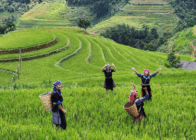
To truly appreciate why thousands of travelers choose to travel vietnam on motorbike, the Ha Giang Loop is the definitive proving ground. Timing your trip is critical; plan your journey between September and October to witness the breathtaking golden rice terraces of Hoang Su Phi and Muong Phang at their absolute peak harvest season.
As you navigate deeper into the karst plateau, make sure to include these immersive cultural stops in your itinerary:
Làng văn hóa Lô Lô Chải: Nestled right at the foot of the Lung Cu flagpole, this traditional village belonging to the Lo Lo ethnic minority offers stunning earthen-walled houses with yin-yang tiled roofs. Staying overnight in a local family homestay here allows you to experience ancient traditions untouched by mass tourism.
Dinh Thự Vua Mèo (The Vuong Palace): Located in Sa Phin valley, this architectural masterpiece blends Hmong, French, and Chinese dynastic designs. Walking through its stone courtyards gives you a rare glimpse into the opium-era history of the northern highlands.
Chợ phiên Đồng Văn (Sunday Market): If your ride lands on a weekend, this vibrant gathering is a sensory explosion. People from various ethnic groups descend from the surrounding mountains in colorful traditional attire to trade goods, livestock, and socialize over corn wine.
Many seasoned adventurers agree that conquering the northern loop is the ultimate reason to travel vietnam on motorbike.
Customer Review:
“The Ha Giang Loop was the most exhilarating ride of my life. The landscapes were unreal, and the local homestays made it even more special!” – James B., UK
Ho Chi Minh Trail – A Ride Through History
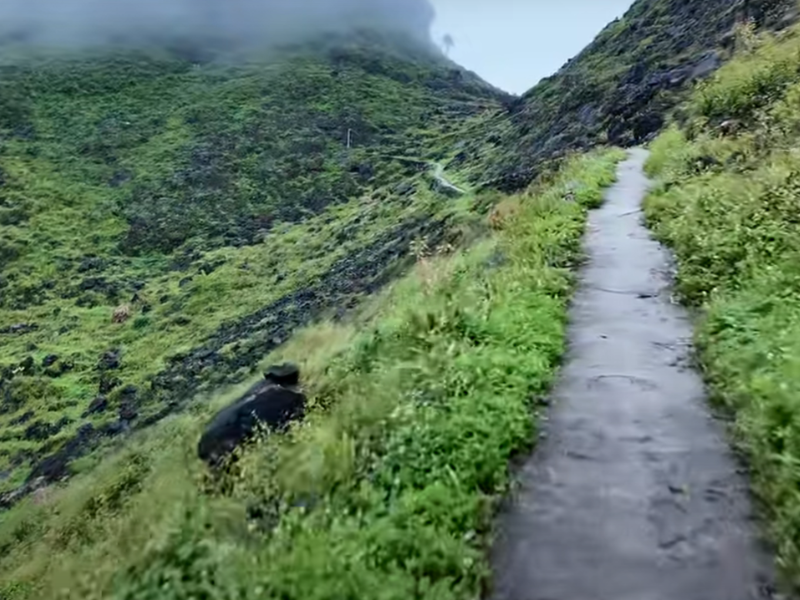
For riders seeking an epic long-haul expedition blending raw wilderness with profound historical context, the legendary Ho Chi Minh Trail is unmatched. While the main paved highway is accessible, true adventure seekers prefer the Western Truong Son section—a remote, winding mountain artery hugging the border with Laos.
When planning your expedition along this historical corridor, keep these essential tactical tips in mind:
Fuel and Logistics: Gas stations can be few and far between in the deep jungle stretches of the Truong Son mountains. Always top up your tank whenever it reaches the half-way mark, and carry a small spare bottle of fuel if you are riding a vintage semi-automatic or manual bike.
Remote Accommodation: Avoid rushing to major cities by planning night stops in lesser-known highland outposts or minority administrative townships (such as A Luoi or Kham Duc). These quiet towns offer authentic local guesthouses where you can rest alongside fellow long-distance riders.
Historical Landmarks: Take time to reflect at remote memorials, bombed-out bridge remnants, and the Khe Sanh combat base.
Riders tracing the historical Ho Chi Minh Trail find that this path defines what it truly means to travel vietnam on motorbike through rugged terrain.
The Coastal Road Hoi An to Nha Trang
Shifting from the rugged northern peaks to the sun-drenched central coastline, the coastal highway offers a completely different rhythm of riding. Here, the asphalt runs parallel to turquoise waters, white sandy bays, and vibrant fishing communities.
To make the most of this ocean-breeze journey, ensure you slow down for these iconic highlights:
Conquering the Hai Van Pass: Riding the legendary “Ocean Cloud Pass” on two wheels lets you lean smoothly into hairpin turns with sweeping panoramic vistas of Da Nang bay on one side and unbroken mountain ridges on the other.
Vinh Vung Ro & Mui Dien: As you cruise further south past Phu Yen, detour toward Vung Ro Bay—a clandestine historical drop-off point for the wartime “Ho Chi Minh ships” on the sea. Continue to Mui Dien (Cap Varella) to stand beside the historic lighthouse marking one of the easternmost points of the mainland.
Culinary Coastal Stops: Take time to pull over at local road-side shacks in fishing villages to savor ultra-fresh seafood, from grilled squid to local fish-cake noodles, prepared by families whose livelihoods have depended on the ocean for generations.
Cruising the central coastline is why thousands of coastal explorers prefer to travel vietnam on motorbike for ocean breezes.
Customer Review:
“Riding along Vietnam’s coastline was an absolute dream. The Hai Van Pass was the highlight!” – Laura M., Australia
Essential Guide to Travel Vietnam on Motorbike: Renting vs. Buying
Renting a Motorbike
- Best for: Short-term trips (1-2 weeks)
- Cost: $5-$15 per day
- Where to rent: Hanoi, Ho Chi Minh City, Da Nang, Ha Giang
Renting is the easiest option for travelers who don’t plan to stay long. Reliable rental companies include:
- Tigit Motorbikes (Nationwide)
- Style Motorbikes (Hanoi, Ho Chi Minh City)
- Tip: Always check the bike for damages and test ride before renting.
Before riding off, always perform a standard T-CLOCS pre-ride inspection to ensure your rental vehicle is mechanically sound:
T – Tires & Wheels: Check tire tread depth, correct air pressure, and look for cracks or embedded debris.
C – Controls: Test front and rear brakes, clutch play, throttle response, and gear-shifting smoothness.
L – Lights & Electrics: Verify that your headlight (high/low beam), taillight, brake lights, turn signals, and horn are fully functional.
O – Oils & Fluids: Inspect engine oil levels and check for any noticeable fluid leaks beneath the engine block.
C – Chassis: Check the suspension dampening and make sure the frame has no structural cracks.
S – Stands & Chain: Ensure the side/center stands retract cleanly and the drive chain is properly tensioned and lubricated.
Buying a Motorbike
- Best for: Long-term travel (1+ month)
- Cost: $250-$700 for a second-hand bike
- Where to buy: Facebook groups, expat markets, rental shops
If you plan to explore Vietnam for an extended period, buying a motorbike can be more cost-effective. The best bikes for touring are:
- Honda Win 110cc – Cheap and commonly used by backpackers.
- Honda XR 150cc – A more powerful option for mountain riding.
- Tip: If you buy a bike, make sure you get the blue registration card (Giấy đăng ký xe).
Safety Tips for Motorbike Touring in Vietnam
Vietnam’s roads can be chaotic, so safety should be a top priority.
- Wear a high-quality helmet – The local ones are often unsafe.
- Drive cautiously – Expect unpredictable traffic and road conditions.
- Avoid night riding – Many rural roads are poorly lit.
- Always carry rain gear – Weather changes quickly, especially in the mountains.
Navigating Mountain Weather Hazards: Landslides & Flooded Roads Riding through the northern mountains during the rainy season requires extreme vigilance against sudden environmental hazards:
Handling Landslides & Falling Rocks: If you notice fresh debris, loose rocks on the asphalt, or wet mud sliding down the cliffside, never attempt to rush past. Stop at a safe distance, assess whether the path is entirely clear, and wait for local road crews or avoid the route altogether.
Crossing Flooded Roads & Streams: Flash floods can rapidly submerge low-water bridges (ngầm). Never try to cross fast-flowing water if you cannot see the roadbed underneath. If the water level is shallow (below the midpoint of your wheels) and the current is calm, shift into first gear, maintain a steady, high-revving throttle to prevent water from entering the exhaust pipe, and walk/ride straight across smoothly without stopping mid-stream.
- Learn basic bike repairs – Knowing how to fix a flat tire can be a lifesaver.
- Customer Review:
“I had a minor accident on my trip, but wearing proper gear saved me. Don’t skimp on safety!” – Michael T., Canada

Essential Gear for a Vietnam Motorbike Tour
Here’s what you should bring for a safe and comfortable ride:
Riding Gear:
- Full-face helmet (not the cheap local ones)
- Riding gloves for better grip and protection
- Protective jacket and pants
Navigation & Tools:
- Offline maps (Maps.me or Google Maps offline)
- Basic repair kit (tire patch, wrench, duct tape)
Miscellaneous:
- Waterproof rain jacket
- Sunglasses and sunscreen
- First aid kit
Legal Requirements and International Driving Permits to Travel Vietnam on Motorbike
Ensuring that all legal protocols are strictly followed is a vital prerequisite before you officially embark on your journey to travel vietnam on motorbike. Proper preparation helps you avoid unnecessary encounters with local traffic police and guarantees your insurance validity if an unexpected incident occurs on the road.
International Driving Permit (IDP) Regulations under the 1968 Vienna Convention
Many international travelers mistakenly assume that any foreign driver’s license or IDP is automatically accepted in Vietnam. However, Vietnam officially recognizes only International Driving Permits (IDPs) issued under the 1968 Vienna Convention (typically valid for up to 3 years), accompanied by your domestic driver’s license endorsed for motorcycle operation.
Crucial Note: Permits issued under the older 1949 Geneva Convention (common in countries like the United States) are not automatically recognized under Vietnamese law. Always verify your IDP classification before departure.
Fines and Document Inspections for Foreign Riders
Traffic police in Vietnam frequently conduct administrative checkpoints along major touring routes, especially in the northern mountainous provinces and around mountain passes like Hai Van. If you operate a motorcycle exceeding 50cc without a valid, legally compliant license, your vehicle may be impounded, alongside heavy administrative fines. Furthermore, lacking proper documentation will cause reputable rental companies to void roadside support and can complicate insurance claims following any traffic collision.
International Travel Insurance and Emergency Medical Evacuation
When tackling adventurous routes with steep mountain passes and remote regions (such as Ha Giang or the Truong Son mountains), securing a specialized international travel insurance policy is a crucial safety net. Opt for reputable insurance providers (such as Allianz, AXA, or specialized plans with “Adventure Sports” riders) that explicitly cover motorcycle accidents and emergency medical evacuation. Ensure your policy handles ambulance or specialized transport costs from remote highlands back to international-standard hospitals in Hanoi or Ho Chi Minh City.
Conclusion: Is Motorbike Touring in Vietnam Worth It?
Absolutely! Vietnam is one of the best countries in the world for motorbike touring. Whether you’re tackling the Ha Giang Loop’s dramatic landscapes, riding the historic Ho Chi Minh Trail, or cruising along the coastal roads of Central Vietnam, the experience is unforgettable.
If you’re looking for the adventure of a lifetime, pack your bags, get your gear ready, and hit the open road in Vietnam!
Have you been on a motorbike tour in Vietnam? Share your experience in the comments!
More Informations:
Best Adventure Activities in Vietnam
Ultimate Guide to Ha Giang Loop
For more expert travel advice, check out @saolatours