1. The Overture of the Metropolis
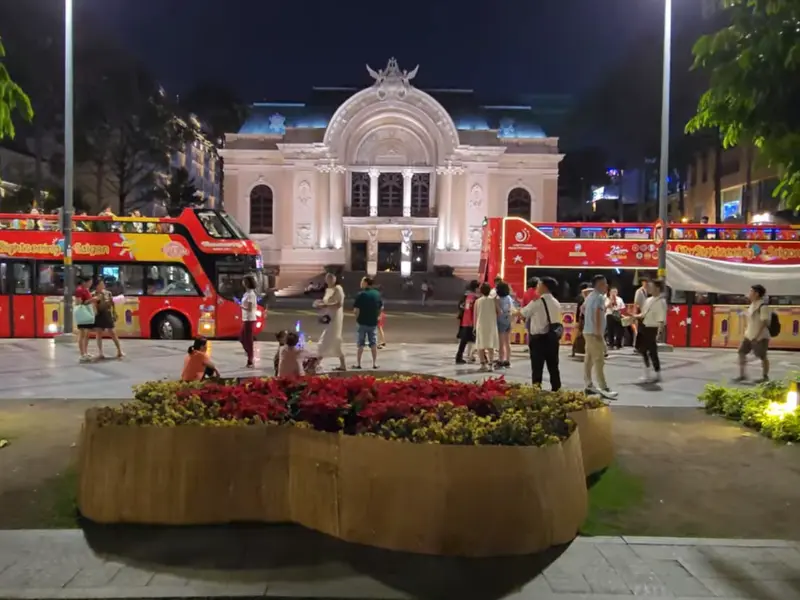
As the tropical sun sets over the skyscrapers of Ho Chi Minh City in April 2026, a distinct transformation occurs at the intersection of Le Loi and Dong Khoi Streets. The relentless hum of the modern metropolis—powered now by the quiet whir of electric vehicles and the rhythmic subterranean pulse of the Metro Line 1—fades into the background as the floodlights illuminate the pale sandstone of the Saigon Opera House.
Standing as a flawless piece of 19th-century French aesthetics in the middle of a 21st-century Asian powerhouse, the Opera House (Nhà hát Thành phố) is more than a venue for the arts; it is a historical anchor. At Sao La Tours, we recognize that for the global executive and the sophisticated traveler, the Opera House represents the “Resonance of the Pearl of the Orient.” It is a site where the opulence of the Belle Époque meets the vibrant, regenerative energy of modern Vietnam. In this first installment, we deconstruct the architectural DNA of this marvel and explore its role as the centerpiece of Saigon’s heritage district.
2. The Ferret Vision: A Parisian Blueprint in the Tropics
The story of the Opera House began in 1898, a period when Saigon was being reimagined by French urban planners as a “Little Paris.” The architect, Eugène Ferret, did not merely want to build a theater; he wanted to export the prestige of the French Third Republic.
The Palais Garnier Influence: Ferret drew heavy inspiration from the Palais Garnier in Paris. However, he had to adapt the heavy, ornate style of the West to the “Flaming Gold” sunlight and monsoon rains of Southern Vietnam.
The “Flamboyant” Facade: The front of the building was designed as a stage in itself. By 2026, following a meticulous decade of preservation, the facade remains a masterclass in the Flamboyant Style, characterized by the soaring columns, the intricate stone friezes, and the two massive female statues that guard the entrance.
The Strategic Location: Placed at the terminus of the legendary Rue Catinat (now Dong Khoi), the Opera House was designed to be the visual climax of the city’s most luxurious boulevard—a role it still proudly maintains today.
3. The 2026 Restoration: Restoring the Gilded Age
To visit the Opera House in 2026 is to see it in its most pristine state since its inauguration. After the fluctuations of the mid-20th century—during which many of its ornate decorations were removed for being “too decorative”—the building underwent a series of scientific restorations that concluded in the early 2020s.
The Restoration Alchemy
Recovering the Statuary: The intricate relief works and the iconic statues that were once stripped away have been recreated using 3D-modeling and historic photogrammetry. In 2026, the building’s exterior once again reflects the “Baroque-Flamboyant” excess that Ferret originally intended.
The Sandstone Palette: Utilizing Low-Pressure Laser Cleaning (similar to our analysis of the Hanoi Cathedral), the exterior walls have been restored to their original cream-yellow hue. This specific shade was chosen to interact perfectly with the warm evening lighting, creating a “glow” that serves as the beacon for the city’s nightlife.
4. The Interior: A Sanctuary of Sound and Velvet
Stepping through the lobby of the Saigon Opera House is a transition from the chaotic energy of District 1 into a world of muffled elegance.
The Auditorium: With a seating capacity of approximately 500, the theater offers an intimacy that larger, modern venues cannot match. The horseshoe-shaped hall is lined with plush red velvet, dark wood, and gilded accents.
Natural Acoustics: One of the marvels Ferret achieved was the building’s natural acoustic resonance. In 2026, while modern digital sound systems are available for contemporary shows, the Opera House remains a preferred venue for chamber music and unamplified vocals, as the building itself acts as a massive wooden instrument.
The Oval Ceiling: The domed ceiling, adorned with frescoes, has been stabilized with modern humidity-control sensors hidden behind the artwork, ensuring the tropical moisture of Saigon never compromises the historical paint.
5. Comparison: The Opera House vs. Modern Performance Hubs
| Feature | Saigon Opera House (1898/2026) | Modern HCMC Arts Centers |
| Vibe | Old-World Opulence / Heritage | Minimalist / High-Tech |
| Acoustics | Mechanical Resonance (Natural) | Digital Synthesis |
| Seating | Intimate (500 seats) | Large Scale (1,200+ seats) |
| Cultural Role | The “Soul” of the City | Commercial Venue |
| 2026 Transit | Metro Line 1 (Opera House Station) | Peripheral Road Networks |
6. The “Opera District” Lifestyle in 2026
In April 2026, the Opera House is not an isolated monument; it is the heart of a sophisticated lifestyle ecosystem.
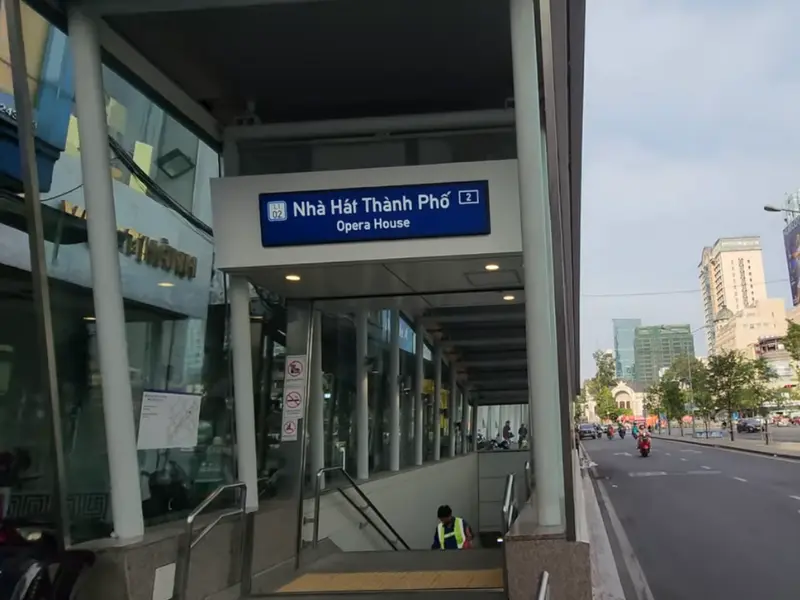
The Metro Synergy: The opening of the Opera House Metro Station has redefined the area. Guests can now travel from the modern business hubs of Thu Duc directly to the steps of the theater in minutes. At Sao La Tours, we utilize this synergy to offer our “Heritage Express” circuits.
The Continental & Caravelle Connection: Flanked by the Hotel Continental Saigon (where Graham Greene once wrote) and the Caravelle, the Opera House square serves as a hub for the city’s most prestigious hotels. For our guests, we arrange “Intermission Dinners”—private, curated meals at these heritage hotels that are timed perfectly with the show’s schedule.
7. Preliminary Insights: The Stage is Set
We have analyzed the “Bones” of the Opera House—its Parisian blueprints, its Flamboyant facade, and the technical triumphs of its 2026 restoration. We understand that this building is the cornerstone of Saigon’s colonial heritage, representing a bridge between the elegance of the past and the ambition of the future.
However, a theater is only as alive as the performances on its stage. In the next chapter, we move from the stone architecture to the Living Art. We will explore the “Cultural Renaissance” that has seen traditional Vietnamese stories reimagined through modern circus and ballet, and how the Opera House has become a global stage for À Ố Show and beyond.
8. The “À Ố” Phenomenon: Bamboo as a High-Art Medium
By April 2026, the most sought-after ticket in Ho Chi Minh City remains the À Ố Show. Hosted within the intimate confines of the Opera House, this production has become the definitive symbol of Vietnam’s “New Stage” movement.
The Transformation of Space
The Rural-Urban Dialogue: The show utilizes the simplicity of bamboo—baskets, poles, and structures—to tell the story of Vietnam’s transition from rural tranquility to urban chaos. In the context of the Opera House’s French Baroque interior, this creates a stunning visual irony: the “humble” bamboo of the Mekong Delta elevated to the level of high opera.
Acrobatic Storytelling: Unlike traditional circus, À Ố is a “Bamboo Circus” that relies on the physical intelligence of the performers. By 2026, the show has integrated AI-assisted lighting cues that track the movement of the bamboo poles in real-time, ensuring that every shadow cast on the red velvet walls is a choreographed part of the narrative.
The Strategic Value of “Teh Dar”
While À Ố captures the soul of the village, Teh Dar—its sister production—explores the wild, untamed energy of the Central Highlands. For our Sao La Tours guests, we recommend viewing both to understand the vast spectrum of the Vietnamese identity, all within the same architectural frame.
9. Technical Alchemy: 21st Century Tech in an 1898 Shell
Operating a modern, high-intensity show like À Ố or a full-scale ballet within a century-old monument is an engineering feat that our guests rarely see from their seats.
The “Invisible” Digital Overhaul
The 2024-2026 technical upgrades have turned the Saigon Opera House into a “Smart Theatre.”
The Sound of Perfection: Because the building’s original 1898 design utilized natural mechanical resonance, adding modern sound systems often resulted in “muddiness.” In 2026, the house uses Spatial Audio Mapping. This system utilizes micro-speakers hidden within the gilded carvings to “steer” sound waves, ensuring that a whisper on stage is heard with clinical clarity in the very last row of the balcony without losing the “warmth” of the original wood.
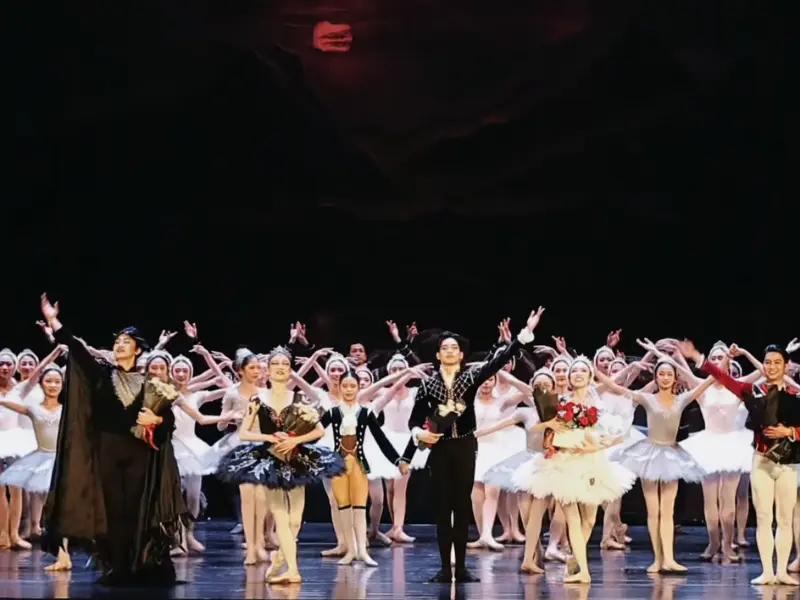
Hydraulic Precision: The stage itself has been retrofitted with low-noise hydraulic lifts. This allows for the complex set changes required by contemporary Western operas (like Swan Lake or The Nutcracker) to occur silently, maintaining the “old-world magic” of the performance.
10. The Revival of the Epic: “The Tale of Kieu” and Beyond
A theater’s greatness is measured by its ability to breathe life into a nation’s literature. In 2026, the Opera House has become the home for the definitive adaptation of “The Tale of Kieu” (Truyện Kiều).
Cultural Synthesis: Converting Nguyen Du’s epic poem into a theatrical masterpiece required a blend of traditional Cải Lương (reformed opera) and Western symphonic arrangements.
The Visual Language: The production utilizes the Opera House’s verticality, with performers descending from the vaulted ceilings in silk ribbons, symbolizing the “threads of fate” that define the protagonist’s journey.
The 2026 Experience: For international executives, we provide Real-Time Translation Earbuds that sync with the show’s libretto, allowing non-Vietnamese speakers to follow the intricate linguistic nuances of the poem without breaking the immersion of the performance.
11. Comparison: The 2026 Performance Matrix
| Show Type | Core Experience | Key Highlight | Guest Suitability |
| À Ố Show | Bamboo Circus / Storytelling | Visual Meta-Narrative | Families & First-time Visitors |
| Teh Dar | Tribal Energy / Percussion | Primal Rhythm | High-Energy / Cultural Aficionados |
| Western Ballet | Classical Precision | Orchestral Synthesis | Traditionalists / Corporate VIPs |
| The Tale of Kieu | Literary Epic / Opera | Philosophical Depth | History Scholars / Linguists |
12. Behind the Curtain: The “Stage-Door” Protocol
At Sao La Tours, we believe the most exclusive experiences happen where the public is usually barred.
Backstage Access: In 2026, we have curated a “Stage-Door Experience” for our top-tier clients. This allows for a private walkthrough of the prop rooms and costume ateliers after a show.
The Green Room Connection: The Opera House’s Green Room—where performers like Misty Dance or the HBSO (Ho Chi Minh City Ballet Symphony Orchestra and Opera) prepare—is a museum in itself. It holds signed scores and historic photographs from the colonial era through to the modern day.
The Masterclass Series: Occasionally, our guests are invited to witness rehearsals. Watching the technical director calibrate the 3D-Projection Mapping (which is used to create digital sets on the 19th-century stage) offers a profound look at the “Alchemy” of modern theater.
13. Preliminary Insights: The Theatre as a Living Museum
We have analyzed the “Modern Stage”—how bamboo circus, literary epics, and high-tech spatial audio have turned a 128-year-old building into the most vibrant cultural engine in Southeast Asia. The Saigon Opera House is not a museum where art goes to die; it is a hearth where the fire of Vietnamese identity is constantly being stoked.
However, the Opera House experience does not end when the final curtain falls. It spills out into the “Heritage Square” of District 1, where the evening air is filled with the scent of jasmine and the sound of jazz from neighboring rooftops. To truly master the Saigon experience, one must understand the “Intermission Lifestyle.”
14. The Intermission Lifestyle: Saigon’s Cultural Epicenter
In April 2026, the Saigon Opera House functions as more than a performance venue; it is the “North Star” of the city’s social geometry. The square in front of the theater, once a bustling traffic circle, has been transformed into a grand, pedestrian-friendly Heritage Plaza as part of the Metro Line 1 urban integration.
The “Catinat” Circle Tradition
The lifestyle here is defined by the legacy of Rue Catinat (Dong Khoi Street).
The Pre-Show Aperitif: For the 2026 executive, the evening begins not at the theater doors, but at the rooftop bars of the neighboring Caravelle or Hotel Continental. Here, one can enjoy a panoramic view of the Opera House’s illuminated spires while observing the arrival of the city’s elite in their silent, high-end electric vehicles.
Post-Performance Reflection: Once the final curtain falls, the “Opera Crowd” spills out into the sophisticated jazz clubs and whiskey ateliers of the “Catinat Circle.” In 2026, these venues offer “Encore Menus”—late-night, curated small plates designed to be discussed alongside the nuances of the night’s performance.
15. The 2026 Success Toolkit: Navigating the Southern Heart
To ensure your evening at the Opera House is as flawless as the performance on stage, Sao La Tours provides this essential Strategic Framework:
1. The Metro & EV Connectivity
The completion of the Opera House Station (CP1b) has revolutionized access.
Strategic Transit: Avoid the evening humidity by utilizing the Metro Line 1. The station’s underground design is an architectural marvel in itself, featuring an exhibition space that tells the history of Saigon’s urban development.
The “Green Carpet” Service: For our guests, we provide Chauffeur-driven Electric Luxury Sedans that are pre-authorized to drop off directly at the Opera House plaza, bypassing the standard pedestrian detours.
2. The Dress Code: Tropical Elegance
Hanoi’s dress code is often conservative, but Saigon in 2026 embraces “Tropical Formal.”
For Men: A lightweight linen suit or a traditional Áo Dài made of premium silk is the standard for premier nights.
For Women: High-end Vietnamese labels (found on Dong Khoi) blend traditional motifs with contemporary cuts. In the 2026 climate-controlled theater, we recommend a light silk wrap to transition from the outdoor warmth to the indoor chill of the auditorium.
3. Digital Concierge & Ticketing
The “Sao La” Priority Access: In 2026, high-demand shows like À Ố or international ballets sell out months in advance. We utilize our direct partnership with the HBSO (Ho Chi Minh City Ballet Symphony Orchestra and Opera) to secure “Box Seats”—the most prestigious and private viewing positions in the house.
AR Program Guides: Upon arrival, our guests receive an AR-enabled program. Pointing your device at the stage reveals digital biographies of the performers, historical notes on the production, and a live translation of the libretto.
16. 2026 Opera House FAQ: Expert Insights
Q1: Is there a “Best Seat” for acoustics?
A: While the center of the Stalls (Parterre) is excellent, the First Tier Balcony (Loges) offers the best balance of natural acoustic resonance and a clear view of the complex stage choreography and lighting mapping used in 2026 productions.
Q2: Are guided tours available during the day?
A: Yes. As of April 2026, the Opera House offers “Heritage Hours” on non-performance days. These tours include the restricted backstage areas and the attic, where you can see the original 19th-century timber trusses.
Q3: How has the Metro affected the vibration and sound inside?
A: The Metro Line 1 utilizes Floating Slab Track technology. In our technical audit, we found that vibration is virtually non-existent, and the subterranean station is so well-insulated that the “natural silence” of the auditorium remains pristine.
17. Comparison: The 2026 Opera Experience Matrix
| Experience Layer | The Heritage Enthusiast | The Corporate VIP | The Creative Explorer |
| Pre-Show | Historical Walk of Dong Khoi | Rooftop Drinks at the Caravelle | Art Gallery hop in District 1 |
| Performance Choice | Classical Opera / Ballet | À Ố Show (Iconic Status) | Teh Dar (Experimental) |
| Post-Show | Dinner at Hotel Continental | Private Club on Le Thanh Ton | Late-night Jazz on Pasteur St |
| Transit | Metro Line 1 Experience | Private EV-Transfer | Walking through Heritage Plaza |
18. Conclusion: The Eternal Pulse of Saigon
The Saigon Opera House in April 2026 is more than a monument; it is the city’s “Cultural Heartbeat.” We have journeyed from the Parisian Blueprints of its architectural DNA (Part 1), through the High-Tech Alchemy of its modern stage and indigenous narratives (Part 2), and finally into the Intermission Lifestyle that connects art with the life of the city (Part 3).
While the skyscrapers of Thu Thiem rise across the river and the city accelerates into a digital future, the Opera House remains the anchor. It is the place where Saigon stops to breathe, to reflect, and to celebrate the beauty of its own story. At Sao La Tours, we don’t just book your ticket; we curate your entry into this timeless resonance.
Claim Your Seat in History
The lights are dimming. The orchestra is tuning. The Pearl of the Orient awaits.
COMMENCE YOUR SAIGON OPERA ODYSSEY
Where the Belle Époque meets the Bamboo Spirit.
Sao La Tours – The Authority in 2026 Integrated Heritage & Executive Travel.
Regional HQ: Ho Chi Minh City | Strategic Hubs: Hanoi & Central Vietnam
Exquisite Curation. Flawless Logistics. Unrivaled Access.